
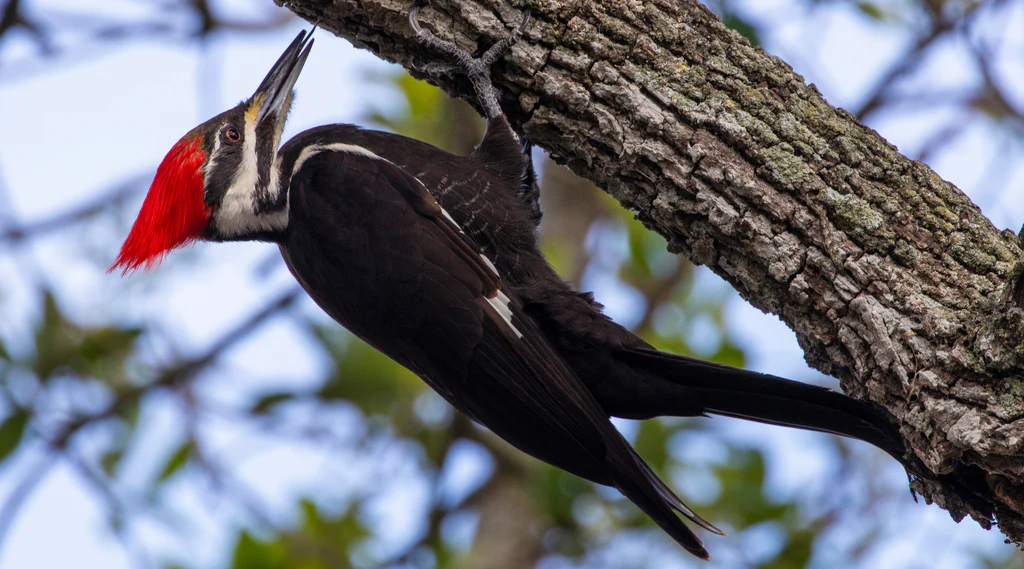
Woodpeckers are some of the most interesting and unique birds in the world. Known for their drumming on trees, strong beaks, and colorful feathers, they have fascinated bird watchers, scientists, and nature lovers for centuries. This article explores everything about woodpeckers, including their appearance, behavior, habitat, diet, and role in nature.
What Is a Woodpecker?
Woodpeckers belong to the family Picidae, which includes over 200 species found all over the world. They are known for pecking on trees to find food, create nests, and communicate with other birds.
One of the most remarkable things about woodpeckers is their ability to drum on hard surfaces without harming their brains. Their skulls and beaks are specially adapted to absorb the impact of constant pecking.
Physical Features of Woodpeckers
Woodpeckers have several features that make them unique among birds:
-
Beak: Strong, chisel-like, and perfect for drilling into wood to find insects or make nests.
-
Feet: Two toes facing forward and two backward (zygodactyl feet), which help them cling to tree trunks.
-
Tail: Stiff tail feathers used as support when climbing or pecking.
-
Tongue: Very long, sticky, and sometimes barbed to catch insects deep in holes.
-
Plumage: Bright and colorful feathers, often with red, black, white, and yellow patterns.
-
Size: Woodpeckers range from tiny species like the Downy Woodpecker (around 6 inches) to large species like the Pileated Woodpecker (around 19 inches).
Where Do Woodpeckers Live?
Woodpeckers are found in forests, woodlands, and sometimes urban areas:
-
Forests: Many woodpeckers prefer dense forests with plenty of old trees.
-
Grasslands and Savannas: Some species adapt to areas with scattered trees.
-
Urban Areas: Woodpeckers may live in parks, gardens, and backyards with trees.
They are widely distributed across North America, Europe, Asia, and Africa. Each species has adapted to its local environment, from tropical forests to temperate woodlands.
What Do Woodpeckers Eat?
Woodpeckers are primarily insectivores, but their diet varies by species:
-
Insects and larvae: Ants, beetles, termites, and wood-boring larvae are favorites.
-
Tree sap: Some species, like the sapsucker, feed on sap from holes they drill in trees.
-
Fruits and nuts: Many woodpeckers eat berries, seeds, and nuts, especially when insects are scarce.
-
Small animals: Occasionally, some woodpeckers eat small lizards or bird eggs.
Their long, sticky tongues help them reach insects hiding deep inside tree bark. They can also hammer into logs to uncover hidden prey.
How Do Woodpeckers Peck Without Injury?
One of the most amazing things about woodpeckers is their ability to drum on trees at high speeds without hurting themselves:
-
Strong skulls: Their skull bones are thick and spongy to absorb impact.
-
Shock absorption: The beak and skull structure distribute the force of each strike.
-
Small brain movement: Their brains are tightly packed and protected by fluid and cartilage, preventing damage.
-
Neck muscles: Powerful neck muscles help control and absorb the impact.
A woodpecker can peck up to 20 times per second, drilling hundreds of holes every day, without suffering brain injury.
Behavior of Woodpeckers
Woodpeckers are active, intelligent, and social birds:
-
Drumming: They drum on trees to mark territory, attract mates, and communicate with other woodpeckers.
-
Climbing: Their strong feet and stiff tails help them climb tree trunks vertically.
-
Nesting: Woodpeckers excavate cavities in dead or decaying trees to lay eggs and raise chicks.
-
Territorial: Male woodpeckers defend their territory through drumming and displays.
-
Communication: Besides drumming, they use calls and feather displays to interact with other birds.
Woodpeckers are mostly solitary, except during mating season or when feeding in groups in food-rich areas.
Reproduction and Life Cycle
Woodpeckers reproduce by laying eggs in tree cavities:
-
Mating season: Varies depending on species and location, usually in spring.
-
Nest building: Both males and females help dig the nest hole.
-
Eggs: The female lays 2–6 eggs, which are white and incubated by both parents.
-
Hatching: Eggs hatch after about 10–14 days.
-
Raising chicks: Both parents feed the chicks insects and other food. Chicks fledge after 3–5 weeks.
Woodpeckers can live up to 10–12 years in the wild, depending on species and environmental conditions.
Predators and Threats
Woodpeckers face several predators and dangers:
-
Birds of prey: Hawks and owls may hunt adult woodpeckers.
-
Snakes: Some snakes raid nests for eggs or chicks.
-
Mammals: Raccoons, squirrels, and monkeys can attack nests.
-
Habitat loss: Deforestation and urbanization reduce nesting and feeding sites.
Despite these threats, many woodpecker species adapt well to new environments as long as trees are available.
Importance of Woodpeckers in Nature
Woodpeckers play an important role in maintaining healthy forests:
-
Pest control: By eating insects, they protect trees from infestations.
-
Tree health: Excavating dead wood removes decaying matter and helps the forest ecosystem.
-
Creating habitats: Nest holes are later used by other birds, mammals, and insects.
-
Seed dispersal: By eating fruits and nuts, woodpeckers help plants spread.
Without woodpeckers, forests would face more insect damage, fewer nesting sites for other animals, and reduced ecological balance.
Unique Woodpecker Species
Some of the most interesting woodpecker species include:
-
Downy Woodpecker: Small, common in North America, black-and-white feathers.
-
Pileated Woodpecker: Large, with a striking red crest, found in North American forests.
-
Great Spotted Woodpecker: Black and white with red markings, found in Europe and Asia.
-
Red-headed Woodpecker: Bold red head, white body, black wings, found in North America.
-
Ladder-backed Woodpecker: Small, with black and white stripes on its back, found in deserts and scrublands.
Each species has adapted to its environment, developing unique feeding techniques and behaviors.
Fun Facts About Woodpeckers
-
Woodpeckers can peck hundreds of times per hour.
-
Some species can hammer at up to 20 strikes per second.
-
Their tongues can be twice the length of their beak.
-
Pileated woodpeckers are the inspiration for cartoon characters like Woody Woodpecker.
-
Woodpeckers have zygodactyl feet, which means two toes face forward and two backward, helping them cling to trees.
Observing Woodpeckers
To watch woodpeckers safely and enjoyably:
-
Look for drumming sounds: This is often the first sign of a nearby woodpecker.
-
Check tree trunks and dead trees: These are favorite feeding and nesting spots.
-
Use binoculars: Helps you see them up close without disturbing them.
-
Visit bird reserves: Many parks and forests protect woodpeckers and other wildlife.
Observing woodpeckers teaches us about their behavior, intelligence, and role in the forest.
Conclusion
Woodpeckers are extraordinary birds with amazing adaptations for survival. From their strong beaks and long tongues to their drumming skills and colorful feathers, they are perfectly designed for life in the trees.
By understanding woodpeckers, respecting their habitat, and providing trees in urban areas, humans can help these fascinating birds thrive. Protecting woodpeckers ensures healthy forests, pest control, and a richer environment for all wildlife.
Read Also: Keep your face towards the sunshine and shadows will fall behind you
Watch Also: https://www.youtube.com/@TravelsofTheWorld24





Leave a Reply