
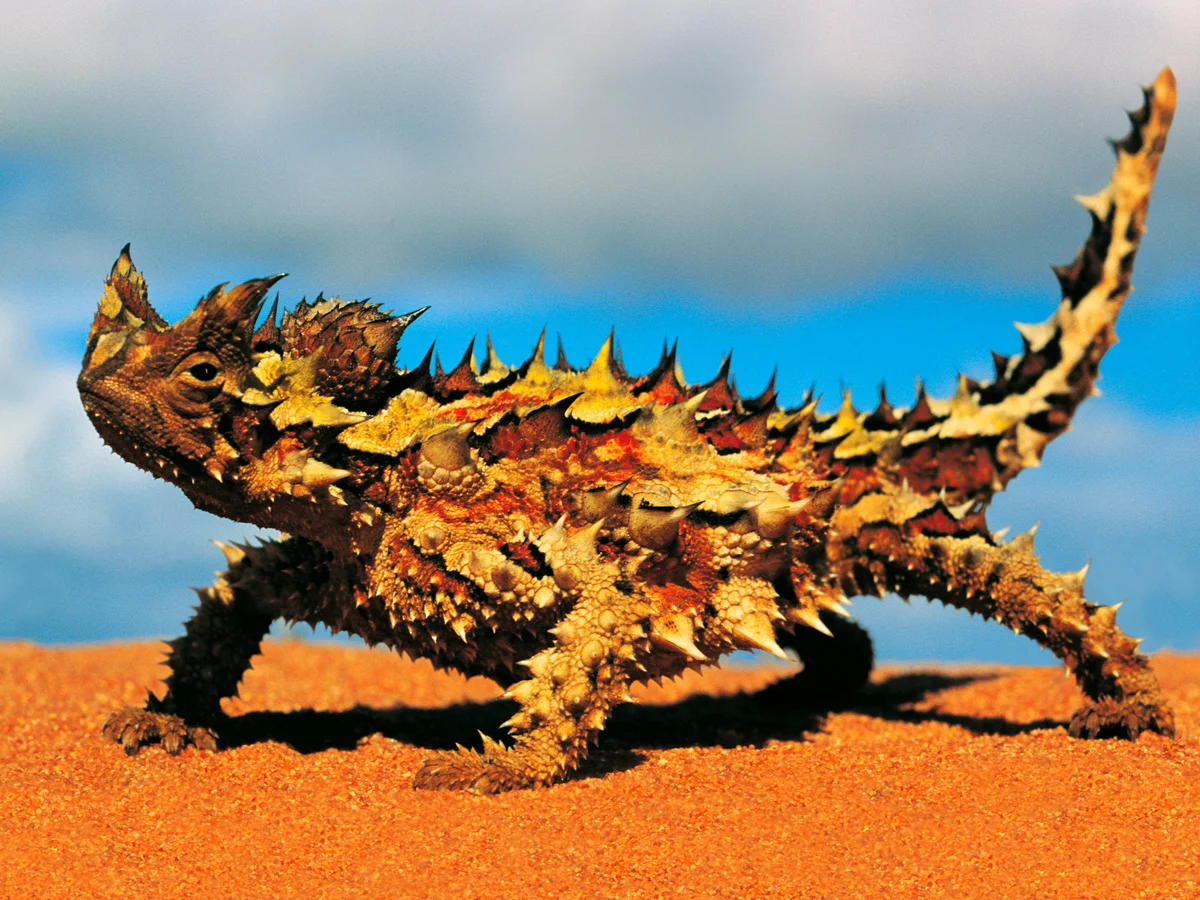
The thorny devil is one of the strangest and most amazing lizards in the world. Covered in sharp spikes from head to tail, it looks like a tiny dragon from a fantasy story. But despite its fierce appearance, this small reptile is harmless and shy. It lives only in the deserts and dry regions of Australia, where it survives extreme heat, little water, and very limited food.
Scientists call it Moloch horridus, but most people know it as the thorny devil, thorny dragon, or mountain devil. Its unique look, strange way of drinking water, and unusual diet make it one of nature’s most fascinating animals.
Appearance
The thorny devil is small, usually about 15–20 centimeters (6–8 inches) long. Its body is wide and flat, covered in sharp cone-shaped spikes. These spikes protect it from predators and help it blend into the desert environment.
Its colors change depending on temperature and surroundings. Most of the time, it is sandy brown, yellow, or reddish — perfect for camouflage in desert sand. When the temperature changes, its color can become darker or lighter.
One of its strangest features is a “false head” on the back of its neck. This bump looks like a real head but is actually a defense trick. When threatened, the lizard lowers its real head and shows the fake one, confusing predators about where to strike.
Its legs are short and strong, built for slow walking rather than running. Its tail is thick and used mainly for balance.
Habitat
Thorny devils live in dry, sandy deserts and scrublands. They prefer areas with loose soil, sand dunes, and sparse vegetation. These habitats provide both food and protection.
They are ground-dwelling animals and rarely climb. During the hottest parts of the day, they often hide under bushes or bury themselves slightly in sand to stay cool.
In winter or very cold weather, they may dig burrows and stay underground for long periods.
Diet — An Ant Specialist
The thorny devil has one of the most specialized diets in the animal world. It eats almost nothing except ants.
An adult thorny devil can eat thousands of ants in a single day — sometimes up to 3,000 or more. It sits near ant trails and waits patiently. As ants pass by, it quickly flicks out its sticky tongue to collect them one by one.
Unlike many lizards, it does not chase prey. Instead, it uses patience and stealth. This energy-saving method is perfect for desert life, where food can be scarce.
Because ants are small, the lizard must eat constantly to get enough energy.
How It Drinks Water — A Unique Method
Water is extremely scarce in deserts, so the thorny devil has developed an incredible way to drink.
Its skin contains tiny grooves between the scales. These channels act like small tubes that draw water toward the mouth. When dew, rain, or wet sand touches its body, the water travels along these grooves automatically.
The lizard does not need to drink in the usual way. Even standing on damp soil can allow water to move into its mouth.
This system helps it survive in places where open water may not exist for months.
Behavior
Thorny devils are slow and calm animals. They rarely run or show aggression. Their main defense is camouflage and stillness.
When walking, they move in a slow rocking motion, almost like a toy robot. This unusual movement may help them blend in with plants moving in the wind.
They are active during the day but avoid extreme midday heat. Most activity happens in the morning and late afternoon.
These lizards are solitary and do not form groups. Each individual lives alone except during the breeding season.
Defense Mechanisms
Despite looking dangerous, thorny devils are harmless. They do not bite strongly, chase prey, or attack animals. Instead, they rely on several clever defenses:
1. Spikes
The sharp spines make them difficult and unpleasant for predators to swallow.
2. Camouflage
Their desert colors help them disappear into sand and dry vegetation.
3. False Head
The fake head on the neck misleads predators.
4. Freezing Behavior
When threatened, they often stay completely still, hoping not to be noticed.
5. Puffing Up
They can inflate their bodies slightly to appear larger and harder to swallow.
Predators include birds of prey, goannas (large monitor lizards), snakes, and wild cats.
Reproduction
Breeding season usually happens in spring or early summer. After mating, the female digs a deep burrow in sandy soil to lay her eggs.
She lays about 3–10 eggs at a time. The eggs are left buried and protected by the sand’s warmth.
Incubation takes several months. Baby thorny devils hatch fully formed and must survive on their own immediately. There is no parental care.
Young lizards are very small and vulnerable, so many do not survive to adulthood.
Movement and Daily Life
Thorny devils do not move long distances. They usually stay within a small home range where food is available.
Their day often follows a simple pattern:
-
Warm up in the sun
-
Walk slowly to feeding areas
-
Eat ants for hours
-
Rest in shade
-
Return to shelter
Because ants are found in predictable trails, the lizard does not need to wander far.
Seasonal Changes
Life in the desert changes with the seasons, and the thorny devil adapts accordingly.
Summer
Extreme heat limits activity to cooler parts of the day.
Winter
Cool temperatures slow metabolism. Many individuals become less active or stay in burrows.
Rainy Periods
More plant growth leads to more ants, which means more food.
Importance in the Ecosystem
Even small animals play important roles in nature. The thorny devil helps control ant populations and serves as prey for larger animals.
Its presence also indicates a healthy desert ecosystem. Because it depends on specific conditions, population changes can signal environmental problems.
Relationship with Humans
Thorny devils are not dangerous to people. They rarely interact with humans and prefer to avoid contact.
In Australia, they are protected by law, and capturing them from the wild is illegal without special permission.
They are popular in wildlife documentaries and zoos because of their unusual appearance and gentle nature.
Many people admire them as symbols of Australia’s unique wildlife.
Interesting Facts
-
Despite its scary name, it is harmless.
-
It eats almost only ants.
-
Water travels across its skin to its mouth.
-
It has a fake head for protection.
-
It moves slowly with a rocking motion.
-
It can change color slightly.
-
It lives only in Australia.
-
It does not drink from ponds or streams often.
Why It Looks Like a “Dragon”
The thorny devil’s spikes, broad body, and small head give it a mythical appearance. Early explorers thought it looked like a tiny dragon or demon, which led to its dramatic name.
However, its behavior is calm and gentle, making it one of the least aggressive reptiles.
Conservation Status
Currently, thorny devils are not considered endangered, but they face threats such as:
-
Habitat destruction
-
Road accidents
-
Invasive predators like foxes and cats
-
Climate change
Protecting desert ecosystems helps ensure their survival.
Observing Thorny Devils
Seeing one in the wild can be difficult because of its camouflage and slow movement. People usually spot them when they cross roads or open sandy areas.
Wildlife parks and reserves sometimes provide safer opportunities to observe them without disturbing their habitat.
Watching a thorny devil is fascinating because of its unusual walk, feeding behavior, and spiky appearance.
Summary
The thorny devil is one of the most unique reptiles on Earth. Small, slow, and covered in sharp spikes, it survives in some of the harshest desert environments. Its specialized diet of ants, ability to collect water through its skin, and clever defenses make it a true desert survivor.
Although it looks fierce, it is peaceful and shy. Its strange body, fake head, and robotic walk show how evolution can produce amazing solutions for survival.
This tiny “dragon” reminds us that even the harshest places on Earth are full of life — strange, beautiful, and perfectly adapted to survive.
Read Also: Keep your face towards the sunshine and shadows will fall behind you
Watch Also: https://www.youtube.com/@TravelsofTheWorld24








Leave a Reply