
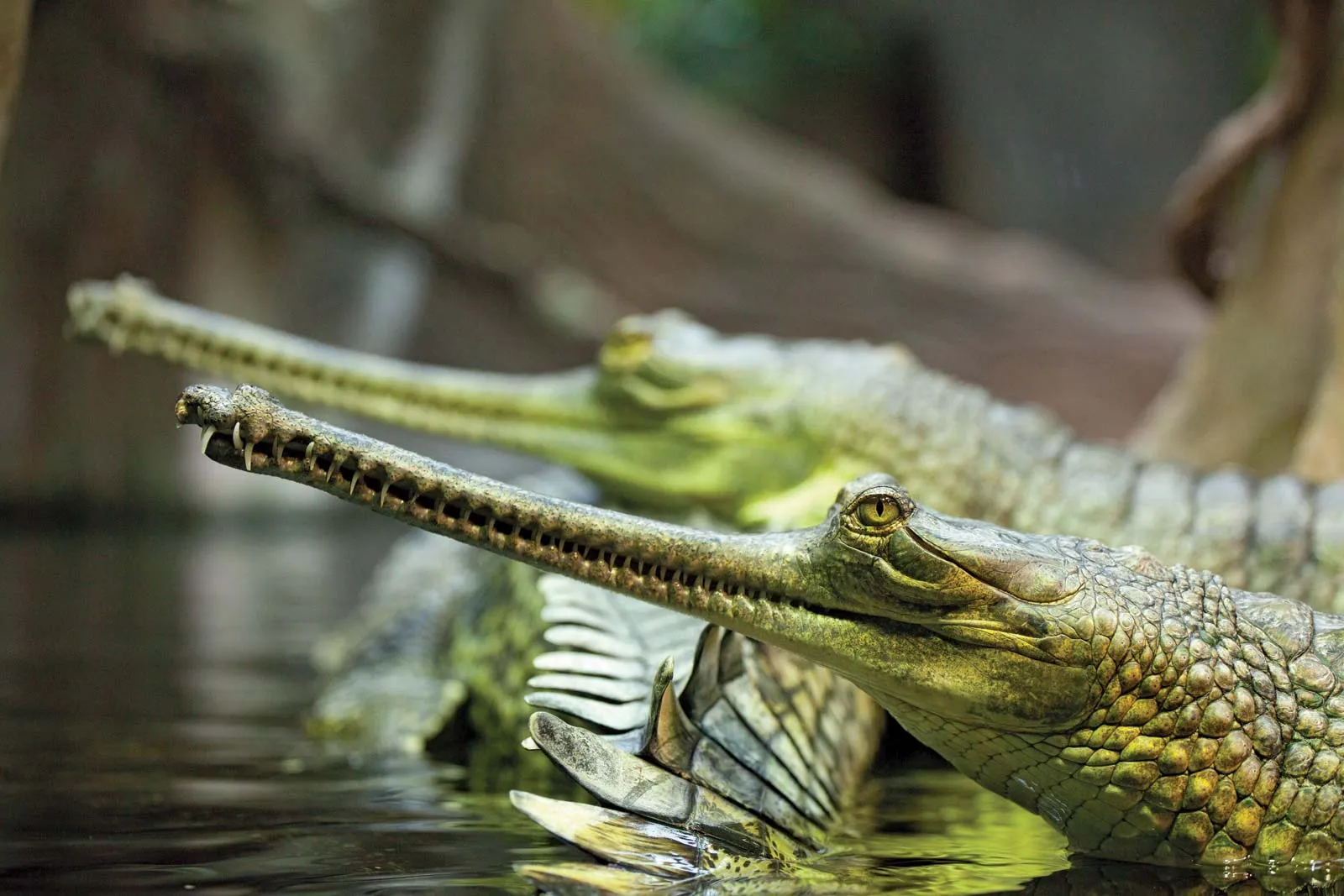
The Gharial is one of the most unique crocodiles in the world. It is easily recognized by its long, thin snout filled with sharp teeth, which makes it different from other crocodiles and alligators. Gharials are freshwater reptiles that live in rivers of India and Nepal. They are critically endangered, making them a rare and important species for conservation efforts.
Appearance
Gharials have a very distinctive look. They have long, narrow snouts that are perfect for catching fish, their main food. Adult males develop a bulbous growth at the tip of their snout, called a “ghara,” which is used to produce sound during mating and display dominance.
Gharials are large reptiles, with males growing up to 20 feet long and females slightly smaller, up to 16 feet. Their bodies are covered in tough, armored scales that protect them from predators and rivals. Their color is usually olive green or grayish-brown, which helps them blend into river water and mud.
Gharials have webbed feet that make them excellent swimmers, but they cannot walk on land as easily as other crocodiles. Their eyes and nostrils are positioned on top of the head, allowing them to see and breathe while mostly submerged in water.
Species and Distribution
The Gharial (Gavialis gangeticus) is the only living species in its genus, making it unique among crocodilians. Historically, Gharials were found in rivers across the Indian subcontinent, including Pakistan, India, Nepal, and Bangladesh. Today, their populations are limited mainly to parts of northern India and Nepal due to habitat loss and hunting.
Gharials prefer deep, fast-flowing rivers with sandy banks for nesting. They are not adaptable to small ponds or slow-moving water like other crocodiles, which makes their habitat more specific and vulnerable.
Diet
Gharials are primarily fish-eaters. Their long, thin snouts and sharp, interlocking teeth are perfect for catching slippery fish. They are highly efficient hunters and rarely eat other animals. Occasionally, they may eat small reptiles or amphibians, but fish make up almost their entire diet.
Gharials hunt by lying in the water with just their eyes and nostrils above the surface. When a fish comes close, they snap their jaws sideways to catch it. Their hunting technique is quick, precise, and adapted to river life.
Behavior
Gharials are mostly aquatic and spend most of their time in water. They are excellent swimmers and can move quickly through rivers. On land, they are slower and mainly come out to bask in the sun on riverbanks or sandy shores.
Gharials are social reptiles and can often be seen in groups, especially when basking. Unlike other crocodiles, they are less aggressive toward humans and other animals. They use their ghara to produce hissing or bubbling sounds during the mating season, which helps attract females and establish dominance among males.
Reproduction
Gharials reproduce by laying eggs in sandy riverbanks. The female digs a hole in the sand, lays 20–50 eggs, and covers them to protect them from predators and heat. The eggs incubate for about 60–90 days depending on temperature and environmental conditions.
Hatchlings are about 20–30 centimeters long and are independent from birth. They must find shelter and hunt small fish immediately. Gharial mothers do not guard the young extensively, but the young may stay near water and in groups to avoid predators.
Predators and Threats
Adult Gharials have few natural predators due to their size and aquatic lifestyle. However, hatchlings and juveniles are vulnerable to birds, large fish, and other crocodiles.
Humans are the biggest threat. Gharials have been hunted for their skin, meat, and eggs. Habitat destruction due to dam construction, sand mining, and pollution has reduced their river habitats. Overfishing also reduces their food supply.
Conservation programs in India and Nepal aim to protect Gharial populations by creating protected river stretches, breeding programs, and awareness campaigns.
Importance in Nature
Gharials play a crucial role in river ecosystems. By feeding on fish, they help maintain healthy fish populations and prevent overpopulation. They also contribute to the food web as prey for certain large predators when young.
Their presence indicates a healthy river ecosystem. Protecting Gharials also helps conserve other river species and the overall health of freshwater habitats.
Relationship with Humans
Humans have historically feared crocodilians, but Gharials are not typically dangerous to people due to their narrow snouts and fish-based diet. Education and awareness programs have helped reduce conflict and promote coexistence.
Gharials are also important in ecotourism. Tourists and wildlife enthusiasts visit rivers in India and Nepal to see these rare crocodiles in their natural habitats. Observing Gharials helps people understand the importance of freshwater ecosystems and endangered species conservation.
Interesting Facts
-
Long Snout: Gharials have the longest snouts among crocodilians, perfect for catching fish.
-
Ghara: Male Gharials have a bulb on their snout used for mating calls.
-
Excellent Swimmers: Webbed feet and streamlined bodies make them fast in water.
-
Fish Specialists: Almost entirely eat fish and rarely hunt other animals.
-
Social Basking: Often seen in groups on sandy riverbanks.
-
Endangered: Critically endangered due to habitat loss and hunting.
-
Unique among Crocodilians: Their diet, body shape, and behavior set them apart.
-
Indicator Species: Presence shows a healthy river ecosystem.
Observing Gharials
Observing Gharials should be done from a safe distance. Wildlife reserves and national parks in India and Nepal provide opportunities to see them in rivers. Using binoculars or cameras allows safe observation without disturbing their natural behavior.
Watching Gharials bask, swim, and hunt provides insight into the life of one of the world’s most specialized crocodilians. Their calm demeanor and unique adaptations make them fascinating for researchers and wildlife enthusiasts alike.
Conservation
Gharials are critically endangered, and their conservation is vital. Efforts include:
-
Protecting river habitats and restricting sand mining.
-
Captive breeding programs and release into the wild.
-
Anti-poaching laws and monitoring.
-
Educating local communities about the importance of Gharials.
These measures have helped increase Gharial numbers in certain rivers, but ongoing efforts are needed to ensure their survival. Protecting Gharials also safeguards freshwater ecosystems and other river species.
Summary
The Gharial is a unique crocodilian with a long, thin snout, webbed feet, and a fish-based diet. They are excellent swimmers, social baskers, and live primarily in rivers of India and Nepal. Adult males have a ghara, which is used to produce sounds during mating and establish dominance.
Gharials are critically endangered due to habitat loss, hunting, and declining fish populations. Conservation programs aim to protect them and their river habitats.
These crocodiles play an important role in maintaining healthy river ecosystems. They help control fish populations and serve as an indicator of freshwater ecosystem health. Observing Gharials teaches us about adaptation, survival, and the delicate balance of river habitats.
Gharials remind us that even the rarest species have a critical role in nature. Protecting them ensures the survival of unique reptiles and the ecosystems they inhabit, highlighting the importance of conservation for future generations.
Read Also: Keep your face towards the sunshine and shadows will fall behind you
Watch Also: https://www.youtube.com/@TravelsofTheWorld24





Leave a Reply