
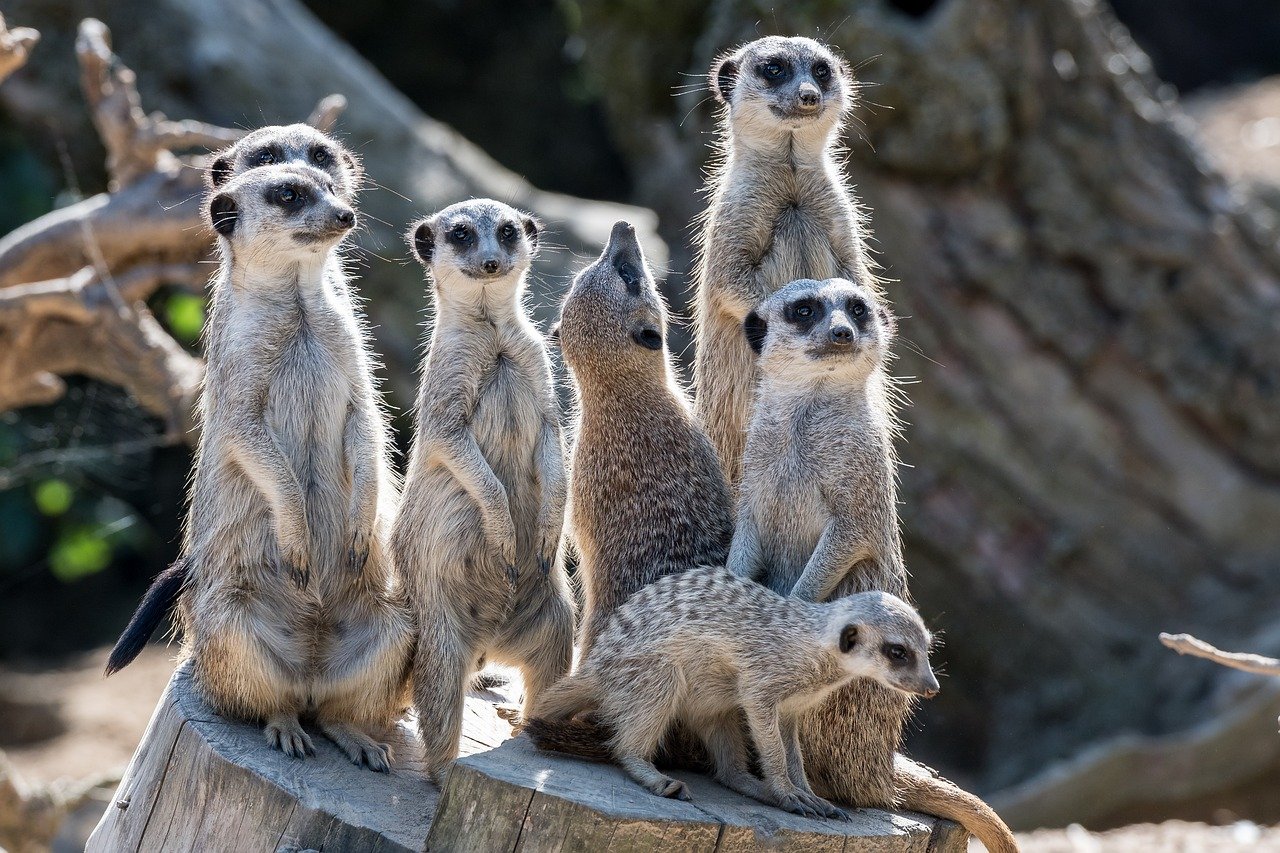
Meerkats are small, social animals that live in dry and sandy areas. They are known for standing on their back legs and looking around carefully. This cute pose is not just for fun. It helps them watch for danger. Meerkats are brave, smart, and very good at teamwork.
Even though they are small, meerkats are strong survivors. They live in groups and support each other. In this article, we will learn about meerkats in very simple words, including their body features, habitat, food, behavior, family life, and importance in nature.
What Is a Meerkat?
A meerkat is a small mammal that belongs to the mongoose family. Its scientific name is Suricata suricatta. Meerkats have slim bodies, small pointed faces, dark patches around their eyes, and long tails.
They usually grow about 25 to 35 centimeters long, not including the tail. Their weight is around 0.6 to 1 kilogram. Their fur is light brown or gray with dark stripes on the back.
The dark circles around their eyes help reduce sunlight glare. This makes it easier for them to see in bright desert areas.
Where Do Meerkats Live?
Meerkats live in southern Africa. They are commonly found in countries like Botswana, Namibia, and South Africa. One famous place where they live is the Kalahari Desert.
They prefer dry grasslands, deserts, and open plains. These areas have soft soil, which helps them dig burrows easily.
Meerkats build underground homes called burrows. These burrows protect them from heat during the day and cold at night. The burrow also keeps them safe from predators.
What Do Meerkats Eat?
Meerkats are mostly insect-eaters, but they also eat other small animals. Their diet includes:
-
Insects
-
Beetles
-
Spiders
-
Scorpions
-
Small reptiles
-
Small birds
-
Fruits and roots
They are very good at hunting scorpions. Meerkats can remove the stinger before eating them. They are also immune to some scorpion venom, which helps them survive.
They search for food during the day. Meerkats use their strong claws to dig in the sand and find insects underground.
Social Life of Meerkats
Meerkats are very social animals. They live in groups called mobs, gangs, or clans. A group can have 10 to 40 members.
Each group has a leader, usually a dominant female. She makes important decisions for the group. Most babies in the group are born to this female.
Meerkats work together in many ways:
-
Some look for food.
-
Some stay on guard to watch for danger.
-
Some take care of the babies.
This teamwork helps them survive in harsh desert conditions.
The Famous Standing Position
One of the most famous things about meerkats is how they stand upright on their back legs. They do this to watch for predators like eagles, snakes, and jackals.
While others search for food, one meerkat acts as a guard. If it sees danger, it makes a sharp warning sound. Then the whole group quickly runs into the burrow.
This system keeps them safe and shows how well they cooperate.
Family and Baby Meerkats
Baby meerkats are called pups. A mother usually gives birth to 2 to 5 pups at a time. The babies are born inside the burrow.
When they are small, other group members help care for them. This is called cooperative breeding. Older brothers and sisters may babysit the pups while adults search for food.
Pups start coming out of the burrow after a few weeks. Adults teach them how to find food and stay safe.
Are Meerkats Dangerous?
Meerkats are not dangerous to humans. They are small and shy animals. If they feel threatened, they try to hide instead of attack.
However, they can defend themselves if needed. They have sharp teeth and claws. But their main protection is teamwork and quick warning calls.
Predators of Meerkats
Meerkats face many dangers in the wild. Their main predators include:
-
Eagles and hawks
-
Snakes
-
Jackals
Because they are small, they must always stay alert. Their group system helps them avoid many attacks.
Importance of Meerkats in Nature
Meerkats play an important role in their ecosystem. By eating insects, they help control insect populations. This keeps the balance in their habitat.
Their digging also helps the soil. It allows air and water to go deeper into the ground, which helps plants grow. Other animals sometimes use old meerkat burrows as shelter.
Meerkats and Humans
Meerkats are popular animals in zoos and wildlife programs. Many people love them because of their cute behavior and social lifestyle.
They also became very famous because of the character Timon in the movie The Lion King. This made more people interested in learning about real meerkats.
In the wild, meerkats are not currently endangered. However, habitat loss and climate change can affect their populations.
Interesting Facts About Meerkats
-
Meerkats can close their ears while digging to keep sand out.
-
They have strong claws for digging tunnels.
-
A group may have many burrows and move between them.
-
They sleep together in the burrow to stay warm.
-
Meerkats teach their young how to handle dangerous prey like scorpions.
-
They communicate using different sounds for different dangers.
Conclusion
Meerkats may be small, but they are brave and intelligent animals. Their teamwork, strong family bonds, and smart survival skills make them special.
They show us how cooperation and communication can help even small animals survive in tough environments.
Meerkats are an important part of nature. By learning about them, we understand how every animal—big or small—has value in the world.
Read Also: Keep your face towards the sunshine and shadows will fall behind you
Watch Also: https://www.youtube.com/@TravelsofTheWorld24





Leave a Reply