
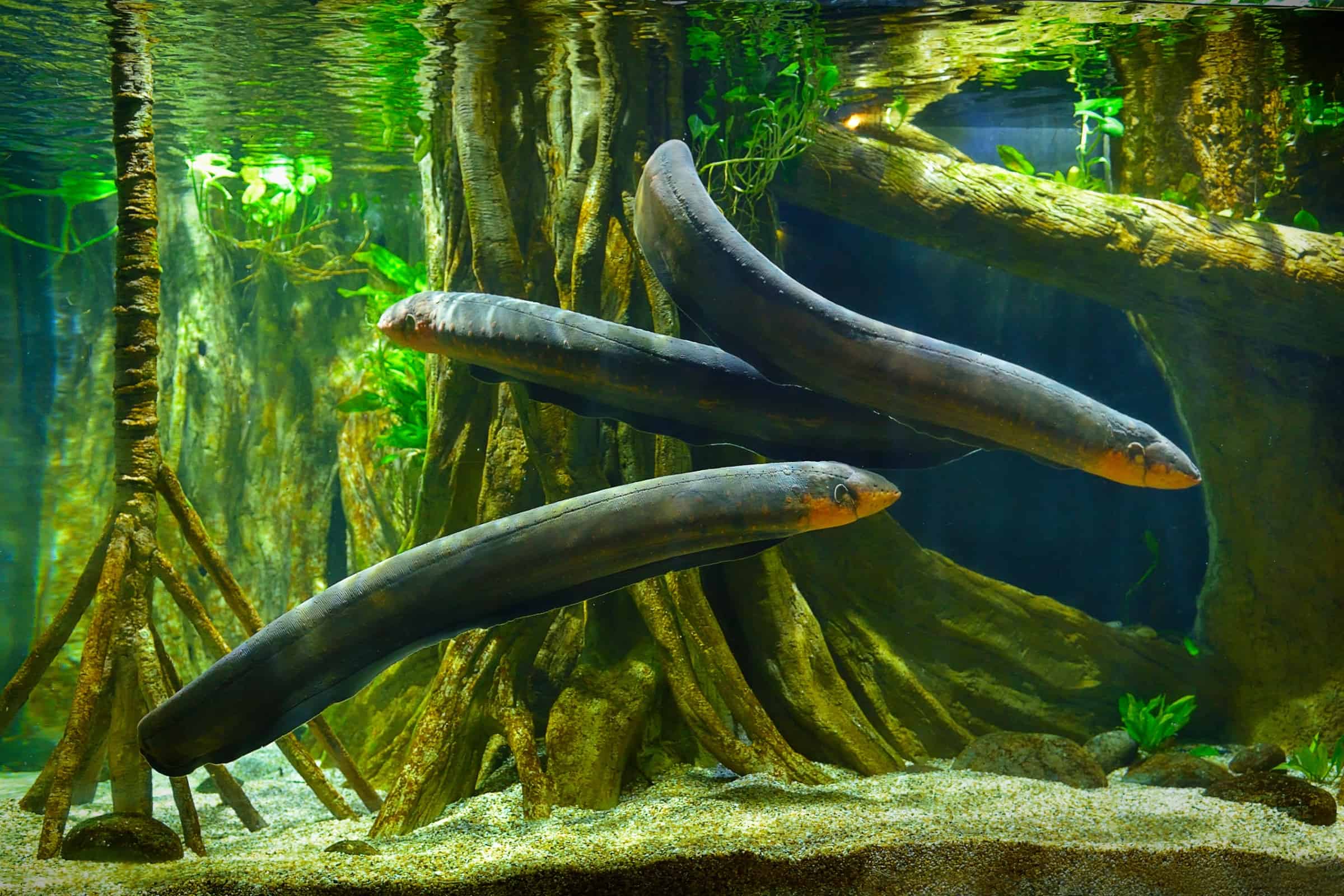
Eels are one of the most interesting and mysterious fish in the world. When people first see an eel, they often think it looks like a snake. Its long, thin body moves in a smooth and wavy way, just like a snake sliding on the ground. But even though eels look like snakes, they are actually fish. They live in water, breathe through gills, and have fins, just like other fish.
Eels can be found in many parts of the world. Some live in oceans, some in rivers, and some travel between both. They have a very special life cycle that makes them different from most other fish. In this article, we will explore everything about eels in simple and easy words. We will talk about their body, types, habitat, life cycle, food, behavior, and their importance in nature.
What Is an Eel?
An eel is a long fish with a smooth body and small fins. Its body is soft and flexible. Most eels do not have large scales like other fish. Their skin is often covered with a slimy layer. This slime helps protect them from bacteria and helps them move easily through water and mud.
Eels have small eyes and a wide mouth filled with sharp teeth. Their teeth help them catch and hold their prey. Even though they look slow, eels can move very quickly when hunting or escaping danger.
There are more than 800 types of eels in the world. They come in many sizes. Some are very small, only a few inches long. Others can grow more than 10 feet long. The giant moray eel is one of the largest types.
Types of Eels
There are many different types of eels, but we will talk about some of the most well-known ones.
1. Moray Eel
Moray eels live in warm ocean waters, especially near coral reefs. They are known for their scary look. They often keep their mouths open, which makes them look angry. But they are not always dangerous. They open and close their mouths to breathe.
Moray eels hide in rocks and coral during the day. At night, they come out to hunt. They eat fish, crabs, and octopus.
2. Electric Eel
The electric eel is one of the most famous eels. It is found in rivers in South America. Even though it is called an eel, it is not a true eel. It is actually a type of knifefish.
Electric eels can produce electricity. They use electric shocks to catch prey and protect themselves. The shock can be very strong, sometimes up to 600 volts. That is enough to hurt a human.
3. Freshwater Eel
Freshwater eels live in rivers and lakes. The European eel and American eel are examples. These eels have an amazing life journey. They are born in the ocean but grow up in freshwater rivers. Later, they return to the ocean to lay eggs.
4. Conger Eel
Conger eels live in the ocean and can grow very large. Some can reach up to 10 feet long. They usually live in deep water and are active at night.
Where Do Eels Live?
Eels live in many different places around the world. Some live in warm tropical oceans, while others live in cold rivers. They are very adaptable animals.
Ocean eels often live near coral reefs, rocky areas, or sandy bottoms. They like places where they can hide. Freshwater eels live in rivers, lakes, and streams. They often hide under rocks, in mud, or among plants.
One of the most amazing things about some eels is their migration. For example, the European eel travels thousands of kilometers from European rivers to the Sargasso Sea in the Atlantic Ocean to lay eggs. After laying eggs, the adult eel dies. The baby eels then travel all the way back to Europe. This journey can take several years.
Life Cycle of an Eel
The life cycle of an eel is very unique and interesting.
-
Egg Stage – Eels lay eggs in the ocean. The exact place where some species lay eggs was unknown for many years, which made them mysterious.
-
Larva Stage – After hatching, baby eels look very different from adult eels. They are flat and transparent. These baby eels are called leptocephali. They float in ocean currents and slowly travel long distances.
-
Glass Eel Stage – As they grow, they become small and transparent. At this stage, they are called glass eels because their bodies look clear like glass.
-
Elver Stage – When they start entering rivers, they turn darker. At this stage, they are called elvers.
-
Adult Stage – They grow into adult eels and live for many years in rivers or oceans. When they are ready to reproduce, they travel back to the ocean to lay eggs, and the cycle begins again.
This long journey and body changes make eels very special among fish.
What Do Eels Eat?
Eels are carnivores. This means they eat other animals. Their diet depends on their size and type.
Small eels eat insects, worms, and small fish. Larger eels eat fish, crabs, shrimp, and even octopus. Moray eels are strong hunters. They hide and suddenly attack their prey.
Eels usually hunt at night. They have a strong sense of smell, which helps them find food in dark water.
Behavior of Eels
Eels are usually shy and secretive. They like to hide during the day. Many eels are active at night. This is called being nocturnal.
They move in a wave-like motion. Their flexible body allows them to swim forward and backward easily. Some eels can even move across wet grass for a short time if they need to travel between water areas.
Moray eels sometimes work together with groupers (another type of fish) to hunt. This teamwork helps both animals catch more food.
Electric eels use electric signals not only to attack but also to communicate and find their way in muddy water.
Are Eels Dangerous?
Most eels are not dangerous to humans. They usually avoid people. However, if they feel threatened, they may bite.
Moray eels have sharp teeth and can bite if someone tries to touch them. Electric eels can give a strong shock, which can be painful and sometimes dangerous.
It is always best to respect wild animals and not disturb them in their natural habitat.
Importance of Eels in Nature
Eels play an important role in the ecosystem. They help control the population of smaller animals like fish and insects. They are also food for larger animals such as birds, big fish, and mammals.
In some countries, eels are an important food source for humans. In Japan, grilled eel, called unagi, is very popular. In Europe, smoked eel is also eaten.
However, eel populations are decreasing in many places. Pollution, overfishing, dams, and climate change are affecting them. Dams block their migration routes, which makes it hard for them to complete their life cycle.
Because of this, some types of eels are now endangered. Many countries are working to protect them by limiting fishing and improving river systems.
Interesting Facts About Eels
-
Some eels can live more than 20 years.
-
Electric eels can jump out of water to shock threats.
-
Moray eels have a second set of jaws inside their mouth to hold prey.
-
Baby eels are almost transparent.
-
Eels have been a mystery for scientists for hundreds of years because no one could find where they laid eggs.
Eels in Culture and Stories
Eels have appeared in many stories and traditions. In some cultures, they are seen as mysterious creatures because of their snake-like shape. In old times, people believed eels were born from mud because they could not see eel eggs.
In some Asian countries, eel is believed to give strength and energy. It is eaten during hot summer days.
Conclusion
Eels are truly amazing and mysterious fish. They may look like snakes, but they are fish with unique features and behaviors. From their long bodies and sharp teeth to their incredible migration journeys, eels are very special animals.
Some live in oceans, some in rivers, and some travel between both. Their life cycle is one of the most interesting in the animal world. They play an important role in nature and in human culture.
Even though many people feel scared when they see an eel, these creatures are mostly shy and peaceful. They prefer to hide and avoid trouble. Like all animals, they deserve protection and respect.
By learning about eels, we can better understand the beauty and mystery of life under the water.
Read Also: Keep your face towards the sunshine and shadows will fall behind you
Watch Also: https://www.youtube.com/@TravelsofTheWorld24








Leave a Reply