
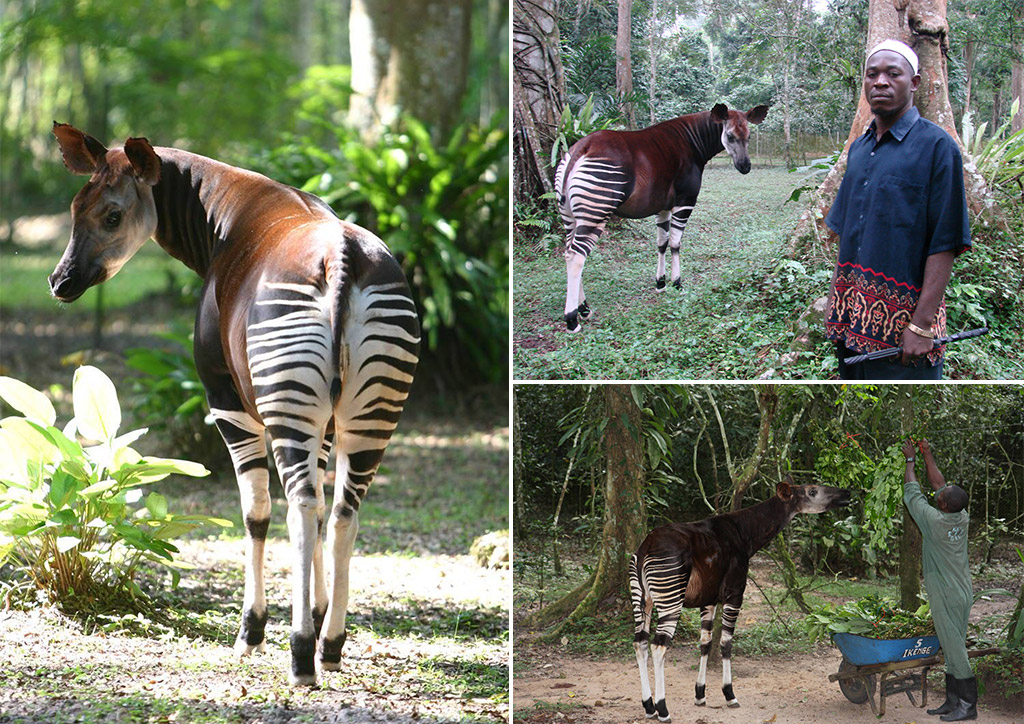
The okapi is one of the most unique and mysterious animals in the world. It lives deep inside the rainforests of Central Africa and is closely related to the giraffe. At first glance, many people think the okapi looks like a mix between a zebra and a deer because of its striped legs and smooth brown body. But in truth, it is a special animal with its own identity.
The okapi is quiet, shy, and prefers to live alone. It spends most of its time walking slowly through thick forests, eating leaves and staying hidden from danger. Even though it was officially discovered by scientists in 1901, local people in Congo knew about this animal for many years before that.
Let’s explore more about this calm and beautiful forest animal.
Where Okapis Live
Okapis live only in one country in the world — the Democratic Republic of Congo in Central Africa. They are found in dense tropical rainforests, especially in a region called the Ituri Forest.
These forests are thick, green, and full of tall trees, plants, and bushes. Okapis need this kind of environment because it gives them food and protection. The thick trees and plants help them hide from predators.
They prefer areas near small rivers and streams because they need fresh water every day. Since they are very shy, they stay away from open areas and human settlements.
Physical Appearance
The okapi has a very special look. Its body is dark reddish-brown, which helps it blend in with the forest shadows. Its legs have black and white stripes, just like a zebra. These stripes are very helpful because they break up the shape of the animal’s body and make it harder for predators to see them clearly in the forest.
An adult okapi stands about 5 to 6 feet tall at the shoulder. It can weigh between 200 to 350 kilograms.
One interesting feature of the okapi is its long, flexible tongue. Its tongue can grow up to 18 inches long. It uses this tongue to pull leaves from branches and even clean its own eyes and ears. Like giraffes, okapis also have a strong digestive system that helps them eat tough leaves.
Their ears are large and very sensitive. This helps them hear even small sounds in the forest, which is important for staying safe.
Relation to the Giraffe
Even though the okapi looks different from a giraffe, they are close relatives. Both animals belong to the same family called Giraffidae.
The okapi has a shorter neck compared to a giraffe, but their body structure and long tongue show their connection. Scientists believe that millions of years ago, both animals shared a common ancestor. Over time, they adapted to different environments. The giraffe moved to open grasslands, while the okapi stayed in the forest.
Because of this, the okapi is sometimes called the “forest giraffe.”
Behavior and Lifestyle
Okapis are solitary animals. This means they prefer to live alone. They do not form groups like zebras or antelopes. Each okapi has its own territory.
They mark their area using scent glands on their feet and by leaving droppings in certain places. This tells other okapis that the area is already taken.
Okapis are mostly active during the day, especially in the early morning and late afternoon. During the hottest part of the day, they rest quietly in shaded areas.
They move slowly and carefully through the forest. Instead of running fast, they depend on staying hidden and silent to avoid danger.
What Okapis Eat
Okapis are herbivores, which means they eat only plants. Their diet includes:
-
Leaves
-
Buds
-
Twigs
-
Fruits
-
Ferns
-
Mushrooms
They use their long tongue to grab leaves from branches. They can even eat leaves from thorny plants without hurting themselves.
Okapis eat many different types of plants. This helps keep the forest balanced. When they eat fruits, they spread seeds through their droppings. This helps new plants grow in different areas.
Predators and Dangers
In the wild, the main natural predator of the okapi is the leopard. Leopards are strong and fast, and they can move quietly in the forest. Young calves are more at risk because they are smaller and weaker.
However, the biggest threat to okapis today is humans. Deforestation, illegal hunting, and mining activities destroy their habitat. When forests are cut down, okapis lose their homes and food sources.
Because of these threats, okapis are now considered endangered. This means they are at risk of becoming extinct if not protected.
Reproduction and Baby Okapis
Female okapis give birth to one baby at a time. The pregnancy lasts about 14 to 16 months, which is quite long.
When the baby is born, it can stand up within a short time. But instead of walking around freely, the mother hides her baby in thick bushes. The baby stays quiet and hidden for several weeks. This helps protect it from predators.
The mother returns several times a day to feed the baby with milk. After a few months, the calf becomes stronger and starts following its mother.
Young okapis stay with their mothers for about one year before becoming independent.
Special Adaptations
Okapis have many special features that help them survive:
-
Striped legs help them blend into forest shadows.
-
Long tongue helps them reach leaves and clean themselves.
-
Large ears help detect danger quickly.
-
Strong legs allow them to walk easily through thick plants.
-
Quiet behavior helps them stay hidden from predators.
All these features make the okapi perfectly suited for life in dense rainforests.
Importance in Nature
Okapis play an important role in the rainforest ecosystem.
By eating leaves and fruits, they help control plant growth. By spreading seeds, they help new plants grow. They also provide food for predators like leopards.
Protecting okapis also helps protect many other animals and plants that live in the same forest. So saving the okapi means saving the rainforest too.
Conservation Efforts
There are special protected areas in Congo where okapis are safe from hunting. One important place is the Okapi Wildlife Reserve.
Wildlife organizations work hard to:
-
Stop illegal hunting
-
Protect forests
-
Educate local communities
-
Study okapi behavior
Zoos around the world also help by caring for okapis and raising awareness about their situation.
Still, more effort is needed to protect their habitat and reduce forest destruction.
Interesting Facts About Okapis
Here are some fun facts about okapis:
-
Okapis were unknown to the Western world until 1901.
-
Their tongue is long enough to clean their own ears.
-
They are one of the few large mammals that live only in one country.
-
Baby okapis do not poop for the first few weeks to avoid attracting predators.
-
They are very quiet animals and rarely make loud sounds.
Conclusion
The okapi is a rare and beautiful animal that lives quietly in the forests of Central Africa. With its striped legs, long tongue, and gentle nature, it is truly one of the most unique animals in the world.
Even though it is related to the giraffe, it has its own special way of life. It moves slowly through the forest, eats leaves and fruits, and plays an important role in keeping the ecosystem healthy.
Sadly, the okapi is endangered because of habitat loss and hunting. Protecting forests and spreading awareness are important steps to make sure this shy forest animal continues to live for many years to come.
The okapi reminds us that some of the most amazing creatures in the world live quietly and hidden, waiting to be protected and respected.
Read Also: Keep your face towards the sunshine and shadows will fall behind you
Watch Also: https://www.youtube.com/@TravelsofTheWorld24





Leave a Reply