
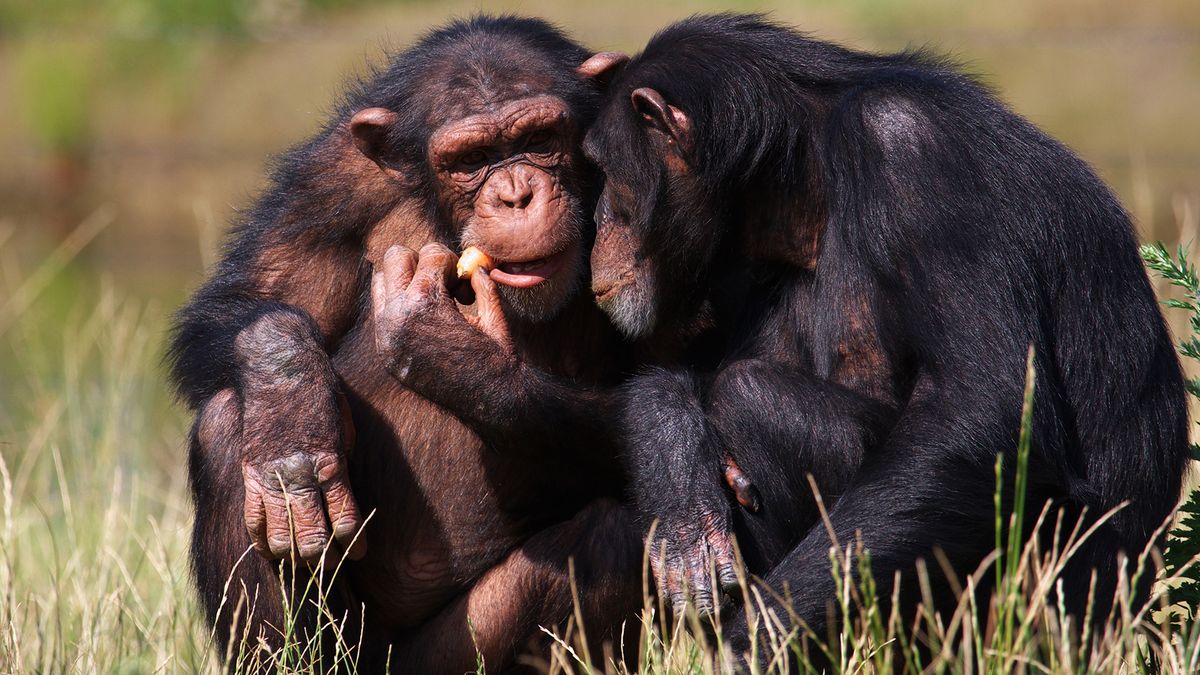
Chimpanzees are one of the most intelligent and interesting animals in the world. They look a bit like humans, and this is not just by chance. Chimpanzees share a very large part of their DNA with humans. Because of this, they are often called our closest living relatives in the animal world. They can show emotions, solve problems, use tools, and even communicate in smart ways.
Chimpanzees live mostly in Africa. They are strong, social, and very active animals. In this article, we will talk in detail about chimpanzees, their home, body, behavior, food, family life, intelligence, and the dangers they face.
Where Chimpanzees Live
Chimpanzees are found in central and western Africa. They live in countries like Uganda, Tanzania, Congo, Cameroon, and others. They mostly live in tropical rainforests, but they can also live in woodlands and grassy areas.
They like places where there are many trees. Trees are very important for them because they climb trees to find food, to rest, and to stay safe from danger. At night, chimpanzees build nests in trees using branches and leaves. They sleep in these nests to stay comfortable and protected.
Chimpanzees need large areas of forest to survive. Sadly, many forests are being cut down, which makes life harder for them.
Physical Appearance
Chimpanzees have black or dark brown hair covering most of their bodies. Their face, ears, hands, and feet have less hair. Their face can be pink or dark, depending on their age and type.
They have long arms and shorter legs. Their arms are very strong and longer than their legs. This helps them swing from branch to branch and climb trees easily. They usually walk on the ground using their knuckles. This way of walking is called knuckle-walking.
An adult male chimpanzee can weigh between 40 to 60 kilograms. Females are usually smaller. Even though they are not as big as gorillas, chimpanzees are very strong. They are much stronger than humans.
Social Life and Groups
Chimpanzees are very social animals. They live in groups called communities. A community can have 20 to over 100 members. However, they do not all stay together at the same time. They often split into smaller groups during the day to look for food. Later, they come back together.
Each community has a leader, usually a strong and smart male. This leader is called the alpha male. The alpha male protects the group and keeps order. But he does not always stay leader forever. Other males may challenge him.
Chimpanzees form strong friendships. They groom each other by cleaning each other’s fur. Grooming helps remove dirt and insects, but it also builds trust and friendship.
They can show emotions like happiness, anger, fear, and even sadness. Sometimes they hug or pat each other to show comfort.
Communication
Chimpanzees have many ways to communicate. They use sounds, facial expressions, and body movements. They scream, grunt, bark, and hoot to send different messages.
For example, they may shout loudly to warn others about danger. They may make soft sounds while grooming to show they feel safe. Their facial expressions are also very clear. A wide open mouth may show excitement. Bared teeth may show fear.
They also use hand gestures. Young chimpanzees learn these gestures from older ones. Communication is very important for their survival and social life.
Intelligence and Tool Use
Chimpanzees are very intelligent. They can solve problems and learn from experience. One of the most amazing things about chimpanzees is that they use tools.
For example, when they want to eat termites, they use a small stick. They put the stick into the termite nest. The termites climb onto the stick, and then the chimpanzee pulls it out and eats them. This shows planning and thinking.
They also use stones to break hard nuts. They choose the right stone and hit the nut until it opens. Young chimpanzees learn this by watching adults.
In some studies, chimpanzees have learned to use simple sign language to communicate with humans. This shows how smart they really are.
Food and Diet
Chimpanzees are mostly fruit-eaters, but they are not fully vegetarian. They eat fruits, leaves, seeds, flowers, and bark. Fruits are their favorite food.
They also eat insects like termites and ants. Sometimes, they hunt small animals like monkeys. Hunting is usually done by a group of males working together. After catching prey, they share the meat.
Sharing food is important in their social system. It helps build friendships and alliances.
Chimpanzees spend many hours each day looking for food. They travel long distances in the forest to find ripe fruits.
Family Life and Baby Chimpanzees
A baby chimpanzee is called an infant. A mother usually gives birth to one baby at a time. Twins are rare. The baby is very small and weak at birth.
The mother takes very good care of her baby. The baby holds tightly to its mother’s fur and travels everywhere with her. At first, it stays on her chest. Later, it rides on her back.
Young chimpanzees depend on their mothers for many years. They learn how to find food, build nests, and behave in the group by watching their mother and others.
The bond between a mother and baby chimpanzee is very strong. If a mother loses her baby, she may show signs of deep sadness.
Daily Life
Chimpanzees wake up early in the morning. After leaving their tree nests, they start searching for food. During the day, they eat, groom, rest, and move around.
In the afternoon, they may rest in the shade. Young ones often play with each other. Play is important because it helps them learn social skills and build strength.
Before sunset, they build new nests in trees to sleep. Each chimpanzee usually builds its own nest.
Differences Between Chimpanzees and Bonobos
Chimpanzees have a close relative called the bonobo. Bonobos look similar but are generally more peaceful and gentle. Chimpanzees can sometimes be aggressive, especially males fighting for leadership.
Both chimpanzees and bonobos share many similarities with humans, but they have different social behaviors.
Enemies and Dangers
In the wild, chimpanzees may face danger from large predators like leopards. However, their biggest threat is humans.
Many forests are being cut down for farming and building. This destroys chimpanzee habitats. Some people hunt chimpanzees for bushmeat. Others capture baby chimpanzees to sell as illegal pets.
Diseases can also spread from humans to chimpanzees. Because they are so similar to us, they can catch some of the same illnesses.
Due to these threats, chimpanzees are now considered endangered. Their numbers are decreasing.
Importance in Nature
Chimpanzees play an important role in the forest. When they eat fruits, they spread seeds through their waste. This helps new plants and trees grow.
They help keep the forest healthy and balanced. Without animals like chimpanzees, the ecosystem would suffer.
They are also important for science. By studying chimpanzees, scientists learn more about human behavior, emotions, and evolution.
Conservation and Protection
Many organizations are working to protect chimpanzees. National parks and wildlife reserves have been created to give them safe places to live.
Education is also important. When local communities understand the value of wildlife, they are more likely to protect it.
Rescue centers care for orphaned chimpanzees and try to give them a better life.
Protecting forests is one of the most important steps. Without forests, chimpanzees cannot survive.
Fun Facts About Chimpanzees
Here are some interesting facts:
-
Chimpanzees share about 98% of their DNA with humans.
-
They can recognize themselves in a mirror.
-
They use more than 30 different sounds to communicate.
-
They can live up to 40 to 50 years.
-
They make new nests every night.
-
They can show emotions like joy and grief.
Conclusion
Chimpanzees are amazing animals. They are smart, social, and very close to humans in many ways. They live in African forests, move in groups, use tools, and take great care of their young.
Even though they are strong and intelligent, they face serious dangers because of human actions. Forest destruction, hunting, and illegal trade have reduced their numbers.
It is our responsibility to protect them. By saving forests and supporting conservation efforts, we can help ensure that chimpanzees continue to live and thrive in the wild.
Chimpanzees are not just wild animals. They are living beings with emotions, intelligence, and social bonds. Learning about them helps us understand not only nature, but also ourselves.
Read Also: Keep your face towards the sunshine and shadows will fall behind you
Watch Also: https://www.youtube.com/@TravelsofTheWorld24







Leave a Reply