
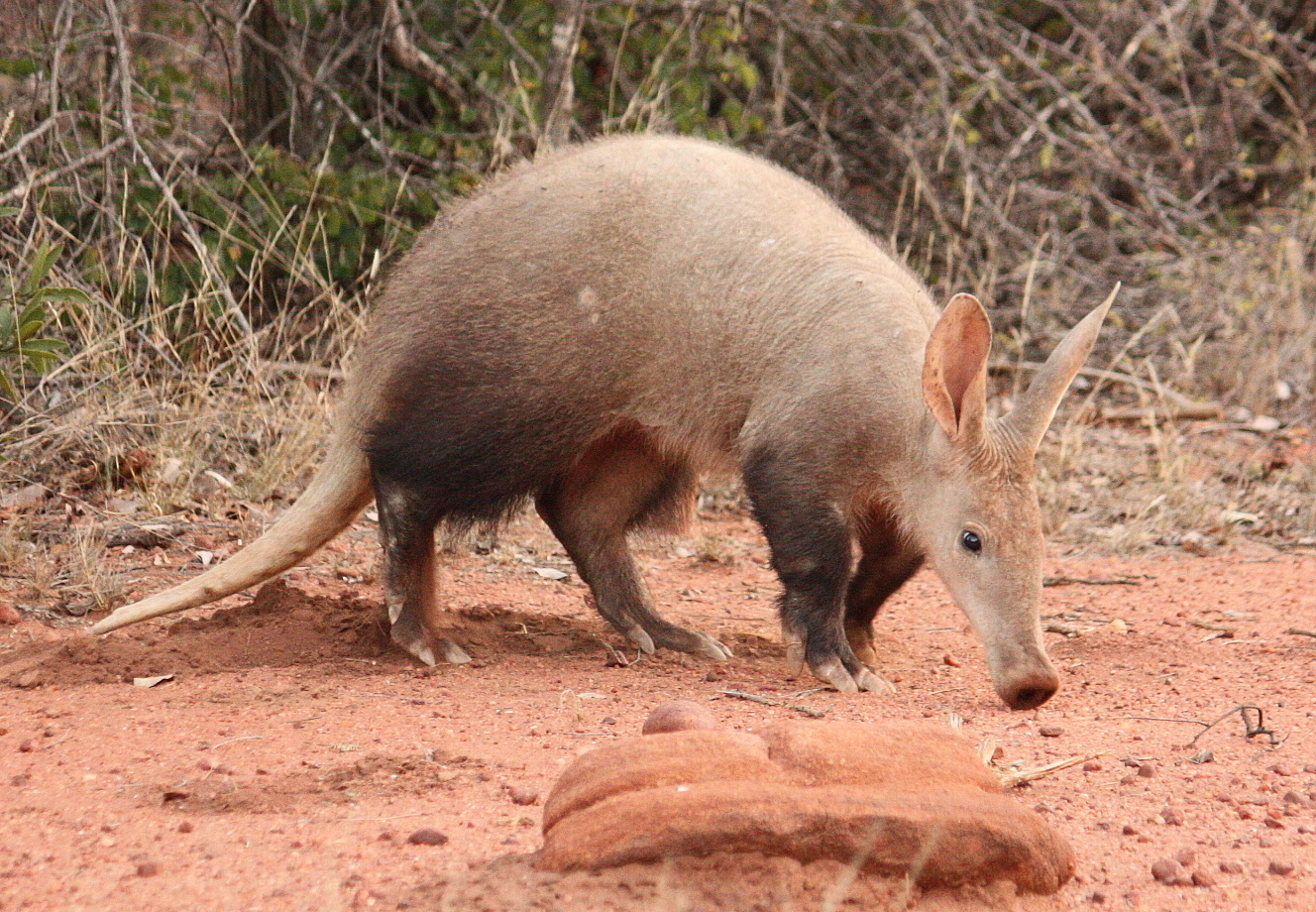
The aardvark is a very unique animal that lives in Africa. It looks a little strange but is very interesting. Aardvarks are mostly active at night, which makes them nocturnal. They have long ears, a long snout, and a sticky tongue that helps them eat ants and termites. Even though they are not very fast, they are very good at digging and finding food underground.
Aardvarks are shy and quiet animals. They like to live alone and spend most of their life digging burrows or searching for insects. They are an important part of the ecosystem because they help control insect populations.
Where Aardvarks Live
Aardvarks are found all across sub-Saharan Africa. They live in grasslands, savannas, woodlands, and sometimes in deserts. They prefer areas with plenty of termites and ants, which are their main food sources.
They like soft soil because it is easier to dig burrows. Burrows are very important for aardvarks. They sleep in them during the day to stay cool and safe from predators.
Physical Appearance
Aardvarks have a very unusual appearance. They are medium-sized animals, about 3 to 4 feet long, not including their tail. They have a long, pig-like snout, large ears, and small eyes. Their fur is usually pale brown or gray.
They have strong legs and sharp claws for digging. Their tail is thick and tapers at the end. Aardvarks have a long, sticky tongue, which can be up to 12 inches long. This tongue is perfect for licking up ants and termites from deep inside nests.
Their teeth are different from most other animals. They do not have front teeth, and their back teeth are special and grow continuously. This helps them eat insects without wearing out their teeth.
What Aardvarks Eat
Aardvarks are insect eaters, or insectivores. They mainly eat ants and termites, but sometimes they eat other small insects.
To find food, aardvarks dig into termite mounds or ant hills. They use their strong claws to break the hard surface. Then they use their long tongue to collect insects. They can eat thousands of ants or termites in one night.
Aardvarks have a strong sense of smell, which helps them locate insect nests underground. They can dig very fast to reach their food before the insects escape.
Aardvark Behavior
Aardvarks are mostly nocturnal. This means they are active at night and sleep during the day. They are solitary animals, which means they live alone most of the time.
They are excellent diggers. Their burrows are usually deep and long, sometimes more than 30 feet. These burrows keep them safe from predators and extreme heat during the day. Aardvarks often have several burrows in their territory.
Even though they are shy, aardvarks are very strong. They can dig quickly and run if a predator comes too close.
Predators of Aardvarks
Aardvarks have some natural enemies. Lions, leopards, hyenas, and large snakes may attack them. However, aardvarks are good at escaping. They can run into their burrows quickly, and their digging skills make it hard for predators to follow them underground.
They also use their strong claws and teeth for defense if needed.
Reproduction and Baby Aardvarks
Female aardvarks usually give birth to only one baby at a time, called a cub. The pregnancy lasts about seven months. A cub is born with soft fur and closed eyes, which open after about two weeks.
The mother takes care of her cub in a burrow for several months. The cub starts eating insects after about three months but stays with the mother for some time to learn survival skills.
Aardvarks can live around 10 to 23 years in the wild, depending on food availability and safety.
Adaptations for Survival
Aardvarks have many special adaptations that help them survive in tough environments.
-
Strong claws – For digging burrows and insect nests.
-
Long tongue – For eating ants and termites.
-
Good sense of smell – To locate insects underground.
-
Nocturnal lifestyle – Being active at night helps avoid predators and heat.
-
Thick skin and fur – Protects them from insect bites and rough terrain.
-
Special teeth – Continuously growing teeth help grind insects without wearing out.
These adaptations make the aardvark one of the most successful nocturnal insect eaters in Africa.
Aardvarks and the Ecosystem
Aardvarks are very important for their environment. By eating ants and termites, they control insect populations. Without aardvarks, termite and ant numbers could grow too large and damage plants.
Their burrows also help other animals. After an aardvark leaves a burrow, other animals like foxes, snakes, and lizards use it as shelter. This makes the aardvark a “keystone species,” meaning many animals depend on its burrows for survival.
Interesting Facts About Aardvarks
-
The word “aardvark” comes from Afrikaans and means “earth pig.”
-
They are excellent swimmers and can cross rivers if needed.
-
Their burrows can be more than 30 feet long.
-
Aardvarks can eat up to 50,000 insects in one night.
-
They have no front teeth, and their back teeth grow continuously.
-
They can run very fast for short distances to escape predators.
Aardvarks and Humans
Aardvarks are usually shy and avoid humans. In some African cultures, aardvarks are part of traditional stories and folklore. People respect them for their ability to survive in harsh environments.
Aardvarks are not hunted widely because their meat is not commonly eaten. However, their habitats are sometimes threatened by farming and human settlements. Protecting their natural environment is important for their survival.
Why Aardvarks Are Unique
Aardvarks are unique because of their appearance and behavior. They do not look like most other mammals. Their long snout, large ears, and digging abilities make them one-of-a-kind.
They are peaceful animals that spend their lives quietly hunting insects and digging burrows. Despite their small size compared to predators, their intelligence and skills help them survive.
Conclusion
The aardvark is a fascinating and important animal in Africa. With its long ears, strong claws, and sticky tongue, it is perfectly built to hunt insects and survive in deserts and grasslands.
It is mostly active at night, lives in burrows, and avoids predators. Aardvarks are solitary but play a big role in the ecosystem by controlling insect populations and providing burrows for other animals.
They are a symbol of how animals can adapt and thrive in tough conditions. Watching or learning about an aardvark reminds us of nature’s creativity and the importance of protecting wildlife.
Aardvarks may be shy and strange-looking, but they are true survivors of the African night.
Read Also: Keep your face towards the sunshine and shadows will fall behind you
Watch Also: https://www.youtube.com/@TravelsofTheWorld24





Leave a Reply