
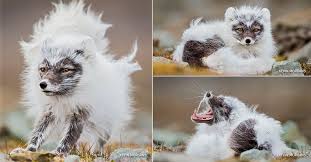
Greenland’s Arctic Fox: The Fox That Changes with the Seasons
The Arctic fox is one of the most incredible animals in the Arctic, including Greenland. It lives where most animals would struggle — in freezing cold, icy land where winter lasts a long time. Despite the harsh conditions, this fox is built to survive and even thrive there.
Arctic foxes are small, tough predators that live in the snowy tundra and icy coasts of the far north. Greenland is one of their homes, and there they live among ice, snowfields, and open tundra, hunting and exploring in places where few other mammals can survive.
What Does an Arctic Fox Look Like?
The Arctic fox is not very big — about the size of a small dog or large cat — but what it lacks in size it makes up for in features that help it handle extreme cold.
-
In winter, its fur becomes thick and white, blending perfectly with snow and ice. This helps it hide from both prey and predators.
-
In summer, its coat changes to brown, gray, or bluish shades so it can blend in with rocks and tundra plants.
-
Its body is compact, with short legs and small ears, which helps reduce heat loss. Its paws are covered in fur too, acting like natural snow boots that stop it from slipping.
These fur and body traits are why the Arctic fox survives in temperatures that can drop far below freezing.
Where Do They Live in the Arctic?
Arctic foxes are found across the Arctic tundra, including northern parts of North America, Europe, and Greenland.
In Greenland, you might spot them along the coast and even deep in the interior tundra. There are a few types of Arctic foxes — some live more inland with snowy coats, and others live near the coast with darker fur to match rocky shores.
How They Live and Hunt
Arctic foxes are clever and tough. They don’t hibernate — even in the coldest months they stay active. These foxes are mostly nomadic, meaning they move around a lot looking for food, especially when resources are low.
They are not picky eaters. When they find food, they take it. Their favourite meals include:
-
Lemmings and other small rodents — their main food source.
-
Birds and eggs
-
Fish and insects
-
Carrion (leftovers from other predators) — even leftovers from polar bears or wolves.
-
Sometimes they even eat berries or seaweed when available.
When food is plentiful, Arctic foxes store extra food in their dens to eat later, kind of like a natural freezer.
Family Life and Babies
Arctic foxes usually mate for life during the breeding season. The time when they mate is usually from late winter to spring.
The mom gives birth to a litter of pups (young foxes) in a cozy den. These dens can have many entrances and tunnels — sometimes the same den is used for generations.
The number of pups can change based on how much food is available. In good years, a mother fox might have a large number of pups.
Both parents help care for the young. The pups stay in the den for several weeks before they start exploring the world. Eventually they grow up and learn how to hunt and survive on their own.
How They Stay Warm
Arctic foxes are famous for being masters of cold. Their thick fur is one of the warmest of all Arctic animals. Scientists say their coat keeps them warm in temperatures as low as -50°C (–58°F).
They also curl up with their bushy tail wrapped around their face and body to stay even warmer.
All these features make the Arctic fox one of the few mammals that can live year‑round in places where few others can survive.
Life in Greenland
In places like Northeast Greenland National Park, one of the largest protected areas in the world, Arctic foxes are often seen roaming around in search of food. These protected lands are important because they give foxes space to hunt, raise young, and stay safe from threats.
Predators and Challenges
Living in the Arctic is not easy. Even though these foxes are tough, they still face danger. Bigger predators like polar bears and arctic wolves may eat them if given the chance.
Also, their main food — lemmings — goes up and down in number each year, which affects how many pups a fox family can raise.
Climate change is making life harder too. As the Arctic warms, snow and ice patterns change, and the animals that foxes depend on can become less common. This can make survival more difficult for them over time.
Why Arctic Foxes Are Amazing
The Arctic fox is a true survivor. It lives in one of the harshest places on Earth, yet it finds ways to stay warm, find food, raise its young, and keep moving across icy landscapes. Its coat changing color with the seasons is one of nature’s clever tricks.
They are small but strong, clever but tough — and they show how life can adapt even in the coldest corners of the planet.
Conclusion
The Arctic fox of Greenland and the Arctic is a remarkable creature built for life in ice and snow. From its changing fur to its clever hunting and survival skills, it stands out as one of the Arctic’s most fascinating animals. Caring about them and protecting their habitat helps keep these amazing foxes part of the Arctic world for future generations.
Read Also: Keep your face towards the sunshine and shadows will fall behind you
Watch Also: https://www.youtube.com/@TravelsofTheWorld24






Leave a Reply