
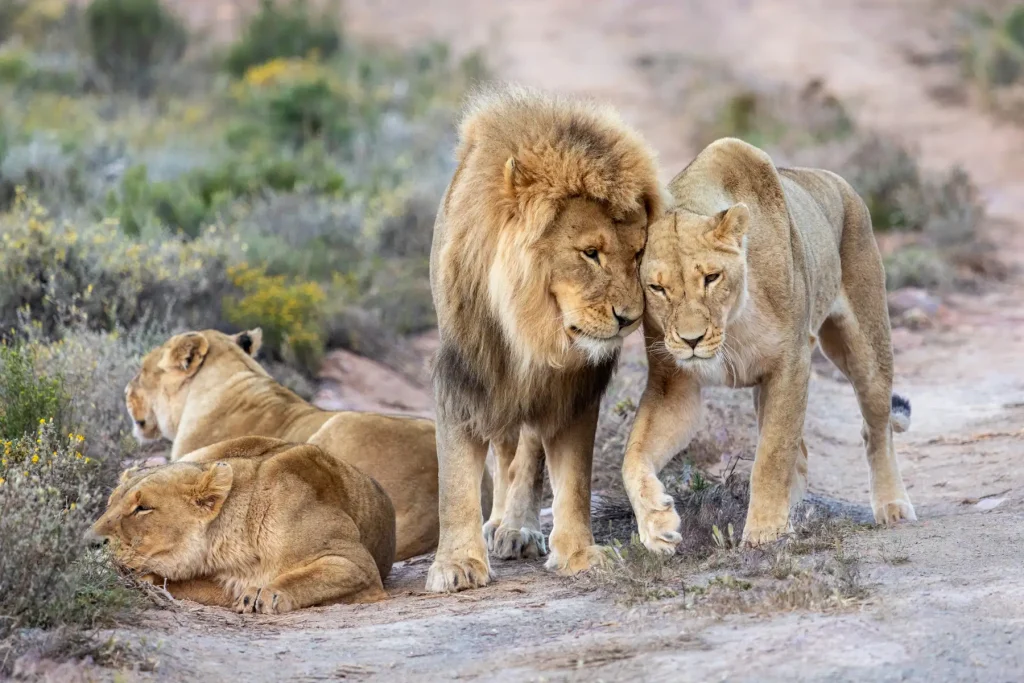
The lion is one of the most famous and powerful animals in South Africa, a country in Africa known for its wildlife, safaris, and vast savannas. Lions are called the “king of the jungle” because of their strength, courage, and the way they rule their territory.
Lions are not only important predators in nature—they also play a big role in culture, stories, and tourism. Watching lions in the wild is one of the most exciting wildlife experiences in the world.
What Is a Lion?
A lion is a large wild cat with a strong body, sharp claws, and powerful jaws. Male lions are famous for their big manes, which make them look larger and more impressive. Female lions, called lionesses, do not have manes but are fast, agile, and excellent hunters.
Lions are social animals. Unlike most cats, which live alone, lions live in groups called prides. A pride usually has a few males, several females, and their young cubs. This social structure helps them protect each other and hunt together.
Appearance and Features
Lions are big and muscular. Males weigh between 150–250 kilograms, while females weigh a bit less, usually 120–180 kilograms. They have short golden fur that blends well with the dry grasslands of South Africa.
Male lions have a mane, which can range from light brown to dark black. The mane protects their necks during fights and signals strength to other lions. Lions also have sharp teeth and strong claws to catch and kill prey.
Where Lions Live
Lions are mostly found in South Africa, especially in national parks and wildlife reserves. Famous places include Kruger National Park, Pilanesberg Game Reserve, and Addo Elephant Park.
They prefer savannas, grasslands, and open woodlands, where they can see prey from far away. Lions need large territories to hunt and raise their cubs, so protected areas are very important for their survival.
Lion Behavior
Lions are social and strategic hunters. Lionesses usually do the hunting in groups, working together to catch zebras, antelopes, wildebeests, and sometimes smaller animals. Males protect the pride and defend the territory from other lions.
Lions are mostly active at night or early morning, when it is cooler. During the day, they rest in the shade to save energy. A lion can sleep or rest for 16–20 hours a day!
Lion Diet
Lions are carnivores, which means they eat only meat. Their diet includes large herbivores like zebras, wildebeests, antelopes, and sometimes young elephants. Lions hunt using strategy, teamwork, and strength.
After a successful hunt, lions eat quickly, often sharing their food with the pride. Lions can also go several days without eating if food is scarce.
Lions and Cubs
Lions raise their young carefully. Female lions give birth to 2–4 cubs after a gestation of about 110 days. Cubs are born blind and small, hiding in tall grass for safety.
All the lionesses in a pride help look after the cubs. Cubs learn to hunt and fight by watching older lions. Growing up in a pride gives them safety, food, and training for the wild.
Lion Communication
Lions communicate in many ways:
-
Roaring – Male lions roar loudly to mark their territory and warn other lions. A lion’s roar can be heard up to 8 kilometers away.
-
Body language – Tail movements, ear positions, and facial expressions show moods.
-
Scent marking – Lions mark their territory with scent to warn outsiders.
Communication helps lions stay organized, protect their pride, and hunt successfully.
Lions in South African Culture
Lions have a strong place in African culture and stories. They are symbols of strength, courage, and leadership. In South African folklore, lions are often admired and respected.
Lions also appear in art, national symbols, and wildlife tourism campaigns. They represent the wild and powerful nature of Africa’s landscapes.
Threats and Conservation
Lions face many dangers:
-
Habitat loss – Farming and human settlements reduce their natural space.
-
Poaching – Lions are hunted illegally for trophies or body parts.
-
Conflict with humans – Lions sometimes attack livestock, causing farmers to harm them.
Because of this, lions are considered vulnerable. South Africa has protected areas and national parks where lions are safe. Conservation groups work to educate people and protect lion habitats.
Lions and Tourism
Seeing lions in the wild is a major reason people visit South Africa. Safaris allow tourists to observe lions in their natural environment. Guides teach visitors how to watch safely and respect the animals.
Tourism helps fund conservation. When people visit parks and pay fees, it supports protecting lions, their prey, and the ecosystem.
Famous Traits of Lions
Lions are famous for:
-
Strength and power – Able to hunt large animals and protect their pride
-
Social behavior – Living and hunting in prides
-
Roaring – Loud, fearsome, and far-reaching
-
Leadership – Male lions defend territory; females hunt
-
Symbolism – Representing courage, pride, and wildlife of Africa
These traits make lions one of the most respected animals on Earth.
Seeing Lions in South Africa
To see lions safely, the best places are national parks and wildlife reserves. Early morning or late afternoon is the best time for sightings.
It’s important to stay in vehicles and follow guides’ instructions. Lions are wild animals—they can be dangerous if approached too closely. Observing them from a safe distance gives the most rewarding experience.
Conclusion
The lion of South Africa, Africa, is a symbol of strength, beauty, and the wild. From the pride that hunts together to the roar that echoes across the savanna, lions show the power of nature.
Protecting lions is important for keeping Africa’s ecosystems balanced and maintaining the wild landscapes that make South Africa famous. Seeing a lion in its natural home is an unforgettable experience, a glimpse of courage and life in the wild.
Read Also: Keep your face towards the sunshine and shadows will fall behind you
Watch Also: https://www.youtube.com/@TravelsofTheWorld24








Leave a Reply