
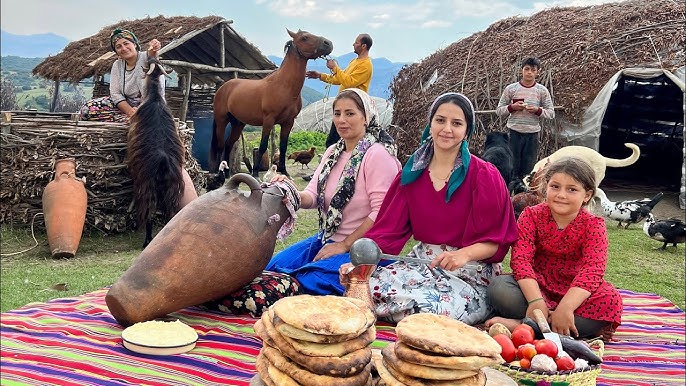
Iran has a long history of nomadic life — people moving from place to place with their animals instead of living in towns or cities. For centuries, nomads in Iran have lived closely with nature, depending on their herds for food, milk, and income. Their way of life is deeply rooted in tradition, culture, and a close relationship with the land.
One of the most interesting parts of this lifestyle is how nomadic families milk cows and other animals and turn that fresh milk into butter, cheese, yogurt, and other dairy products. This process is not just a task; it is a way of life — carefully learned, practiced, and passed down through generations.
Who Are the Nomads of Iran?
The nomads of Iran, often called ashayer in Persian, are people who traditionally move with their livestock between grazing areas depending on the season. They don’t live in one permanent location. Instead, they travel with their animals — sheep, goats, cows, and camels — to find the best grasslands and water.
This movement is usually seasonal. In spring and summer, nomads take their herds to higher pastures where the grass is fresh and cool. In autumn and winter, they migrate to lower land with warmer weather. This yearly cycle is known as kooch — the heart of nomadic life.
Nomadic Life Is Built Around Animals
Livestock are the center of a nomadic family’s life. The animals provide:
- Milk for drinking and dairy products
- Meat for food
- Wool and hair for clothing or cashmere
- Transport in some cases
Because they depend so much on their herds, nomads know how to take care of each animal and make the best use of what they produce.
Daily Life in the Grasslands
On the grasslands, nomads start their day early. Before sunrise, they take the animals out to graze. While the sheep and goats eat grass on the open fields, women and children often begin the task of milking the livestock. In many nomadic communities, women are responsible for milking the animals and processing dairy products like butter and yoghurt.
Milking is done by hand. The nomad women gently milk the cows, goats, or sheep into clean containers. This milk is used fresh, but most of it is processed into other dairy products that can be stored and eaten over time. These skills are essential for life in the pasture and are often taught from a young age.
Turning Milk Into Butter
Butter making is one of the most common and important dairy activities among Iranian nomads. The process is simple yet full of tradition:
- Fresh Milk Collection: Nomadic women collect milk from cows, goats, or sheep.
- Cooling and Filtering: The milk is filtered and left to cool.
- Fermentation: A bit of yoghurt is added, and the milk is left covered to become sour.
- Churning: The sour milk (yoghurt) is put into a container and churned. Traditionally, a mashk — an animal skin used as a churn — is filled with the fermented milk and rocked until butter forms.
- Separating Butter: The butter floats and is scooped out by hand. The liquid left behind is buttermilk, which can be used to make other foods.
This method makes fresh, flavorful butter that is used in cooking or eaten with bread and meals every day.
Other Dairy Products Nomads Make
Nomads don’t just make butter. Dairy products are an important part of their diet, and they have developed many ways to preserve milk:
- Yoghurt: Made by fermenting milk and eaten fresh or used in cooking.
- Cheese: Made by curdling milk with natural enzymes and drying it for storage.
- Curds (kashk): Hard cheese-like balls that can be used later in meals.
- Ghee: Clarified butter made by heating butter to remove water — it lasts longer.
- Soured milk beverages: Such as doogh, a salty yogurt drink.
These products help nomadic families store food that lasts for long periods, which is very important when living far from towns or markets.
Life Together on the Move
Nomadic lifestyle is not only about grazing animals — it is also about community. Families often move together in groups, called tireh or tayefeh, which include relatives and close friends. They help each other with daily tasks, such as herding, milking, cooking, and building shelters.
Children grow up learning many traditional skills, including milking, animal care, and even weaving carpets or making handicrafts. Everyone in the group has a role to play, and the whole community supports one another.
Adaptation and Modern Challenges
Although this nomadic way of life has existed for centuries, it has faced modern pressures. Changes in land use, environmental degradation, and economic challenges have made traditional nomad life harder. In some regions, fewer families continue full nomadic travel, and some have settled down in villages or towns.
But many still maintain their way of life, passing down their deep knowledge of animal care and grassland management. Their traditions give us a unique insight into a life shaped by nature, community, and resilience.
Why Nomadic Culture Matters
Nomadic pastoralism is an important part of Iran’s cultural heritage. Their knowledge of grasslands, livestock, seasonal movement, and traditional food production has been refined over centuries. Nomads contribute to the diversity of culture in Iran and highlight a way of life that is deeply connected to the environment.
Today, travelers and researchers are drawn to nomadic areas to learn from this lifestyle, taste traditional foods, and see how these communities interact with nature. It’s a lifestyle that reminds us how humans once lived closely with their environment — using skills, cooperation, and tradition to survive and thrive.
Conclusion
Iran’s nomadic lifestyle — especially on the grasslands — is more than just a way of surviving. It’s a cultural identity rooted in tradition, community, and respect for nature.
From milking cows by hand to turning milk into butter, yoghurt, and cheese, nomadic families use knowledge passed down through generations to make the most of what nature gives them. Their movement across vast grasslands with herds of animals, their deep understanding of the land, and their commitment to working together show a way of life that is rare in today’s modern world.
Learning about nomadic life teaches us about resilience, simplicity, and the connection between people and the land. It shows that even in the most open grasslands, there is a rich, meaningful culture built on generations of wisdom and harmony with nature.
Read Also: Keep your face towards the sunshine and shadows will fall behind you
Watch Also: https://www.youtube.com/@TravelsofTheWorld24












Leave a Reply