
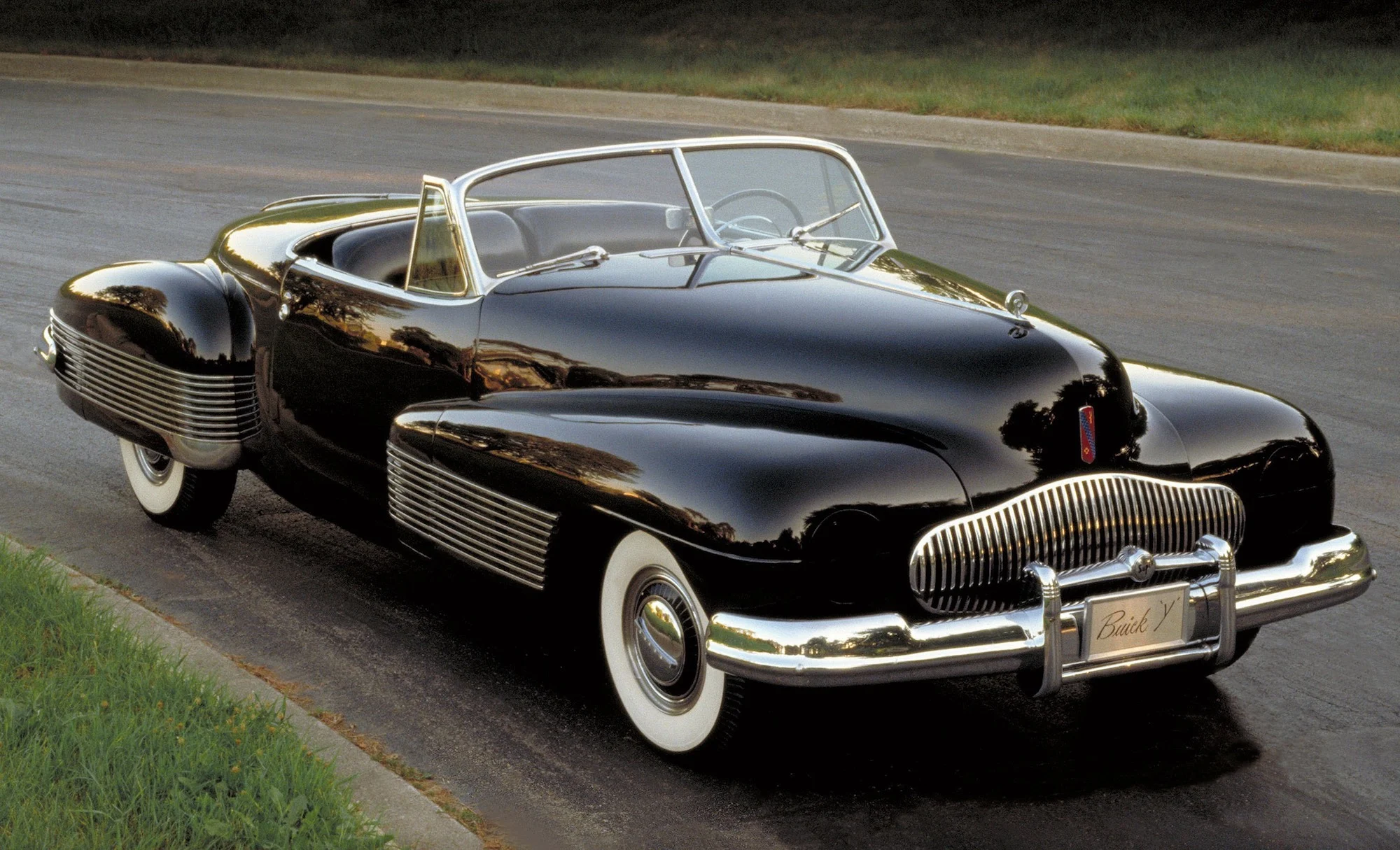
The 1938 Buick Y‑Job is one of the most famous and important cars in history. It was made by Buick, a car brand from the United States, and it wasn’t just a regular car you could buy. Instead, it was a concept car — meaning it was built to show the world what future cars might look like.
This car is special because it laid the foundation for many design ideas we see in modern cars today. It wasn’t made for sale in showrooms. It was made to test new ideas, new styles, and new technology. The “Y‑Job” name doesn’t have a specific real meaning, but some say it might come from a project name inside Buick. Whatever the name’s origin, the car itself became legendary.
In this big but simple guide, I’ll explain what the 1938 Buick Y‑Job is, why it matters, how it looks and works, its history, what people thought about it, and why it still matters to car lovers today. Think of it as an easy story rather than a boring history text — something you can read and enjoy even if you don’t know much about old cars.
1. What Is the 1938 Buick Y‑Job?
The 1938 Buick Y‑Job was a concept car built by Buick’s design team, led by a famous designer named Harley Earl. A concept car is a special car made to explore new ideas. It is not meant to be sold to the public. Instead, it shows new styles, shapes, and features that might appear in future cars.
The Y‑Job was one of the first true concept cars ever made. Buick made it in 1938 to show what cars might look like in the years ahead. Many of the features and design ideas from this car later appeared in regular Buick models and even in other car brands.
People often call the Buick Y‑Job the “first concept car in history” because it was one of the earliest cars built just to show design and technology ideas.
2. Why Did Buick Create the Y‑Job?
Back in the 1930s, car companies were trying to attract customers with new styles and innovations. Cars were becoming popular, and companies wanted to show they were modern and exciting.
Buick’s design chief, Harley Earl, believed that cars should look beautiful and exciting, not just practical. He wanted to explore what future cars could be like — sleeker, smoother, and more stylish. The Y‑Job was his way of showing these ideas.
Instead of waiting to put new ideas into production models, Buick built the Y‑Job as a standalone project. It was like a form of artistic expression and creative thinking wrapped in metal and wheels. The Y‑Job gave Buick a chance to experiment with:
- New shapes and body styles
- Smooth, curved designs
- Hidden headlights
- Modern interior features
- Advanced technology ideas
Buick did not intend to sell this car, but it did want to see how people reacted and how the ideas could influence future models.
3. How Did the Y‑Job Look?
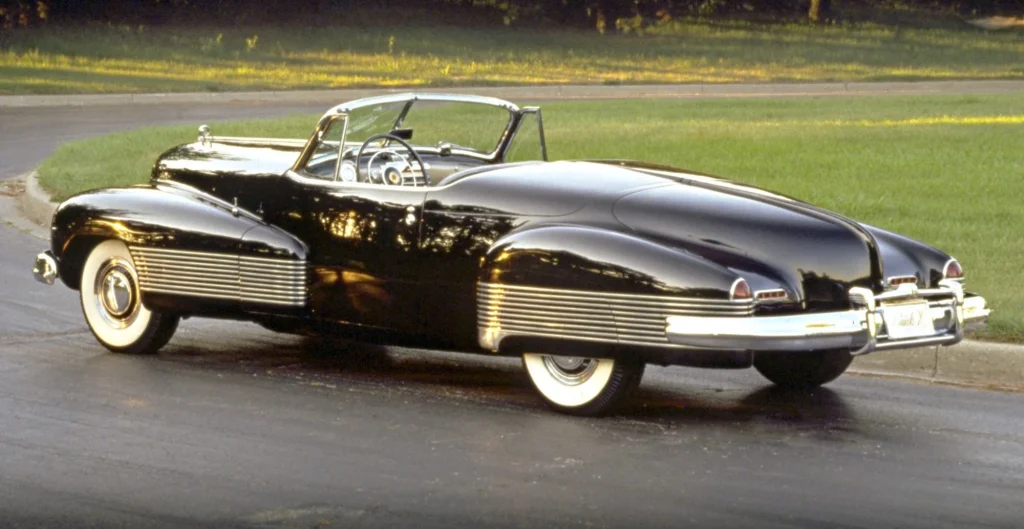
The 1938 Buick Y‑Job had a look that was very different from most cars of its time. Cars in the 1930s usually had boxy shapes, big fenders, upright grilles, and lots of separate parts. The Y‑Job changed all that with a much smoother and modern design.
Here’s what made its look special:
a. Smooth, Rounded Shape
Instead of sharp angles and flat sides, the Y‑Job had smooth curves everywhere — from the front to the back. This made it look like it was flowing through the air, even when standing still.
b. Hidden Headlights
One of the cool things about the Y‑Job was its hidden headlights. Instead of sticking out, the headlights were tucked into the body of the car and covered when not in use. This was a new idea at the time and later became popular in many sports and luxury cars.
c. Low and Wide Stance
The car sat lower to the ground and looked wider than most cars from the era. This gave it a sleek, sporty feel. Even though it wasn’t a race car, it looked faster and more dynamic.
d. Convertible Roof
The Y‑Job was a convertible — meaning it could be driven with the top down. The roof folded back neatly and added to the elegant look.
e. Stylish Trim and Details
The Y‑Job had chrome trim (shiny metal decoration), smooth bumpers, and a grille that flowed into the body instead of standing apart. These details made it look modern and classy.
4. Inside the Car — Interior Design
The inside of the Buick Y‑Job was just as special as the outside. The designers wanted it to look modern and comfortable — not just plain and ordinary.
a. Dashboard and Instruments
The dashboard had a clean layout with clear instruments — speedometer, gauges, and controls — arranged in a simple and stylish way.
b. Upholstery and Materials
The seats were covered with quality materials, and the interior had a feeling of comfort and elegance. The designers wanted it to feel like a luxury space, even though it was experimental.
c. Steering Wheel and Controls
The steering wheel was larger than what you see in modern cars, but it felt good in the hands — smooth and well‑placed. Controls were easy to reach and use.
d. Thoughtful Details
Buick even paid attention to small design details that made the interior feel complete and planned, not thrown together.
5. The Technology Behind the Y‑Job
Although the Y‑Job was mostly a design showcase, it also had some interesting technical features for its time.
a. Engine and Performance
The Y‑Job used a straight‑eight engine — a type of engine with eight cylinders in a row. This was a common engine layout in the 1930s for larger, more powerful cars. It gave the car smooth running and enough performance for cruising.
b. Automatic Features
Some early versions of automatic features were tested on cars like the Y‑Job. At that time, most cars had manual transmissions, so anything that made driving easier felt very modern.
c. Suspension and Ride Comfort
The suspension (the system that absorbs bumps and keeps the ride smooth) was tuned to be comfortable. Even rough roads didn’t feel too harsh, which made the car feel luxurious.
d. Hidden Headlights Mechanism
The hidden headlights were not just for style. They showed that mechanisms and parts could be integrated into the body for a cleaner look. Years later, many sports cars used a similar idea.
The Story of the 1938 Buick Y‑Job, America’s First Concept Car
6. First Public Appearance and Reaction
The Buick Y‑Job made its first public appearance in 1938. When it was first shown, people were surprised because it looked so different. Many car lovers, designers, and regular people saw the car and said things like:
- “This looks like a car from the future.”
- “It is so smooth and sleek.”
- “It doesn’t look like any other car on the road.”
Some people didn’t like it at first because they were used to boxy, traditional cars. But many others loved it and saw how fresh and exciting it was.
The reaction showed that people were ready for change in car design — something more modern, stylish, and forward‑thinking.
7. Influence on Future Cars
Even though Buick never sold the Y‑Job, its ideas influenced many future car designs. Designers inside Buick and other companies studied the Y‑Job and took inspiration from it.
Here are some ways it influenced cars:
a. Smoother Body Shapes
Cars started moving away from boxy designs and toward more rounded, aerodynamic shapes.
b. Hidden Headlights in Sports Cars
In the 1950s, 60s, and 70s, many sports cars, especially in Europe and America, used hidden headlights — an idea first seen on the Y‑Job.
c. Thoughts About Form and Function Together
Before the Y‑Job, many cars looked functional but not always beautiful. The Y‑Job taught designers to think about beauty and function together.
d. Concept Cars as a Celebration of Design
Because the Y‑Job was one of the first concept cars, it helped start a tradition where designers build show cars to explore ideas. Today, almost every car brand shows concept cars at auto shows to preview future styles.
8. Harley Earl — The Designer Behind the Y‑Job
A key reason the Y‑Job became famous is because of Harley Earl, the man who led the design team at Buick.
Harley Earl was one of the first car designers to believe that design mattered as much as engineering. He wasn’t just a technician or engineer — he was an artist who wanted cars to look beautiful.
Some of Harley Earl’s ideas included:
- Use of smooth curves instead of sharp edges
- Designing cars that feel emotional and exciting
- Creating show cars to preview future design trends
Because of his vision, the Y‑Job became more than a one‑off car — it became a symbol of creative design.
9. Later Life of the Y‑Job
The Buick Y‑Job didn’t go into regular production, but it wasn’t forgotten. Harley Earl kept the car for himself for many years and drove it around as his personal car.
Over time, the car became a treasure for car lovers and historians. It has been shown in museums and car shows, where people can see it and understand its importance. It stands as a reminder of how design and imagination can shape the future.
10. Why the Y‑Job Still Matters Today
Even decades later, the 1938 Buick Y‑Job still matters for several reasons:
a. It changed how designers think
Instead of only thinking about function, designers started thinking about beauty, emotion, and storytelling.
b. It inspired future cars
Many design ideas first seen on the Y‑Job appeared years later in mainstream models.
c. It started the concept car tradition
Today, concept cars are a big part of auto shows. They show technology and style ideas for years to come.
d. It shows that creativity matters
The car is proof that creative thinking can shape entire industries — not just small parts of them.
11. What People Say About It Now
Car experts and regular car lovers often talk about the Y‑Job with respect and admiration. They say things like:
- “It was ahead of its time.”
- “It paved the way for modern car design.”
- “It showed that cars can be art, not just machines.”
- “It started a tradition that still lives today.”
Many people visit museums or car shows to see the actual Y‑Job because it represents a piece of automotive history.
12. Comparing Old Cars to Modern Cars
If you look at cars from the 1930s and compare them to today’s cars, the difference is huge. Most 1930s cars were boxy, tall, and simple. Today’s cars are sleek, aerodynamic, and packed with technology.
The Y‑Job was one of the first cars to point toward this modern thinking. It didn’t have advanced computers or modern safety systems, but it showed that cars could look smooth, stylish, and forward‑thinking.
It helped shift the mindset from “This is how cars must look” to “This is how cars could look.”
13. Final Thoughts
The 1938 Buick Y‑Job is more than just a car. It is a symbol of creativity, imagination, and the power of good design. It wasn’t meant to be sold in showrooms, but it taught lessons that shaped the future of automobiles.
From its smooth curves to its hidden headlights, its comfortable interior to its forward‑thinking design, the Y‑Job changed how people saw cars. It showed that cars could be exciting, elegant, and beautiful — not just machines to move from point A to point B.
Today, the Y‑Job stands in history books and museums as a reminder that design and imagination matter. It was one of the first concept cars ever made, and its influence still lives in the shape of cars we see on the road every day.
Read Also: Keep your face towards the sunshine and shadows will fall behind you
Watch Also: https://www.youtube.com/@TravelsofTheWorld24






Leave a Reply