
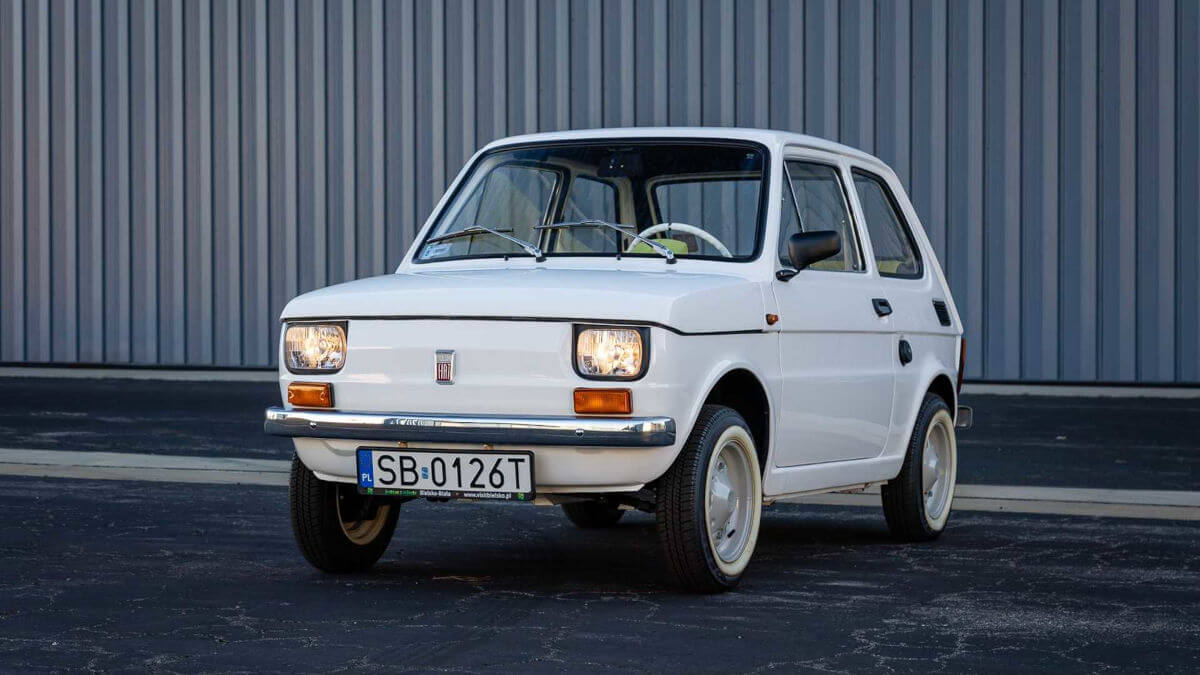
The Fiat 126 was originally designed in 1972 by Fiat. Its main idea was to create a small, cheap car for city driving.
- Compact size for narrow streets
- Cheap to buy and maintain
- Simple design for everyday use
In Poland, the car was produced under license as the 126P, and that’s why it became extremely popular in Eastern Europe.
Design – Tiny but Functional
The Fiat 126P is very small:
- Rounded edges
- Simple, boxy shape
- Two doors
- Small wheels
It was meant to be easy to park and drive in crowded cities. Even though it’s tiny, the interior was cleverly designed to fit four people.
Engine and Performance
The 126P wasn’t made for speed—it was made for practicality.
- Rear-mounted engine
- Air-cooled
- Around 23–26 horsepower in the basic version
It could reach speeds of about 90–100 km/h, which was enough for city driving at that time.
The engine was simple and easy to repair, which made the car very reliable in everyday use.
Why the 126P Became Popular
1. Affordable for Families
At a time when most cars were expensive, the 126P was cheap. Many families could finally own a car.
2. Easy to Maintain
The small engine and simple design made repairs easy and cheap. You didn’t need a professional mechanic to fix it.
3. Compact and Practical
Its small size made it perfect for city streets, tight parking, and short trips.
Production in Poland
The Fiat 126P was produced by FSM (Fabryka Samochodów Małolitrażowych) in Poland starting in 1973.
- It became the most common car in Poland for decades.
- Millions of units were made.
- It was sometimes called “Maluch,” which means “Little One” in Polish.
For many people in Poland, it was the first car they ever owned.
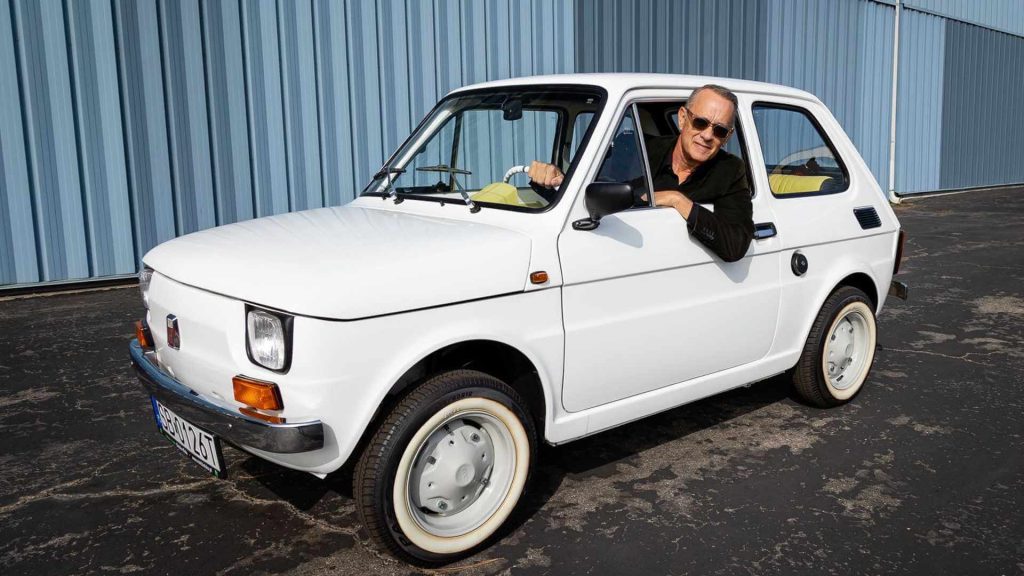
Fiat 126P: The Classic City Car Everyone Remembered
Cultural Impact
The 126P became more than just a car—it became a symbol of everyday life in Eastern Europe.
- Families loved it for daily commuting
- It became part of the popular culture in movies and TV
- Kids and adults alike remembered it as a fun, simple car
Even today, it is seen as a nostalgic symbol of that era.
Interior
Inside, the 126P was very simple:
- Basic seats
- Minimal dashboard
- Simple controls
It wasn’t luxurious, but it was functional. You could fit four people, and some versions even had small storage space in the back.
Fun Modifications
Despite being small and simple, people loved to modify the 126P:
- Sporty paint jobs
- Engine tweaks for more power
- Custom interiors
It became a hobby car for many enthusiasts, showing that even small cars could be fun.
Driving Experience
Driving the 126P is very different from modern cars:
- Light steering and small size make it easy to maneuver
- Slow acceleration, but city-friendly
- No fancy electronics—pure driving feel
It’s not a car for speed, but it’s reliable and charming in its own way.
Legacy
The Fiat 126P is remembered as:
- A practical city car
- A symbol of affordability and simplicity
- A car that brought freedom to many families
Even though technology has advanced a lot, people still remember the 126P fondly. Many classic car fans restore them today.
Fun Facts
- The nickname “Maluch” made it a beloved part of Polish culture.
- It was exported to several countries, including Italy, Germany, and the UK.
- Despite being small, it lasted in production for decades because of its popularity.
Modern Influence
While small city cars today are very different, the 126P inspired many compact cars:
- Practical city design
- Cheap maintenance
- Reliability over speed
It showed that a car doesn’t need to be big or fast to make an impact.
Final Thoughts
The Fiat 126P is more than just a tiny car. It’s a symbol of practicality, culture, and nostalgia.
In simple words, it wasn’t about speed or luxury—it was about giving people a car they could rely on, fit in tight streets, and love for everyday life. For many, it’s still remembered with a smile as the little car that changed their world.
Read Also: Keep your face towards the sunshine and shadows will fall behind you
Watch Also: https://www.youtube.com/@TravelsofTheWorld24





Leave a Reply