
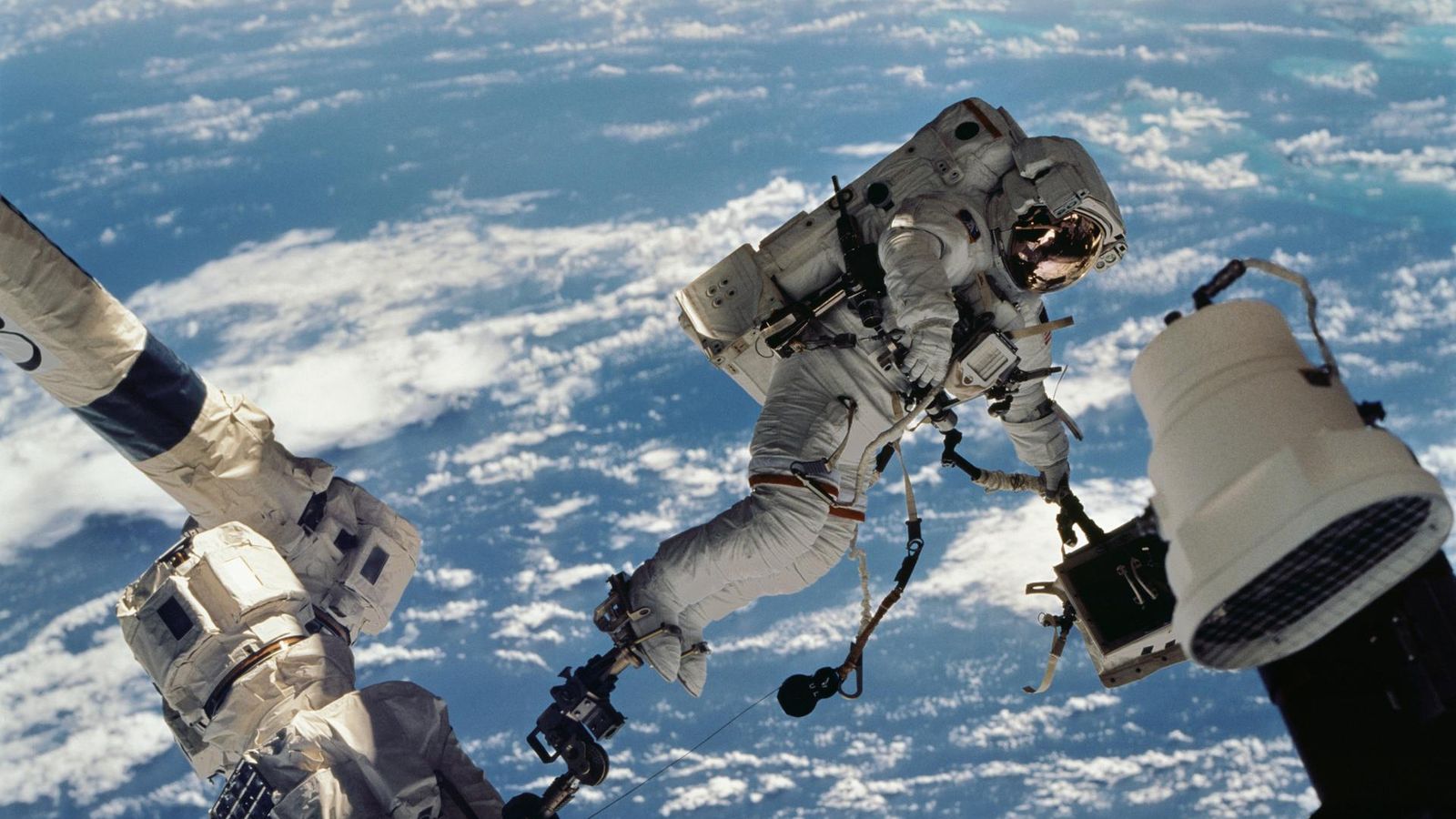
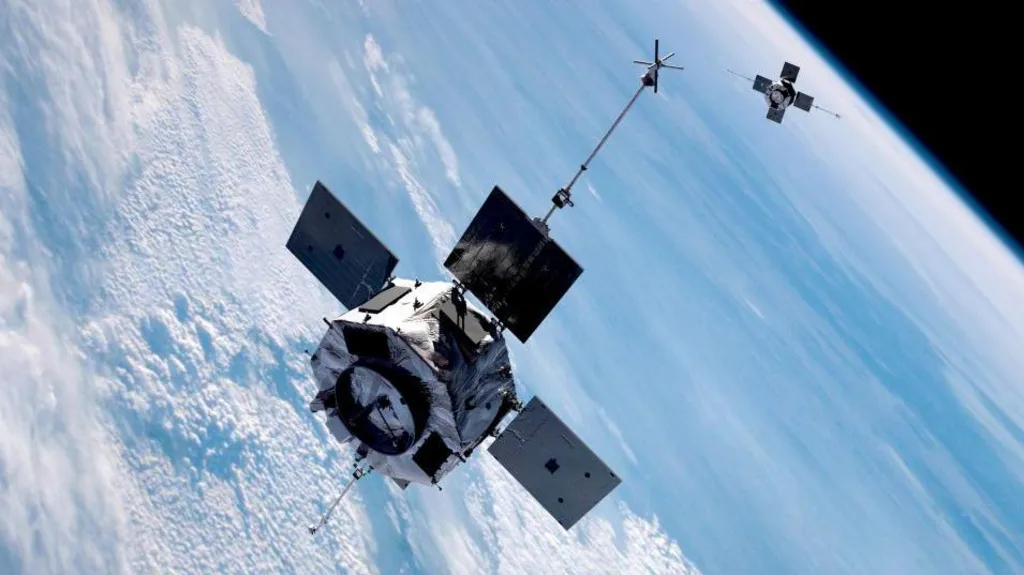
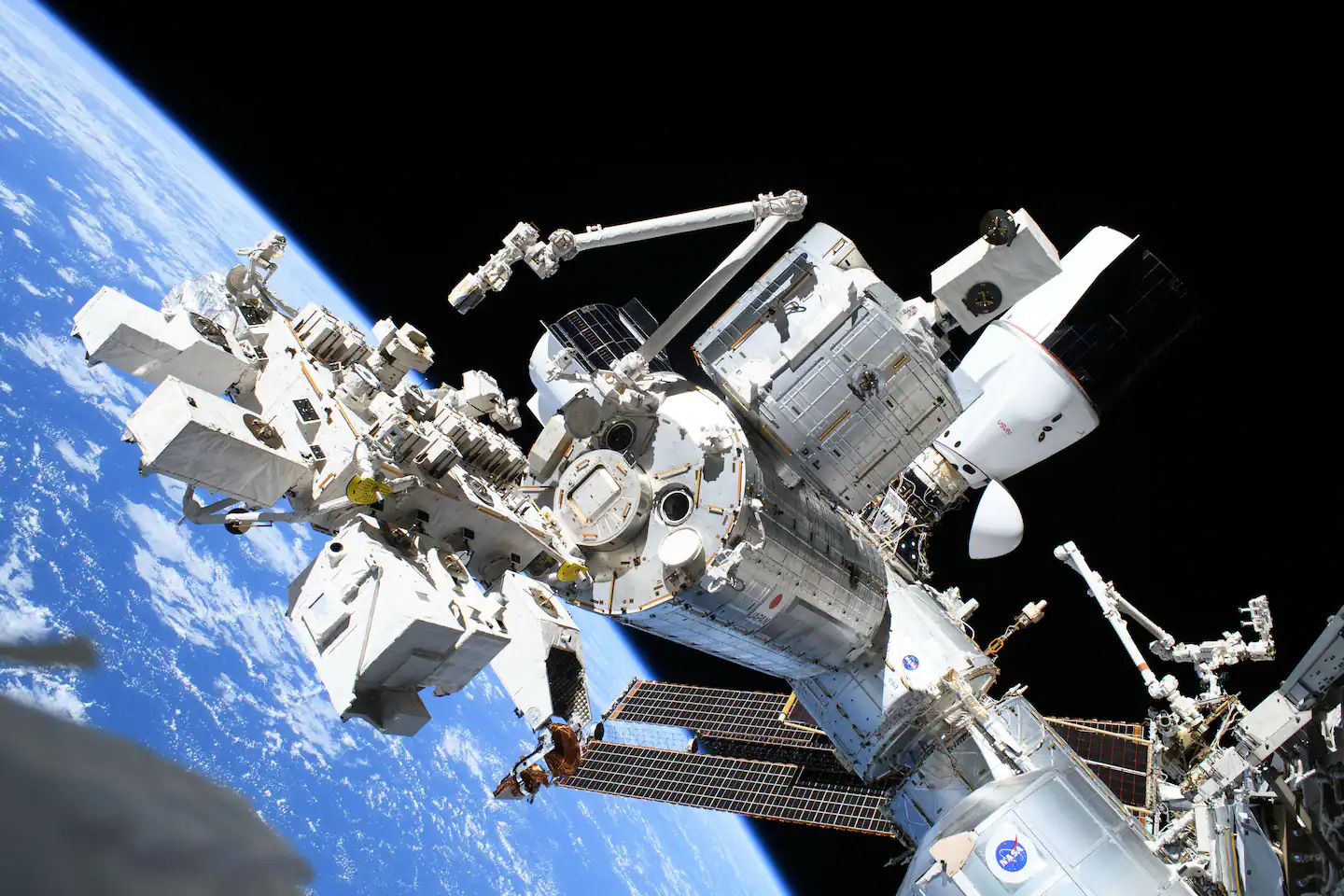
Last night, something alarming happened in space that put astronauts’ safety at risk. The International Space Station, which orbits high above the Earth, became the focus of a serious alert. A Russian satellite that was already in orbit broke apart into more than 100 pieces of debris. This kind of debris is extremely dangerous because even the smallest pieces can move at very high speeds, fast enough to damage or pierce the station.
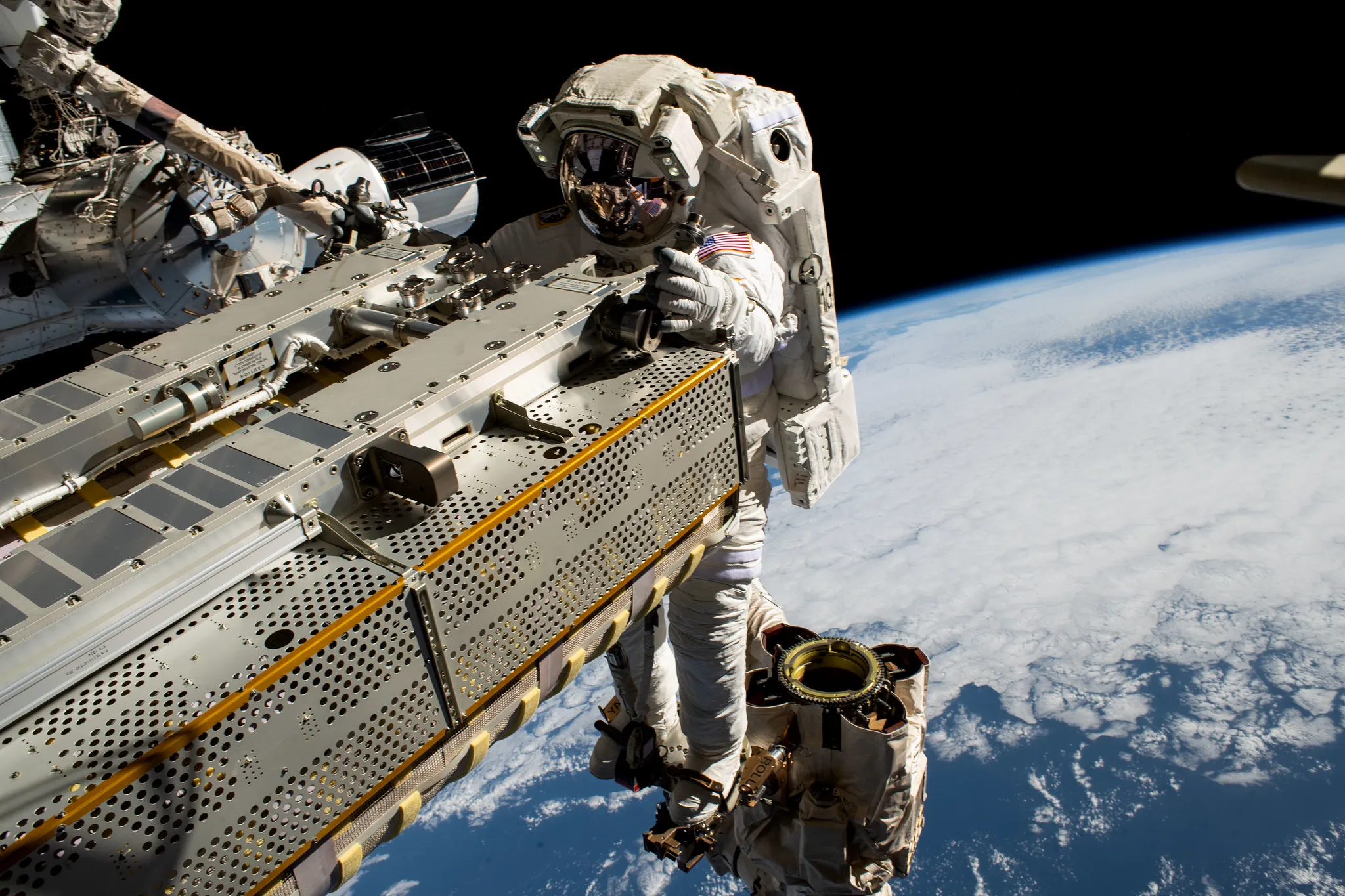
The nine astronauts currently living on the space station were immediately informed of the situation. They were instructed to take shelter in their own spacecraft, a safety measure that ensures they are protected from any possible collisions. These spacecraft act like small lifeboats attached to the station, ready to keep astronauts safe in emergencies. NASA, the U.S. space agency, confirmed that the debris had been spotted and that the crew followed standard safety procedures.
This incident highlights how risky life in space can be. Satellites orbiting Earth eventually become old or damaged, and collisions or breakups can happen, creating dangerous debris. Even though space may seem vast and empty, objects travel there at incredible speeds. A tiny fragment from a broken satellite can cause significant damage if it hits the space station or any spacecraft. This is why astronauts need to be prepared and why agencies like NASA have strict safety rules in place.
Sheltering in spacecraft is not a new procedure for astronauts. It is a part of the training they receive long before they go to space. They practice entering their spacecraft quickly and securing themselves so that even if debris hits the station, they remain safe. This protocol has been developed over decades of space travel and is used anytime there is a risk of collision.
The debris from the broken Russian satellite is now being tracked carefully by multiple space agencies. Using radar and other tracking tools, scientists can predict the path of each piece of debris to determine if it poses a threat to the space station or other satellites. This tracking helps mission control teams make decisions to protect astronauts and equipment. In some cases, spacecraft can even adjust their orbit slightly to avoid collisions.
While the astronauts were safe in their spacecraft, the situation was a reminder of the hazards of space travel. Living and working in orbit is not like being on Earth. In addition to dealing with microgravity, radiation, and the isolation of space, astronauts must also be constantly aware of space debris. The tiny fragments from satellites, old rocket parts, and other objects floating in orbit are a growing concern for everyone who works in space.
This event also shows the importance of international cooperation in space. Satellites from different countries share the same orbital paths, and debris from one satellite can potentially affect stations and satellites from other nations. That is why countries collaborate on tracking space debris and warning each other about potential dangers. The safety of astronauts often depends on quick communication and coordination between space agencies around the world.
Thankfully, no one was hurt during this incident. The astronauts followed their training, and the protective measures worked as intended. After the debris passed, the crew was able to leave their spacecraft and return to their normal activities on the space station. NASA praised the crew for their calm and professional response during the alert.
Incidents like this also remind us of the importance of taking care of space. With more satellites being launched each year, the amount of debris in orbit is increasing. Scientists and engineers are exploring ways to clean up space debris and prevent collisions in the future. Some ideas include designing satellites that can safely deorbit at the end of their life or even developing technologies to capture and remove debris.
The International Space Station continues to operate safely, thanks to careful monitoring and strict safety procedures. Events like the breakup of a satellite show the real dangers of space travel, but also the effectiveness of the measures in place to protect astronauts. Every piece of debris is tracked, every emergency plan is tested, and astronauts are trained to respond quickly. This combination of preparation, technology, and international cooperation ensures that space exploration can continue safely even in the face of unexpected incidents.
As space exploration grows, the lessons from events like this will help make future missions safer. Protecting astronauts from debris, monitoring satellites, and improving spacecraft safety are all crucial steps. The universe may be vast, but in orbit, careful planning and fast action make all the difference between danger and safety.
Read Also: Keep your face towards the sunshine and shadows will fall behind you
Watch Also: https://www.youtube.com/@TravelsofTheWorld24





Leave a Reply