
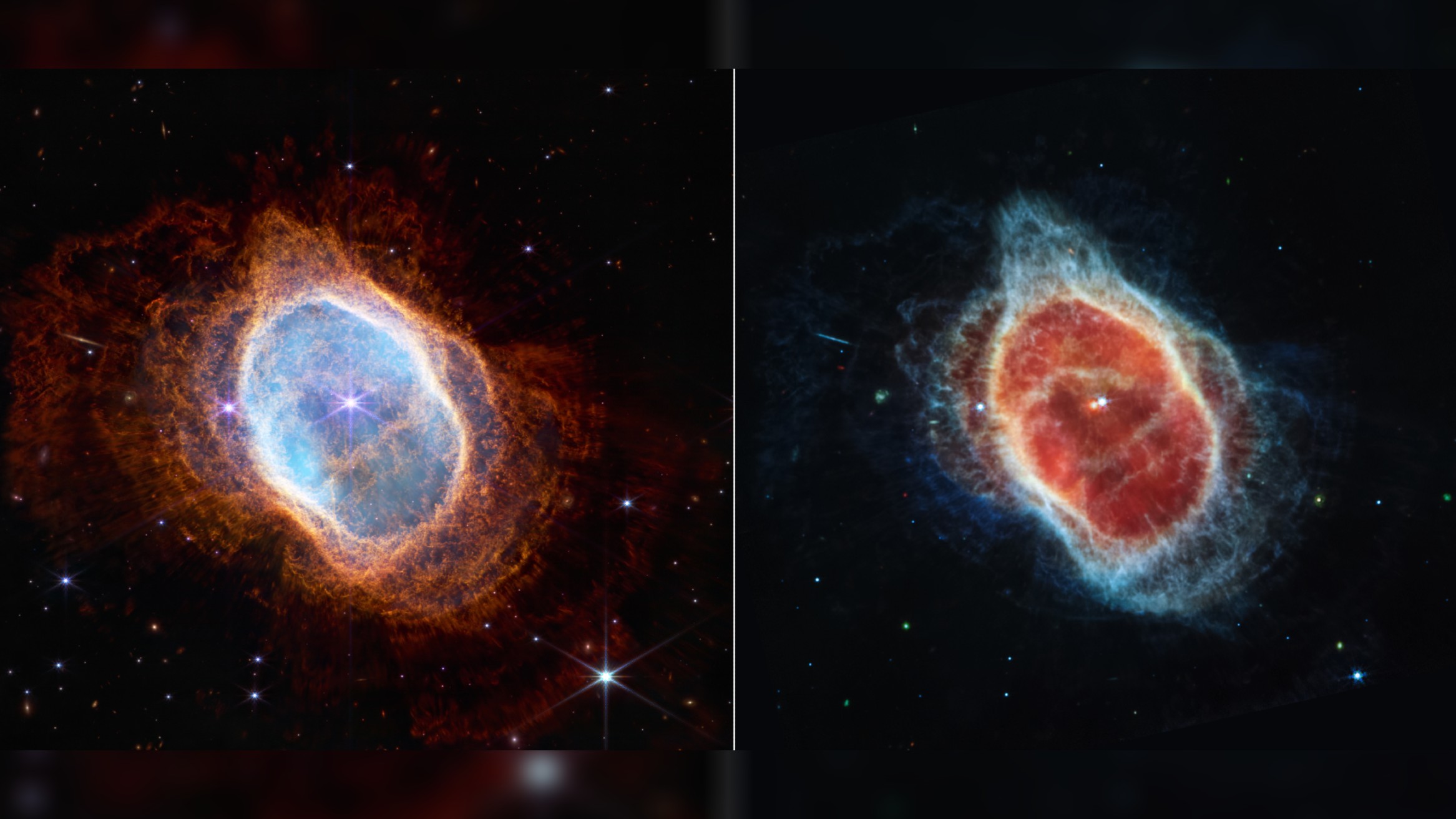
Scientists using the James Webb Space Telescope have shared some truly amazing new images of a nebula called PMR 1, also nicknamed the “Exposed Cranium Nebula.” This cloud of glowing gas and dust is shaped in a way that makes it look a bit like a huge brain inside a transparent skull floating in space. The new images reveal features that we’ve never seen before and help us understand what is happening in this strange cosmic object.
In this article, we’ll walk you through what PMR 1 is, what the Webb images show, how it likely formed, and why astronomers are so excited about it — all in a friendly, easy‑to‑digest way.
What Is a Nebula Like This?
A nebula is a giant cloud of gas and dust in space. Some nebulae are places where new stars are being born, while others are formed when old stars die and throw off their outer layers. In the case of this particular nebula, PMR 1, it’s made by a star that is nearing the end of its life.
As stars burn through the fuel in their cores, their inner balance shifts and they start pushing material outward. Over time, that material forms huge shells of glowing gas. What makes PMR 1 unusual is the way its gases are arranged and how it looks in infrared light — so unusual, it reminds people of a brain floating in a clear skull.
Astronomers didn’t see this nebula in this much detail until now because older telescopes didn’t have the instruments that Webb does. This is why the new images are so exciting — they show features that we’ve never seen before.
How Webb Sees the Nebula
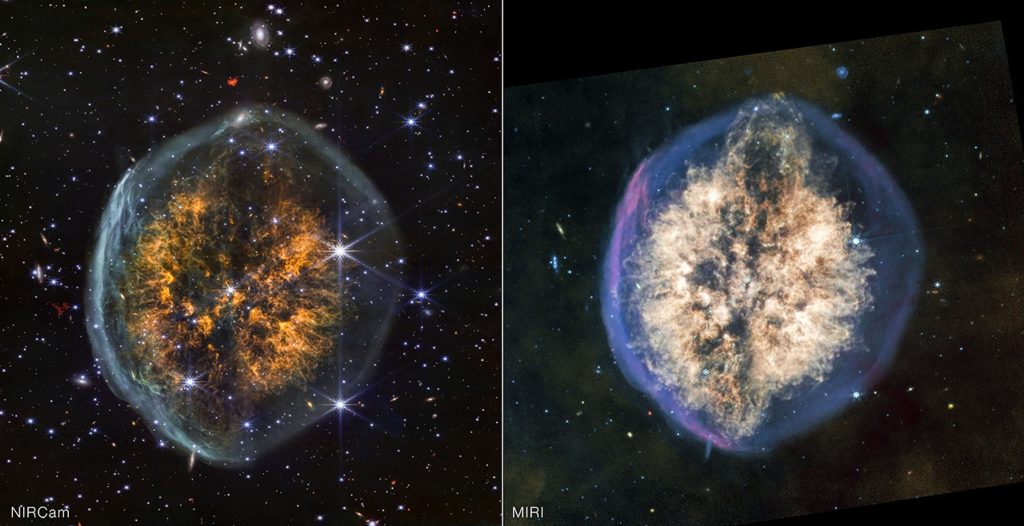
The James Webb Space Telescope looks at space in infrared light, which is invisible to our eyes but great at revealing cool and dusty regions that visible‑light telescopes can’t see. Webb has two key instruments used in these images:
-
NIRCam – Webb’s Near‑Infrared Camera, good for seeing stars and structures through dust.
-
MIRI – Webb’s Mid‑Infrared Instrument, excellent at highlighting warm dust and deeper details.
By combining what these instruments see, astronomers can get a fuller picture of what’s going on inside the nebula. The two images together make the cloud’s structure — and unusual shape — much clearer.
What the Nebula Looks Like
When you look at the Webb images of PMR 1, it’s hard to miss how it seems divided into two halves, like the left and right sides of a brain. There is a dark lane running straight down the middle of the nebula, separating these two halves. This line gives it that “brain‑like” appearance.
The outer part of the nebula looks like a shell of glowing gas — this is material that was blown off first by the dying star. This outer shell is mostly hydrogen, the simplest and most common element in the universe.
Inside that shell is another cloud that has a more complex shape and contains other kinds of gases and particles. It’s denser and more intricate than the outer layer.
This inner cloud and the outer shell together show two different phases of how the star lost its material. The outer hydrogen shell was pushed away earlier, while the inner gases were released later, possibly as the star’s dying processes changed.
Inside the Cosmic Brain: Webb Images Show Star’s Gas Clouds
Why That Dark Lane Is Important
The long vertical dark line that seems to split the nebula in half isn’t just a pretty detail — it tells astronomers something about how the nebula formed and how the star has behaved.
Some scientists think this lane might be caused by an outburst or outflow from the central star itself. When stars get close to the end of their lives, they can eject material in powerful jets in opposite directions. These jets can shape the surrounding gas in dramatic ways.
In other words, that dark band might be the “shadow” or separation created by jets of material shooting out from the star. The way the gas appears to be stretching out near the top of the nebula in Webb’s mid‑infrared view is consistent with that idea — it looks like gas might be pushed outward from inside.
So what we’re seeing could be the result of powerful processes at work in the star’s final stages, shaping the cloud from the inside out.
A Snapshot of a Dying Star
Astronomers agree that the glowing cloud is being driven by a star that has almost used up all its fuel. When stars run short on the hydrogen and helium in their cores, they go through big changes and start losing mass.
In some cases, the star becomes unstable and expels shells of gas in pulses or bursts. These shells expand outward into space and can create layered structures like what we see in PMR 1 — the older shells on the outside and newer ones closer in.
In Webb’s view, that layered look becomes clear: the outer bubble is mostly simpler gas, while the inner region is more complex, filled with gases of different kinds. It’s like looking at the history of the star’s loss of material, frozen in place in space.
What Will Happen Next?
Even though the new images show a lot of detail, astronomers still don’t know everything about this nebula. One big question is what the star will do next.
There are two main possibilities:
-
If the star is massive enough, it could eventually explode in a spectacular supernova.
-
If it’s more like the mass of our Sun, it will eventually shed its outer layers completely and leave behind a tiny, dense core called a white dwarf.
At the moment, scientists aren’t sure which will happen because that depends on exactly how heavy the star is — and that’s something they’re still trying to figure out. But either outcome will be amazing to follow as part of the star’s life story.
Why This Discovery Matters
You might be wondering why astronomers care so much about a nebula that looks a bit like a brain in space.
There are a few important reasons:
1. It shows us how stars die:
Stars don’t just disappear — they go through complicated processes as they run out of fuel. Seeing this nebula up close helps scientists understand those final stages better.
2. Infrared images reveal what visible light can’t:
Because Webb observes in infrared, it can see through dust and gas that would block a regular telescope. This gives scientists a much clearer picture of what’s really happening inside the nebula.
3. Every nebula is a unique story:
These clouds are shaped by many factors — the star’s mass, its history, its environment, and even explosive events. By studying different nebulae, scientists learn more about the diversity of life cycles stars go through.
4. It helps us understand where elements come from:
When stars die, they release gases that later become part of new stars, planets, and even living things. Seeing how these materials spread out helps trace the life cycle of matter in the universe.
A Beautiful, Strange Sight
Beyond the science, the images of PMR 1 are just stunning to look at. The way the light and dark regions play off each other, the symmetrical halves, and the sense of depth all make this nebula something that sparks wonder and curiosity.
Some people compare it to a brain, others see it as a skull, and others just appreciate the raw beauty of a dying star’s final moments frozen in light. Either way, it reminds us that the universe often looks stranger and more beautiful than we might expect.
In Simple Terms
Let’s boil all that down into easy points:
-
The Exposed Cranium Nebula is a glowing cloud of gas and dust made by a dying star.
-
Webb’s infrared cameras show it in incredible detail, with an outer shell and inner gas cloud that capture different stages of the star’s life.
-
A dark lane straight down the middle gives it a brain‑like look, maybe caused by powerful jets from the star.
-
The nebula shows how stars lose material as they near the end of life.
-
Scientists still aren’t sure whether the star will explode as a supernova or become a white dwarf, but they’re learning more from these images.
Read Also: Keep your face towards the sunshine and shadows will fall behind you
Watch Also: https://www.youtube.com/@TravelsofTheWorld24








Leave a Reply