
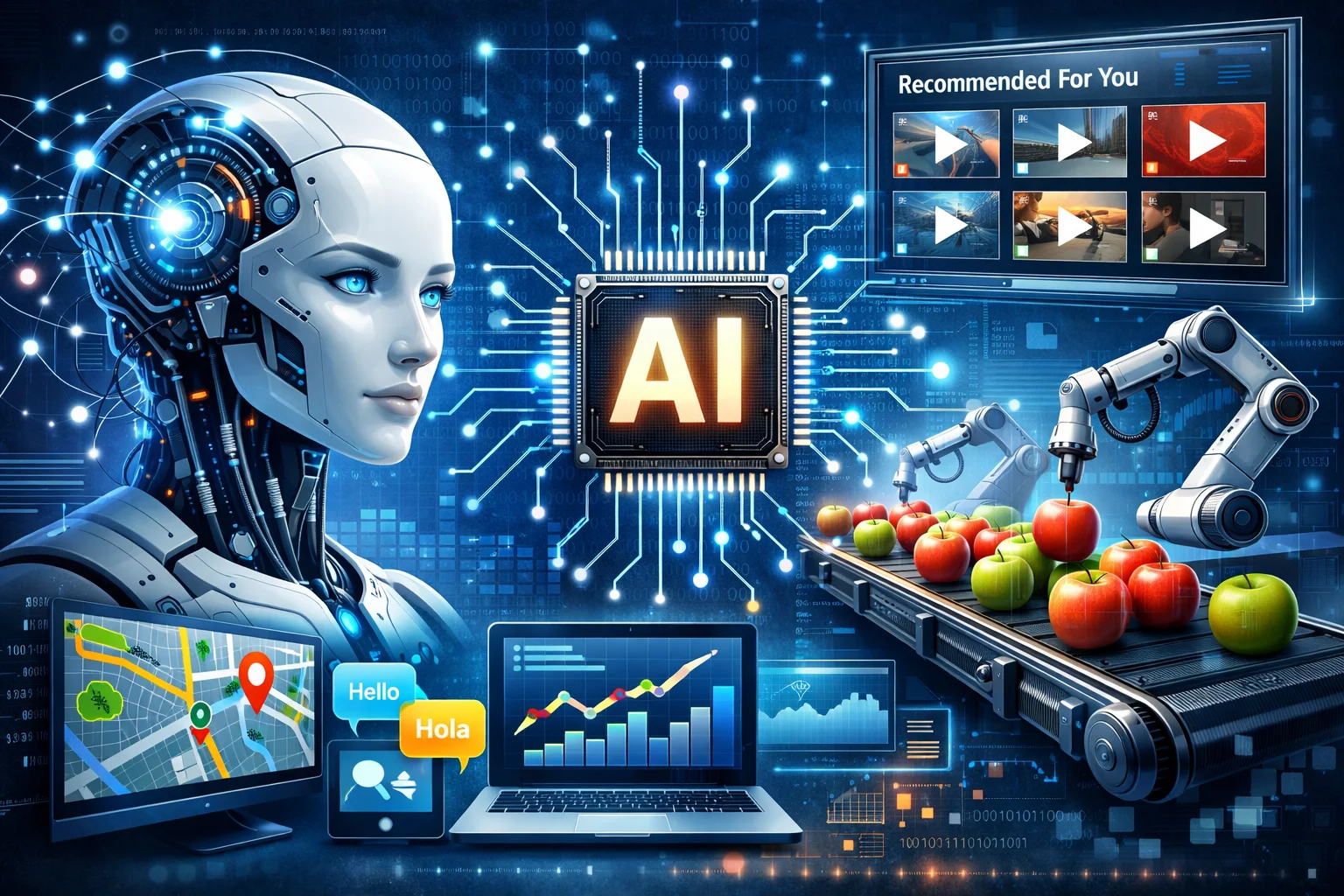
Many of the apps and services people use every day depend on AI. Voice assistants like Siri or Google Assistant can answer questions, set alarms, and control smart home devices. Streaming platforms such as Netflix suggest movies and shows based on what you like. Shopping sites like Amazon recommend products you may want to buy. Social media platforms show posts and videos tailored to your interests.
Navigation apps use AI to find the fastest route and avoid traffic. Email services filter spam automatically. Translation apps allow people to understand different languages instantly. All of this happens in the background, making daily tasks easier and saving time.
Smart home devices also rely on AI. Thermostats learn your temperature preferences, lights can turn on automatically, and security cameras can detect unusual activity. These systems make homes more comfortable, energy-efficient, and secure.
AI in Education
Education is changing rapidly because of AI tools. Students can now get personalized learning experiences instead of one-size-fits-all lessons. AI systems analyze how a student learns and adjust the content to match their pace and ability.
Online learning platforms use AI to recommend courses, quizzes, and study materials. Virtual tutors can explain difficult topics in simple ways and provide instant feedback. Language learning apps use speech recognition to help users improve pronunciation.
Teachers also benefit from AI. It can help grade assignments, track student progress, and create lesson plans. This allows teachers to spend more time focusing on students rather than administrative tasks.
For students in remote areas, AI-powered education tools can provide access to quality learning resources that were previously unavailable. This helps reduce the gap between urban and rural education.
AI in Healthcare
Healthcare is one of the most important areas where AI is making a huge difference. AI tools can analyze medical data quickly and accurately, helping doctors diagnose diseases earlier and more precisely.
Medical imaging systems can detect problems in X-rays, CT scans, and MRIs that might be difficult for humans to spot. AI is also used to predict disease risks, monitor patients remotely, and suggest treatment options.
Hospitals use AI to manage patient records, schedule appointments, and optimize resources. Wearable devices track heart rate, sleep patterns, and physical activity, helping people monitor their health in real time.
During global health crises, AI has helped researchers analyze large amounts of data to track outbreaks and develop treatments faster. Telemedicine platforms allow patients to consult doctors from home, making healthcare more accessible.
AI in Business and Work
Businesses across all industries are adopting AI to improve efficiency and reduce costs. AI tools can analyze market trends, customer behavior, and financial data to help companies make smarter decisions.
Customer service has been transformed by AI chatbots, which can answer common questions instantly at any time of day. This reduces waiting times and improves customer satisfaction.
Automation is another major impact. Routine tasks such as data entry, scheduling, and inventory management can now be handled by AI systems. This allows employees to focus on creative and strategic work.
Remote work has also become easier with AI-powered collaboration tools that help with meeting summaries, task tracking, and communication. Companies are using AI to recruit employees by screening resumes and identifying suitable candidates.
However, this shift also raises concerns about job displacement. Some roles that involve repetitive tasks may be replaced by automation, but new jobs are also being created in technology, data analysis, and AI management.
AI in Transportation
Transportation is becoming safer and more efficient thanks to AI. Navigation apps analyze real-time traffic data to suggest the best routes. Ride-sharing platforms use AI to match drivers with passengers and calculate fares.
Self-driving vehicles are one of the most talked-about developments. Companies like Tesla are developing cars that can drive with minimal human input. These vehicles use sensors, cameras, and machine learning to understand their surroundings.
Public transportation systems use AI to optimize schedules, reduce delays, and manage crowds. Airlines use AI for flight planning, maintenance prediction, and passenger services.
In the future, autonomous vehicles could reduce accidents caused by human error and improve mobility for elderly and disabled people.
AI in Agriculture
Farming is also benefiting from AI technology. Farmers use AI-powered tools to monitor crops, soil conditions, and weather patterns. Drones and sensors can detect pests, diseases, and water needs, allowing farmers to act quickly.
Precision agriculture helps reduce waste by applying water, fertilizers, and pesticides only where needed. This increases crop yields while protecting the environment.
AI systems can predict harvest times, market demand, and supply chain needs. This helps farmers make better decisions and improve profitability.
With the global population growing, AI-driven agriculture is essential for producing enough food sustainably.
AI in Entertainment and Media
The entertainment industry has been transformed by AI. Streaming services like Spotify recommend music based on listening habits. Video platforms suggest content tailored to each user’s preferences.
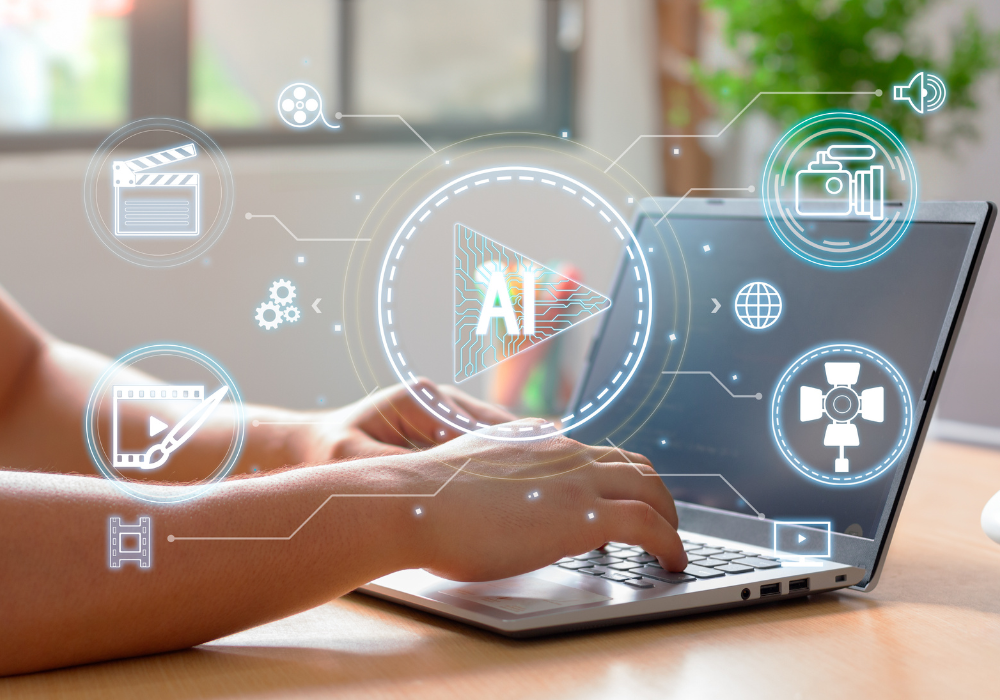
AI is also used in video games to create smarter characters and realistic environments. Filmmakers use AI for editing, visual effects, and even script analysis.
Content creation tools can generate images, videos, music, and text. This allows individuals and small teams to produce professional-quality content without large budgets.
However, AI-generated content also raises concerns about misinformation, deepfakes, and copyright issues. Balancing innovation with ethical use is an ongoing challenge.
AI in Security and Safety
AI plays a major role in improving security. Surveillance systems use facial recognition and behavior analysis to detect suspicious activity. Cybersecurity tools use AI to identify threats and prevent attacks before they happen.
Financial institutions use AI to detect fraud by analyzing unusual transaction patterns. Airports and border control agencies use AI for identity verification and risk assessment.
Disaster management systems use AI to predict natural events such as floods, storms, and wildfires. Early warnings can save lives and reduce damage.
Challenges and Ethical Concerns
While AI offers many benefits, it also presents serious challenges. Privacy is a major concern because AI systems often rely on large amounts of personal data. There is also the risk of bias if AI models are trained on unfair or incomplete data.
Job displacement is another issue. Automation may replace certain roles, especially in manufacturing and administrative work. Governments and organizations need to focus on reskilling workers for new opportunities.
There are also concerns about misuse, such as deepfake technology, surveillance abuse, and autonomous weapons. Clear regulations and ethical guidelines are necessary to ensure AI is used responsibly.
The Future of AI
The influence of AI will continue to grow in the coming years. Future developments may include smarter robots, fully autonomous transportation, advanced medical breakthroughs, and more personalized digital experiences.
AI could help solve global challenges such as climate change, food shortages, and disease outbreaks. At the same time, society must address risks to ensure technology benefits everyone.
Experts believe that the most successful societies will be those that learn how to combine human creativity with machine intelligence. AI is not meant to replace humans completely but to assist and enhance human capabilities.
Conclusion
AI tools are reshaping the world in powerful ways. They are making life more convenient, improving healthcare and education, transforming businesses, and opening new possibilities across industries. From simple daily tasks to complex scientific research, AI is becoming an essential part of modern life.
While challenges remain, the potential benefits are enormous. With responsible development and thoughtful use, AI can help create a future that is more efficient, connected, and innovative.
In many ways, the world is entering a new era — one where humans and intelligent machines work side by side.
Read Also: Keep your face towards the sunshine and shadows will fall behind you
Watch Also: https://www.youtube.com/@TravelsofTheWorld24






Leave a Reply