
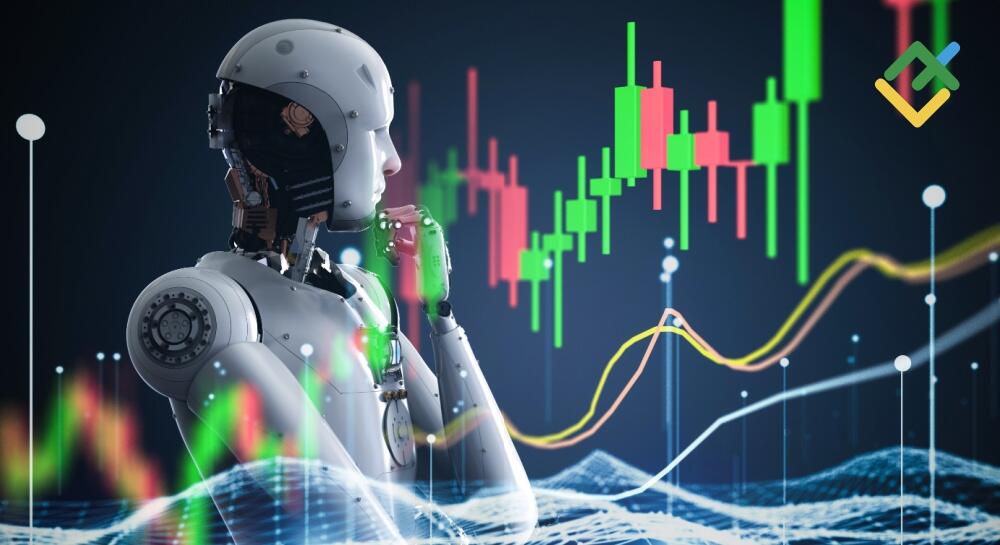
Artificial intelligence — or AI — is no longer something from sci‑fi movies. Today, it is real, powerful, and used in many areas of life. One of the fastest‑growing areas is financial markets — like stocks, Forex, and cryptocurrency trading. More and more investors and traders are using AI tools to make smarter decisions, reduce mistakes, and react quickly to market changes.
In this article, we will explore how AI is used in trading, why it matters, the tools people use, and how you can get started with AI trading. I’ll explain everything in simple English so you understand clearly even if you are new to this topic.
What Is AI Trading?
AI trading means using artificial intelligence technologies to help make decisions in financial markets. Instead of relying only on human judgment, AI uses data, patterns, and algorithms to analyze information and give signals or execute trades automatically.
Think of it like a smart assistant that watches the market, learns from data, and helps you decide when to buy or sell an asset such as stocks, currencies, or crypto.
Why AI Is Important in Trading
In the past, traders relied on charts, news, and personal experience. But markets move fast — sometimes in seconds. AI helps traders:
1. Analyze huge amounts of data
AI can process data much faster than humans. It looks at price history, news, social media, and other signals at the same time.
2. Find patterns human eyes can’t see
AI models can spot trends or patterns that are not obvious. These patterns help predict future price movements.
3. Reduce emotional mistakes
Human traders often make decisions based on fear or excitement. AI makes decisions based on data and rules — no emotions.
4. Respond faster
Markets change quickly. AI can react instantly — faster than any human.
5. Automate trading
AI can trade automatically without you watching the market 24/7.
How AI Works in Trading
AI trading is built on computers that learn from data. Here are the main technologies:
1. Machine Learning
Machine learning (ML) is a branch of AI where computers learn from past data. ML models look at historical price data and learn to make predictions.
Example: A model sees that a stock often goes up after certain events — it learns this pattern and uses it to predict future moves.
2. Neural Networks
Neural networks are AI systems inspired by the human brain. They are powerful at spotting complex patterns in large data sets.
Neural networks are used to:
-
Predict price movements
-
Classify market conditions
-
Detect unusual activity
3. Natural Language Processing (NLP)
NLP helps AI read and understand text — like financial news, reports, or social media posts. AI then uses this information to make trading decisions.
Example: If a company news report is positive, the AI might predict its stock price will rise.
4. Algorithmic Trading
Algorithmic trading means using pre‑defined rules to trade automatically. AI can improve these algorithms by learning what works best over time.
Types of AI Trading Tools
Here are the main types of tools used in AI trading today:
AI Trading Bots
These are automated systems that trade for you. You give them rules or train them with data, and they buy or sell automatically.
Good for:
-
Forex trading
-
Cryptocurrency trading
-
Short‑term strategies
AI Signal Providers
These tools analyze data and tell you when to buy or sell. They don’t trade automatically — you still decide.
Good for:
-
Swing traders
-
Long‑term investors
AI Charting Tools
These help analyze price charts using AI. They can highlight patterns, support and resistance levels, or trend signals.
Good for:
-
Technical traders
-
Chart analysts
AI News & Sentiment Tools
These use AI to read news, social media, and reports to gauge market sentiment (whether traders feel positive or negative).
Good for:
-
Investors relying on news
-
Markets sensitive to headlines such as crypto
AI Portfolio Tools
These tools help manage your investment portfolio. They can balance risk, suggest allocations, and rebalance your assets automatically.
Good for:
-
Long‑term investors
-
People building diversified portfolios
Examples of AI Tools in Trading
Below are some popular AI tools traders use today (simple explanation):
1. ChatGPT for Research
ChatGPT (OpenAI) can help you understand market concepts, financial terms, or explain complex ideas.
How to use:
-
Ask it to explain a trading strategy
-
Ask it to summarize earnings reports
-
Mental practice (like “teach me stock basics”)
ChatGPT is not a trading bot — it helps you understand information.
2. AI Crypto Bots
Many platforms offer AI bots for crypto trading. These bots can:
-
Trade automatically
-
Learn from price behavior
-
Adjust strategies
Good for crypto markets that work 24/7.
3. Automated Forex AI Systems
Forex markets are huge and fast. AI systems can:
-
Scan currency pairs
-
Predict trend changes
-
Trade automatically
4. AI Platforms with Sentiment Analysis
These tools read news and social sentiment to:
-
Predict market mood
-
Spot early trend changes
-
Alert traders
Example: Tool reads thousands of tweets, finds rising positive sentiment on a coin, and signals a possible price jump.
5. Quantitative AI Models
“Quant” models use math and AI to find opportunities. They often trade large volumes and use statistical methods.
Benefits of AI Trading
Here are the main advantages of using AI in trading:
1. Faster Decision Making
AI analyzes data instantly — faster than any human.
2. More Accurate Predictions
AI’s pattern recognition can lead to better predictions than manual analysis. It sees things human traders may miss.
3. Emotion‑Free Trading
AI doesn’t get scared or greedy — it follows rules.
4. More Time for You
AI handles routine tasks, so you can focus on higher‑level decisions.
5. Works 24/7
Especially useful for crypto markets that never sleep.
Risks and Limitations of AI Trading
AI is powerful, but it’s not perfect. You should know the risks:
1. Market Conditions Change
AI learns from past data. If the market suddenly changes in a way it hasn’t seen, the AI might make wrong decisions.
2. Data Quality Matters
Bad or incomplete data will lead to bad predictions.
3. Over‑Optimization
Sometimes AI models become too fitted to old data (“curve‑fitting”). This means the model works well in backtests but fails in real markets.
4. Technical Problems
System bugs, server issues, or data feed delays can affect performance.
5. No Guarantee of Profit
Even top AI tools can lose money. Markets carry risk.
How to Start Using AI for Trading
If you want to use AI in the stock market or other markets, here’s a step‑by‑step guide:
Step 1: Learn the Basics
Before using AI tools, know basic terminology:
-
What is a stock?
-
What is a trend?
-
What is support and resistance?
You don’t need expert knowledge, but a foundation helps.
Step 2: Choose Your Market
Decide where you want to trade:
-
Stocks
-
Forex
-
Crypto
-
Commodities
Each market moves differently.
Step 3: Choose the Right Tool
Match the tool to your goal:
-
Long‑term investing → portfolio tools
-
Short‑term trading → AI bots or signal tools
-
Learning → ChatGPT or sentiment tools
Step 4: Test First
Never put real money right away. Use:
-
Demo accounts
-
Backtesting (simulate past data)
-
Paper trading (practice without real money)
Step 5: Start Small
Begin with a small investment. Get comfortable before adding more.
Step 6: Monitor Regularly
AI can automate tasks, but you should still check performance and make adjustments.
Strategies AI Can Use in Trading
AI systems use different strategies depending on market conditions. Here are some examples:
1. Trend‑Following Strategy
AI detects ongoing trends (up or down) and trades in the same direction.
Example: If a stock is rising over days, the AI buys and holds until the trend ends.
2. Mean Reversion Strategy
This strategy expects prices to return to their average level.
Example: If a price jumps too high quickly, AI might assume it will fall back, and trade accordingly.
3. News Sentiment Strategy
AI reads news and social media with NLP and predicts price reaction.
Example: Big positive news about a company → AI signals buy.
4. Arbitrage Strategy
AI finds price differences across exchanges and trades to capture profit.
This is popular in crypto markets.
Real‑World Uses of AI in Markets
Big trading firms, hedge funds, and banks use AI widely:
✔ High‑Frequency Trading (HFT)
AI systems trade in milliseconds, capturing tiny price changes.
✔ Risk Management
AI monitors risk exposure — it warns when your portfolio is too risky.
✔ Portfolio Allocation
AI can recommend how much money to put in each asset.
✔ Fraud Detection
AI spots unusual trading activities and prevents fraud.
Common Myths About AI Trading
Let’s clear some common misunderstandings:
“AI always makes money”
False — AI improves decisions but doesn’t guarantee profits.
“AI replaces human traders”
AI helps traders but humans still make key decisions — especially strategy and risk control.
“AI works without learning”
Wrong — AI needs training, data, and tuning to perform well.
AI Trading and Ethics
Using AI in markets also brings questions:
Fairness
Should all traders have access to powerful AI? Big firms have more resources, so fairness is a topic of discussion.
Transparency
AI models can be complex. Understanding why a model makes a decision is important for trust.
Regulation
Regulators watch AI because automated trading can cause rapid market movements.
Is AI Trading Right for You?
AI trading is good if you:
Want to automate parts of your strategy
Want data‑driven decisions
Are willing to learn basics first
Can handle risk
AI trading may not be right if you:
Expect guaranteed profits
Don’t want to learn market basics
Prefer simple buy‑and‑hold without tools
Final Thoughts
AI is changing how people trade. It makes analysis faster, reduces emotional mistakes, and helps automate repetitive tasks. But AI doesn’t replace human judgment — it supports it.
Artificial intelligence in trading is not a magic machine that makes you rich overnight. It is a tool that, when used correctly and with discipline, can help you become a smarter trader.
Remember:
-
Learn the basics first
-
Choose the right tool
-
Start with small tests
-
Watch your trades regularly
-
Manage risk wisely
AI is powerful, but success still depends on careful planning, learning, and practice.
Quick Recap — AI Trading Tools and Uses
| Tool Type | What It Does | Good For |
|---|---|---|
| AI Trading Bots | Trades automatically | Fast trading (crypto, forex) |
| Signal Providers | Gives buy/sell alerts | Swing traders |
| Charting AI Tools | Analyzes charts | Technical traders |
| Sentiment AI | Reads news and sentiment | News‑driven strategies |
| Portfolio AI Tools | Manages allocation & risk | Long‑term investors |
| NLP Tools (like ChatGPT) | Explains concepts and research | Beginners & learners |
Read Also: Keep your face towards the sunshine and shadows will fall behind you
Watch Also: https://www.youtube.com/@TravelsofTheWorld24












Leave a Reply