
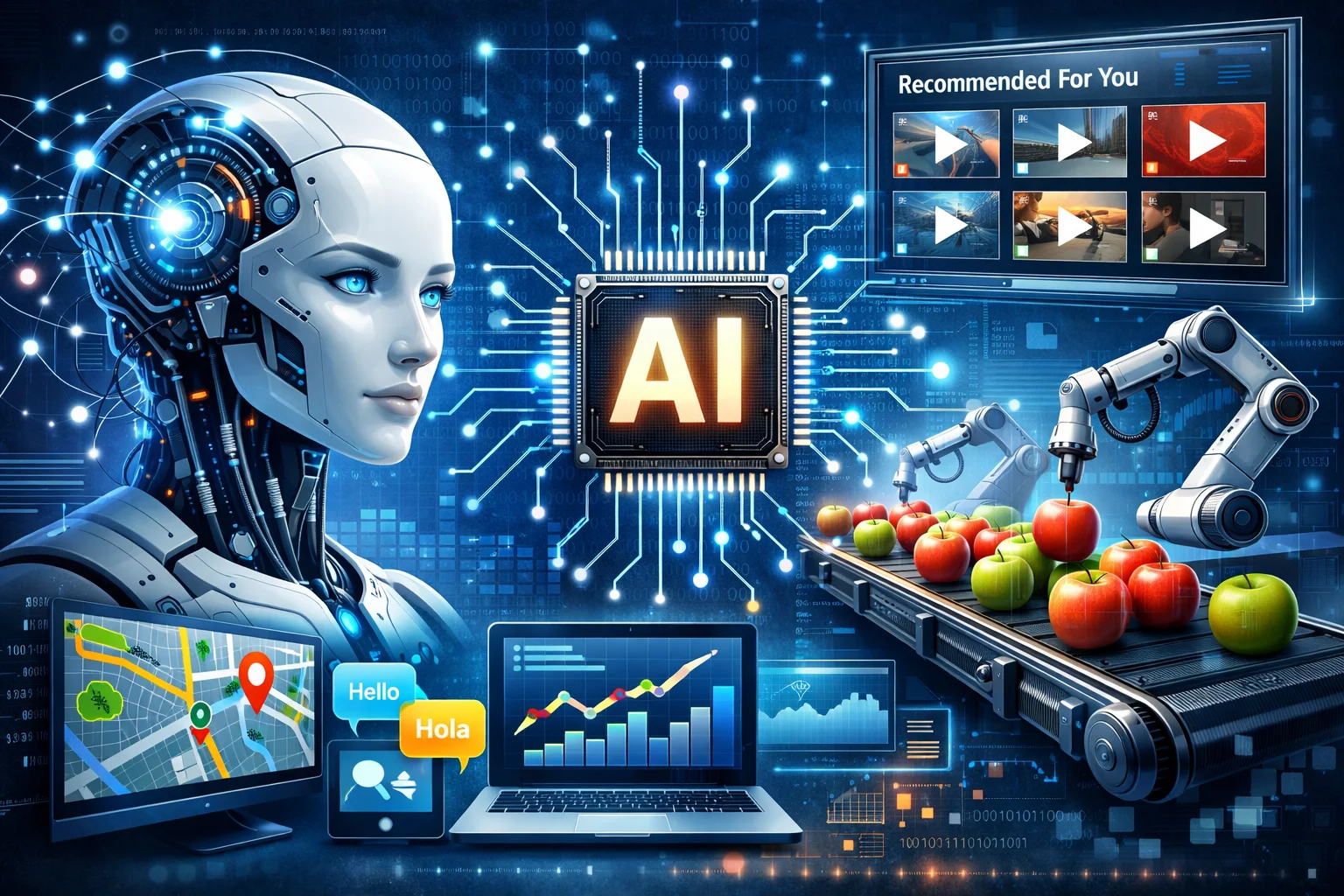
Artificial Intelligence (AI) is everywhere today. From the apps on our phones to smart assistants, AI is quietly making our lives easier. But many people are still unsure about how AI actually works or how AI tools and machine learning fit into the picture.
This article will explain AI in simple terms, show how AI tools work, and explore how machine learning powers the smart technology we use every day.
What is Artificial Intelligence?
Artificial Intelligence is a type of computer technology that allows machines to perform tasks that usually require human intelligence. These tasks include:
-
Understanding language
-
Recognizing images
-
Making decisions
-
Predicting outcomes
Unlike regular computer programs that follow strict instructions, AI can learn from data and improve over time.
Example:
When Netflix recommends a movie, AI analyzes what you have watched before and predicts what you might like next.
What Are AI Tools?
AI tools are software applications or platforms that make AI easy to use. They let people:
-
Automate tasks
-
Analyze large amounts of data
-
Generate content
-
Make predictions
AI tools are everywhere—from chatbots and virtual assistants to software for creating images, videos, or reports.
Example:
ChatGPT is an AI tool that can answer questions, generate text, and even help you write emails or essays.
How Does Machine Learning Fit In?
Machine Learning (ML) is a branch of AI. It’s the method that allows AI to learn from data instead of just following rules.
How it works:
-
Collect Data: AI needs data, like photos, text, or numbers.
-
Train the Model: The AI learns patterns in the data.
-
Test and Improve: AI is tested on new data to see how well it performs.
-
Make Predictions: Once trained, AI can make predictions or decisions based on new data.
Example:
A bank uses machine learning to detect fraudulent transactions. By analyzing past transactions, AI learns to recognize patterns that indicate fraud.
Types of AI Tools
AI tools can be divided into different categories depending on their function.
1. AI for Productivity
Tools that help automate work, manage tasks, and increase efficiency.
-
Examples: Notion AI, Microsoft Copilot, Trello + AI
-
Benefits: Save time, organize work, and reduce repetitive tasks
2. AI for Content Creation
Tools that generate text, images, and videos.
-
Examples: ChatGPT, Jasper AI, Canva AI, Lumen5
-
Benefits: Overcome writer’s block, create visuals and marketing content quickly
3. AI for Data and Analytics
Tools that analyze data and provide insights.
-
Examples: Tableau + AI, IBM Watson, Google Analytics + AI
-
Benefits: Predict trends, make data-driven decisions, and automate reports
4. AI for Learning and Research
Tools that help students and professionals learn new skills.
-
Examples: Quizlet + AI, Khan Academy + AI, Photomath
-
Benefits: Personalized learning, instant feedback, and efficient study methods
5. AI for Communication
Tools that improve writing, transcribe speech, or translate languages.
-
Examples: Grammarly, DeepL, Otter.ai
-
Benefits: Better communication, fast transcription, accurate translations
How AI Tools Learn
AI tools use machine learning to improve over time. They follow these basic steps:
-
Input Data: AI needs examples to learn from.
-
Process Data: It looks for patterns and connections in the data.
-
Output Results: AI produces results, like recommendations, text, or images.
-
Feedback Loop: Users or the system provide feedback to improve accuracy.
Example:
Spotify’s music recommendation AI learns from your listening habits. If you skip a song, it learns you might not like similar songs.
AI in Everyday Life
AI is already part of daily life, often in ways we don’t notice:
-
Smartphones: AI predicts text, suggests apps, and improves photos.
-
E-commerce: AI recommends products based on browsing history.
-
Healthcare: AI analyzes medical images to detect diseases faster.
-
Transportation: AI powers navigation apps, traffic prediction, and self-driving car technology.
Example:
When you type a message on your phone, AI predicts the next word, helping you type faster.
Benefits of Using AI Tools
-
Save Time: Automate repetitive tasks like data entry or content creation.
-
Increase Accuracy: Reduce human errors in calculations or predictions.
-
Enhance Creativity: AI generates ideas, images, or designs to inspire humans.
-
Improve Decision-Making: Analyze data and provide actionable insights.
-
Personalized Experience: AI adapts to user behavior, learning preferences, and needs.
Challenges and Considerations
While AI tools are powerful, they also have limitations:
-
Data Quality: AI can only be as good as the data it learns from.
-
Bias: AI may inherit biases present in the training data.
-
Dependence: Over-relying on AI can reduce human problem-solving skills.
-
Privacy: AI tools often process sensitive data, so privacy must be considered.
Tip:
Use AI as a helper, not a replacement. Always review AI outputs critically.
Getting Started with AI Tools
-
Choose Your Goal: Identify what you want AI to help with—writing, data analysis, or productivity.
-
Select the Tool: Pick an AI tool that matches your goal. For example, ChatGPT for text, Canva AI for design, or Otter.ai for transcription.
-
Start Small: Begin with one feature or project to learn the tool.
-
Practice Regularly: The more you use AI tools, the more efficiently you can apply them.
-
Combine Tools: Many AI tools work better together. For example, use ChatGPT to create content and Canva AI to design visuals.
The Future of AI Tools
In 2026 and beyond, AI tools are expected to:
-
Become more intelligent and context-aware
-
Integrate seamlessly into everyday software
-
Offer more personalized and adaptive experiences
-
Help people with creative tasks like writing, design, and video production
-
Continue to automate repetitive work across industries
Example:
Future AI tools might automatically generate entire reports, presentations, and visualizations based on a single command.
Conclusion
Understanding AI tools and machine learning helps us see how technology is shaping the world. AI is not magic—it works by analyzing data, learning patterns, and improving over time.
By using AI tools wisely, we can:
-
Boost productivity
-
Enhance creativity
-
Make better decisions
-
Learn faster and more effectively
AI tools are not here to replace humans but to make work and life easier. Learning how AI works and applying these tools can help anyone—students, professionals, and businesses—stay ahead in a rapidly changing world.
Read Also: Keep your face towards the sunshine and shadows will fall behind you
Watch Also: https://www.youtube.com/@TravelsofTheWorld24









Leave a Reply