
If you’ve ever tried macro photography — taking super‑close pictures of flowers, insects, tiny objects — you know one thing quickly: it’s hard to get everything sharp. At close distances, the part of the scene that is in focus (called depth of field) becomes very thin. That means you might have just a sliver of your subject in clear focus while the rest is blurry.
One of the common solutions photographers use is called focus stacking. It sounds simple: take many photos with different focus distances — near to far — and then blend them together using software. The result is a single image where everything looks sharp.
But even this technique isn’t perfect. That’s because of something called focus breathing and other tiny optical issues that show up when focus stacking is done the usual way — changing the focal point inside the lens. That can change the perspective slightly from shot to shot, and make parts of the final image look odd or misaligned.
Luckily, a new gadget from Novoflex was designed specifically to fix these problems and make better‑looking macro photos easier to get.
What’s Wrong With Ordinary Focus Stacking?
Before we talk about the gadget, let’s be clear about why focus stacking is tricky in the first place:
1. Tiny Depth of Field at Close Range
In macro photography, when you get very close to your subject, the area that stays in focus becomes extremely thin — often just a few millimetres deep. This makes it almost impossible to capture everything in focus with one shot, even if you stop down the aperture really small.
2. Focus Breathing Changes Perspective
Most focus stacking techniques work by adjusting the focus inside the lens. But as the lens changes focus, the optical geometry shifts slightly — a phenomenon called focus breathing. That tiny shift changes the angle and perspective from shot to shot, and when the software tries to merge these photos later, it can create artifacts — strange lines, mismatched areas, or ghosts around edges.
This is especially noticeable in product macro shots — jewelry, tiny gears, watch parts — where you need perfect alignment with clean edges and no weird distortions.
3. Reflections and Artifacts Can Still Happen
Even if you get all the photos, reflections from shiny surfaces or small errors in alignment can still show up in the final image. This makes some stacks look messy or unnatural.
So What Is This New Gadget?
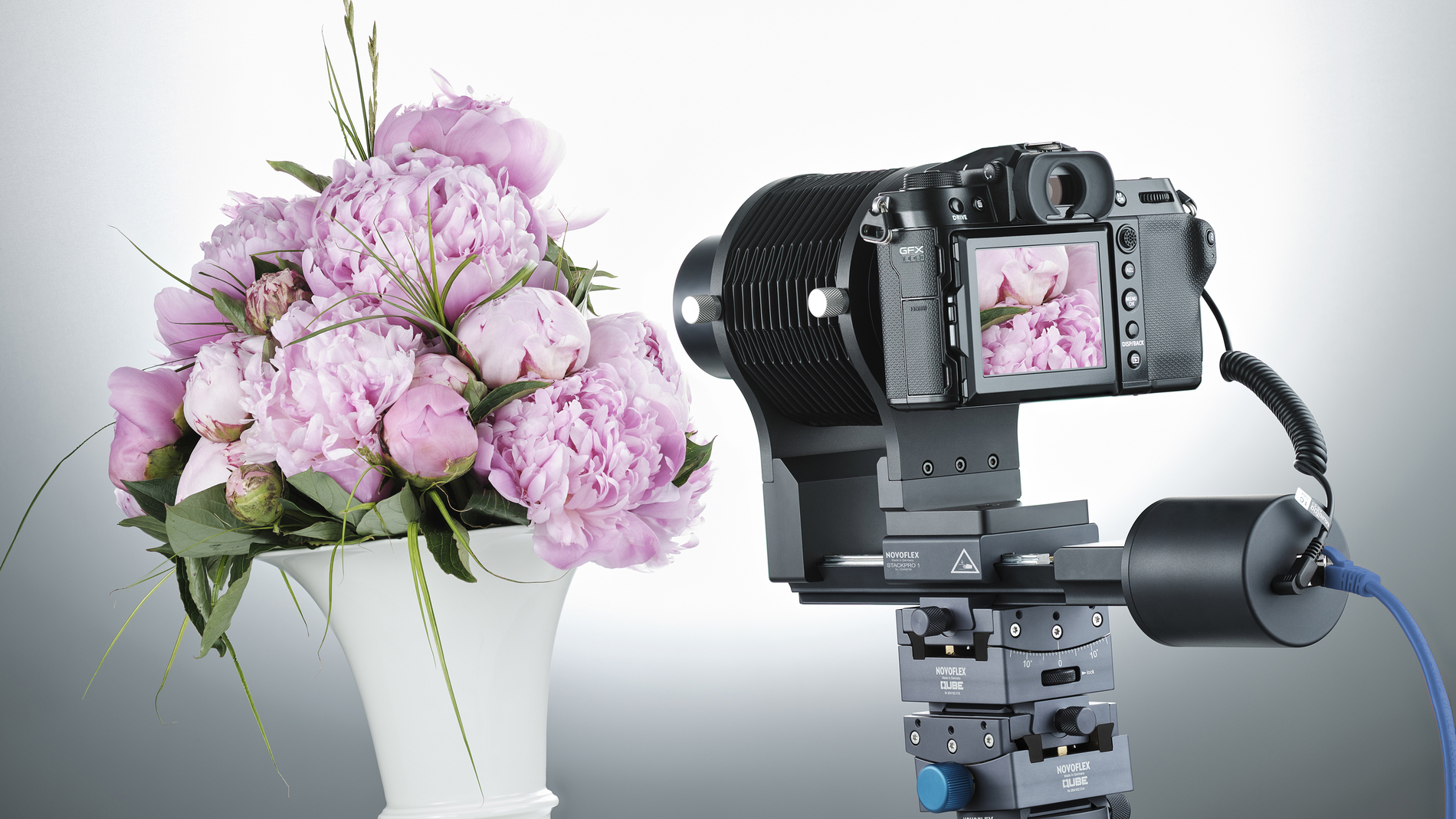
The gadget designed to fight these flaws is called the Novoflex StackPro 1 Universal Stacking Camera System — and it works very differently from traditional focus stacking gear.
Instead of changing the lens focus to get different shot distances, this system keeps the lens fixed and actually moves the camera itself. That’s a big deal.
Most stacking setups change the focus inside the lens, which brings in those focus breathing issues. But if the lens never moves, the perspective doesn’t shift between shots — meaning the final blended image has far fewer weird distortions or artifacts.
How the StackPro 1 Works
The StackPro 1 combines three things into one system:
1. A Macro Bellows System
A macro bellows is like an extendable tube between your camera and lens. It lets you focus closer and get higher magnification without changing the lens focus.
2. A Motor‑Driven Focus Rail
This is the key part: a motor moves the camera forward and backward precisely between each shot. It doesn’t touch the lens at all.
3. A Control Module
This controls the rail and bellows together so that you can program how far to move between photos, how many shots to take, and how fast.
In simple terms: you set up the camera and lens, you tell the StackPro 1 how deep you want the final image to be, and it takes care of making sure your camera moves in tiny steps — all while your lens stays in the same position.
Why That’s Better
By moving the camera instead of the lens focus:
No Focus Breathing Distortions
Since the lens doesn’t change focus, the perspective stays the same between shots. This reduces strange artifacts and makes blending much easier.
Better Results With Shiny or Reflective Subjects
Because the perspective stays consistent, reflections and ghosting have less chance of messing up your final image — useful for product shots like jewelry or small mechanical parts.
Works With Many Camera Systems
The StackPro 1 can work with lots of mirrorless camera mounts — Canon RF, Sony E, Nikon Z, Fujifilm GFX, L‑Mount, and even medium format digital backs. That means it isn’t limited to just one brand.
What Gear Do You Need?
A few important things to know before you decide if this gadget is right for you:
A. Medium or Large Format Lenses Are Best
You need lenses that have a big image circle — that means medium or large format lenses work best. Full‑frame or APS‑C lenses usually don’t project a big enough circle to let you move the camera around far enough for stacking without losing image coverage.
That’s why some photographers will pair this system with lenses from brands like Schneider, Mamiya, Rodenstock and others that are known for quality macro optics.
B. Adapters Are Available
Even though it’s designed for larger lenses, there are adapters that let you mount different lenses so you can use the StackPro 1 with almost any camera body.
C. Price Is Not Cheap
This entire system starts at around $4,849 (or £2,750 in the UK), and kits that include a suitable lens cost more. That means it’s mostly aimed at serious macro shooters, studios, product photographers, and professionals who need very high‑quality results.
How Photographers Might Use It
This kind of setup is especially useful when:
Product Photography
Jewelry, small electronics, tiny shapes — anything shiny where perfect focus and consistent perspective matter — will benefit from more accurate focus stacking.
Scientific or Nature Macro
Botanists, entomologists, and other professionals who document small things for research need ultra‑sharp details, making this tech useful for their work too.
Creative Macro Art
Artistic macro photographers who want flawless detail in every inch of their composition will appreciate the cleaner results without weird edge artifacts or focus mismatches.
What About Cheaper or DIY Alternatives?
Lots of photographers still use focus stacking in more traditional ways. You can:
Use Software Only
Programs like Helicon Focus or Zerene Stacker let you blend focus stacked series of images and correct some issues in software after capture.
DIY Motion Controllers
Some hobbyists use DIY motion rigs built with an Arduino or stepper motors to move the camera precisely. These cost a lot less than professional gear, though they require technical skills to build and operate.
Standard Macro Rails
Many photographers have mechanical macro focusing rails that let them move the camera in small steps manually or with a simple motor. Those help, but they don’t solve focus breathing unless the lens stays fixed.
Both these alternatives can work fine for many situations, but they won’t eliminate lens‑related perspective changes like the StackPro 1 does.
Is This Worth It?
If you are a hobbyist or just starting macro photography, this gadget might feel overkill. Traditional focus stacking techniques combined with regular macro rails or software might be enough. But if you’re doing professional product photography, scientific work, or ultra‑high‑quality macro art, then something that reduces focus breathing and artifacts could make a big difference in your final images.
The ability to keep the lens fixed and move the camera precisely is a clever solution to a problem that macro shooters have been fighting for years. It’s not just a gadget — it’s a new way of thinking about how to approach focus stacking.
Final Thoughts
Focus stacking has been around for a long time, and it’s helped photographers get much sharper macro images than was possible with single shots. But it’s not perfect — lens breathing and perspective shifts can still create problems even when the stack is technically “correct.”
The Novoflex StackPro 1 Universal Stacking Camera System offers a fresh way to tackle those issues, letting your camera itself do the tiny movements while the lens stays put. This gives cleaner images with fewer artifacts, and supports a wide range of camera systems.
It’s expensive, yes, but for serious photographers who demand the best macro results, it could be a game changer. If you’re thinking about improving your macro workflows, this gadget shows how far stacking technology can go beyond just software blending.
Read Also: Keep your face towards the sunshine and shadows will fall behind you
Watch Also: https://www.youtube.com/@TravelsofTheWorld24



Leave a Reply