
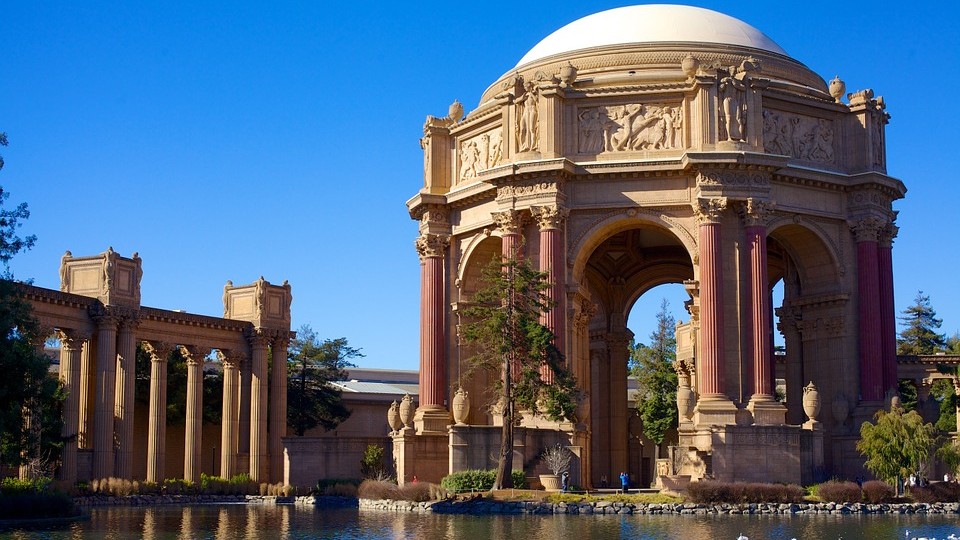
The Palace of Fine Arts is one of the most beautiful and peaceful places in San Francisco. With its grand columns, giant dome, and calm lagoon, it feels like a piece of ancient Europe placed gently in the middle of a modern American city. Many visitors say that walking here feels like stepping into a dream.
This landmark is not just a pretty structure. It carries a deep history, artistic meaning, and emotional charm that has touched people for more than a century. Families come here for picnics, couples come for romantic walks, photographers come for perfect shots, and travelers come simply to admire its quiet beauty.
A Monument Built for Beauty
The Palace of Fine Arts was created for a grand world fair held in 1915. At that time, San Francisco wanted to celebrate its recovery from the devastating earthquake and fire of 1906. The city aimed to show the world that it had rebuilt itself and was stronger than ever.
Unlike most exhibition buildings that focused on technology or industry, this structure was designed purely to celebrate art, imagination, and beauty. It was meant to be emotional rather than practical — a place where people could pause, reflect, and feel inspired.
The architect behind this vision was Bernard Maybeck. He believed architecture should touch the heart, not just impress the eye. Instead of creating something modern and flashy, he chose a design inspired by ancient Roman and Greek ruins.
Inspired by Ancient Civilizations
When you look at the Palace of Fine Arts, you may feel as if it belongs to another time. The tall classical columns, decorative sculptures, and massive rotunda resemble ancient temples.
Maybeck intentionally designed it to look slightly aged and weathered, as if it had been standing for centuries. He wanted visitors to feel a sense of nostalgia — the beauty of something grand that has survived time.
The open circular structure surrounding the dome is called a rotunda. It stands beside a peaceful lagoon, creating perfect reflections in the water. This mirror-like effect doubles the visual impact, making the building seem even more majestic.
The Magical Lagoon
The lagoon is not just decorative. It plays a big role in the atmosphere of the place. Calm water, gentle ripples, and reflections create a sense of peace that contrasts with the busy city nearby.
Swans, ducks, and other birds glide across the water, adding life and movement to the scene. Trees and plants surround the lagoon, softening the stone architecture and making the whole area feel like a natural sanctuary.
People often sit along the edge to relax, read, or simply watch the water. It is one of those rare urban spaces where time seems to slow down.
Built to Be Temporary — But Saved Forever
Interestingly, the Palace of Fine Arts was never meant to last. It was originally constructed from temporary materials like wood, plaster, and a fiber-like substance. Most buildings from the fair were demolished afterward.
However, people loved this structure so much that they refused to let it disappear. It quickly became a cherished symbol of the city.
Over the years, the original materials began hookup, and the building started to deteriorate. By the mid-20th century, it was in serious danger of collapse. Thankfully, a major restoration project rebuilt the entire structure using strong, permanent materials like concrete.
The new version carefully preserved the original design, ensuring that future generations could continue to enjoy it.
Located in a Charming Neighborhood
The Palace of Fine Arts stands in the Marina District, a scenic area known for its waterfront views and relaxed atmosphere. The neighborhood itself was also developed after the 1906 earthquake, making it part of the city’s rebirth story.
From here, visitors can enjoy views of the bay, nearby parks, and sometimes even distant landmarks on clear days. The location adds to the feeling that this is a special place set apart from everyday life.
A Favorite Spot for Photography
Few places in San Francisco are photographed as often as the Palace of Fine Arts. The combination of grand architecture, water reflections, trees, and open sky creates endless picture opportunities.
Popular photo moments include:
-
Sunrise light glowing on the dome
-
Sunset reflections in the lagoon
-
Nighttime illumination of the columns
-
Wedding portraits
-
Engagement shoots
-
Travel photography
At night, soft lighting turns the structure into a golden masterpiece against the dark sky. The reflections shimmer in the water, creating a romantic and almost magical scene.
A Place for Romance and Celebration
Because of its beauty and peaceful mood, the Palace of Fine Arts has become one of the most popular wedding locations in San Francisco. Couples from all over the world come here to exchange vows or take wedding photos.
The space also hosts:
-
Cultural events
-
Art performances
-
Outdoor gatherings
-
Community celebrations
Despite its grand appearance, the atmosphere remains welcoming and calm rather than formal or intimidating.
Symbolism and Emotional Impact
Maybeck designed the structure to symbolize the fleeting nature of beauty and human achievement. By making it resemble ancient ruins, he suggested that even great civilizations eventually fade — but their art and ideas live on.
This theme gives the building a poetic quality. It is not just about looking impressive; it invites reflection about time, history, and creativity.
Many visitors describe feeling peaceful, inspired, or even slightly melancholic while walking through the colonnades. The quiet echo of footsteps, the open sky above, and the still water nearby all contribute to this emotional experience.
Wildlife and Natural Harmony
Although it is an architectural monument, nature plays a huge role in the experience. Birds nest in the trees, turtles sun themselves on rocks, and fish swim beneath the surface of the lagoon.
This mix of architecture and nature creates a balanced environment. The building does not dominate the landscape — it coexists with it.
In spring, flowers bloom around the area, adding color and fragrance. In autumn, falling leaves create a golden carpet on the ground. Each season brings a different personality to the site.
A Popular Tourist Attraction
Today, the Palace of Fine Arts is one of the most visited places in San Francisco. Tourists often include it in their itinerary along with other famous city sights.
What makes it special is that it is free to visit and open to everyone. There are no gates, no tickets, and no strict rules about how long you can stay. You can walk through, sit quietly, or simply enjoy the view at your own pace.
This accessibility makes it feel like a gift from the city to the public.
Inside the Theater
Behind the rotunda is a large theater building that hosts performances, exhibitions, and special events. While many visitors focus on the outdoor beauty, the indoor space also plays an important role in keeping the site active and culturally relevant.
Shows held here include:
-
Music concerts
-
Dance performances
-
Film screenings
-
Art exhibitions
-
Educational programs
This blend of art forms continues the original purpose of celebrating creativity.
A Peaceful Escape in a Busy City
San Francisco is known for its hills, traffic, and fast-moving urban life. The Palace of Fine Arts offers a rare calm space where people can slow down.
There are no loud commercial activities here, no large shopping areas, and no overwhelming crowds most of the time. Instead, the focus is on quiet appreciation.
Locals often come here for morning walks, meditation, or simply to breathe fresh air. It functions almost like an outdoor living room for the community.
Cultural and Artistic Importance
Beyond tourism, the Palace of Fine Arts holds deep cultural value. It represents the power of art to uplift a city during difficult times. Built after a disaster, it symbolized hope, resilience, and human creativity.
It also shows that architecture can be meaningful even when it serves no practical purpose. Its value lies in emotional and aesthetic experience rather than function.
Few structures in the world are dedicated so purely to beauty.
Why It Still Matters Today
More than a hundred years after its creation, the Palace of Fine Arts continues to inspire. In a world filled with modern glass skyscrapers and fast construction, it reminds people of the importance of artistry and imagination.
It teaches several lessons:
-
Beauty can unite people
-
Public spaces matter
-
Art should be accessible to everyone
-
Architecture can create emotion
-
Preservation of heritage is important
Its survival shows how deeply people care about places that touch their hearts.
Final Thoughts
The Palace of Fine Arts is not just a building — it is an experience. It blends architecture, history, nature, and emotion into one unforgettable place. Whether you visit for a few minutes or spend an entire afternoon there, the atmosphere leaves a lasting impression.
Standing beside the quiet lagoon, looking up at the grand dome, you may feel both small and uplifted at the same time. It is a reminder that human creativity can produce something timeless, something that speaks across generations.
In a city famous for innovation and change, this elegant monument stands as a symbol of enduring beauty. It proves that sometimes the most powerful structures are not the tallest or the most advanced, but the ones that make people stop, breathe, and simply feel.
Read Also: Keep your face towards the sunshine and shadows will fall behind you
Watch Also: https://www.youtube.com/@TravelsofTheWorld24






Leave a Reply