
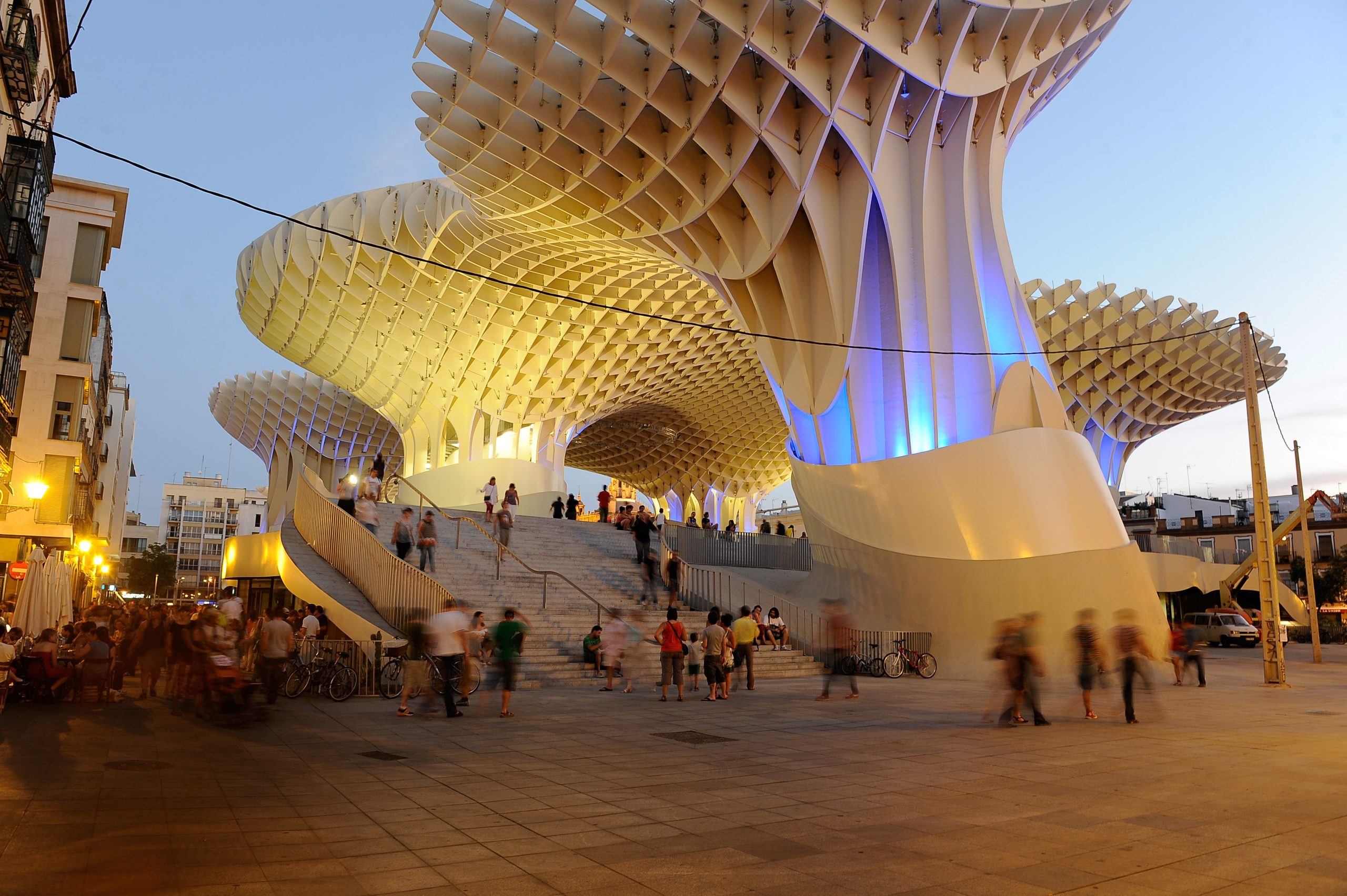
Seville is famous for its rich history, colorful streets, and lively culture. The city is filled with old cathedrals, palaces, and charming plazas. Amidst all this history stands a very unusual and modern structure called the Metropol Parasol. Unlike anything traditional in Seville, it looks like giant mushrooms or a futuristic canopy, stretching over a historic square.
Locals sometimes call it “Las Setas,” which means “The Mushrooms” in Spanish, because of its unusual shapes. It has become a symbol of modern Seville and attracts tourists from all over the world who want to see this unique combination of design, art, and public space.
Why It Was Built
Plaza de la Encarnación, where the structure stands, was once an ordinary square with a market. City planners wanted to revitalize the area and create a space where people could gather, shop, and enjoy the city in a new way.
Instead of building another ordinary building, the city held a design competition. The idea was to create something bold, innovative, and functional — a structure that would provide shade, enhance the square, and become an icon for Seville.
Designed by a Famous Architect
The project was designed by the German architect Jürgen Mayer H.. His concept was inspired by organic shapes and the idea of creating an airy, flowing space above the square.
The design is made mostly of wood, which is unusual for such a large public structure. It combines natural materials with modern engineering, showing how architecture can be both artistic and functional.
The Structure
Metropol Parasol is massive. It stretches over 150 meters (about 492 feet) in length and covers the square completely. Its design consists of six large parasols connected together, forming a wavy, umbrella-like canopy.
From the ground, the structure provides shade and a pleasant environment for people walking or sitting below. From above, it looks like a network of flowing wooden patterns that almost seem alive.
The structure uses a special laminated wood called Kerto, combined with a polyurethane coating to make it weatherproof and durable. This mix allows it to remain stable while keeping the organic shapes light and airy.
Different Levels of the Parasol
Metropol Parasol is more than just a roof. It contains multiple levels with different uses:
-
Market Level: At the base, there is a traditional market where locals and tourists can buy fresh fruits, vegetables, and local products. This space brings life to the plaza every day.
-
Archaeological Museum: Below ground, visitors can explore ruins from Roman and Moorish times. The museum highlights Seville’s long history while connecting it to the modern structure above.
-
Public Square: Open spaces under the parasols serve as a plaza for gatherings, performances, and events.
-
Walkways and Viewing Platforms: Above, a network of wooden walkways lets visitors walk high above the square, offering panoramic views of Seville.
Walking Among the Canopy
One of the most exciting experiences is walking along the elevated walkway. The platform is open and offers a 360-degree view of the city, including Seville Cathedral, historic rooftops, and the winding streets of the old town.
At sunset, the view is especially beautiful. The warm light reflects on the wooden surface, creating patterns and shadows that change as you move. People often stop to take photographs or simply enjoy the view.
Shading and Comfort
Seville is known for hot summers, with temperatures often above 35°C (95°F). The parasol’s large canopy provides shade for pedestrians, markets, and outdoor events.
The design also allows airflow, keeping the square cooler than surrounding streets. By combining artistic design with practical comfort, the structure improves the urban environment while creating a unique visual statement.
Public Events and Social Life
The plaza under Metropol Parasol has become a hub of social life. People gather for concerts, cultural performances, street art, and festivals.
Tourists enjoy walking around, shopping, or relaxing in cafés beneath the structure. Locals use it daily, making it part of the city’s routine. This mix of visitors and residents gives the square a lively and dynamic atmosphere.
Modern Landmark in Historic Seville
Seville is famous for its traditional architecture, including Gothic cathedrals, Moorish palaces, and cobbled streets. Introducing such a modern structure in the middle of this historic setting was bold.
At first, some people were skeptical. They worried that the futuristic design might not fit the city’s traditional style. Over time, however, it has become an accepted and loved landmark, admired for its creativity and functionality.
Architectural and Engineering Feats
Creating such a large wooden structure posed many challenges. Wood is lighter than concrete or steel, but building something of this scale required careful planning and engineering.
Special techniques were used to make the structure strong, durable, and resistant to weather. The curved, flowing shapes had to fit precisely, with every piece of wood cut and shaped for the exact position.
The result is a stable, lasting structure that feels almost weightless despite its size.
Tourism and Cultural Significance
Metropol Parasol has become one of Seville’s most visited modern attractions. Tourists come to walk above the city, take photographs, and enjoy the mix of old and new.
The structure also highlights the city’s openness to innovation. By blending contemporary architecture with public life and history, it creates a space that respects tradition while embracing modern ideas.
Accessibility and Experience
Visitors can easily reach the site by walking from the city center or using public transportation. Entrance to the elevated walkway is usually ticketed, while the market and plaza remain open to everyone.
Walking along the top, seeing the city spread below, and observing the shadows of the parasols is an unforgettable experience. It gives a new perspective on Seville — a city where history, culture, and modern life coexist.
Nighttime Views
At night, the structure is illuminated with warm lights that emphasize its curves and wooden patterns. The plaza below continues to be lively, with cafés and street performers entertaining visitors.
The combination of lighting, shadows, and activity makes Metropol Parasol feel magical after dark, different from any other square in Seville.
Connecting Past and Present
One of the most remarkable things about Metropol Parasol is how it connects different layers of history and life.
-
The archaeological museum below shows Roman and Moorish ruins.
-
The market and plaza keep local traditions alive.
-
The canopy above represents modern design and innovation.
This layering makes it more than a structure — it is a bridge between past, present, and future.
Why People Love It
People appreciate Metropol Parasol for many reasons:
-
Unique, bold, and artistic design
-
Shade and comfort in a hot city
-
Panoramic views of Seville
-
Cultural events and public space
-
Connection to history through the underground museum
-
Lively atmosphere for locals and tourists alike
It is not just a building, but a social, cultural, and visual experience.
Conclusion
Metropol Parasol is a perfect example of how modern architecture can enhance a historic city. Its organic, flowing shapes, functional design, and public accessibility make it one of the most fascinating landmarks in Seville.
Visitors can explore ancient ruins, shop in a local market, walk above the city, or simply relax under the shade of the giant wooden canopy. It shows that creativity and innovation can create spaces that are practical, beautiful, and socially meaningful all at once.
In a city known for history and tradition, Metropol Parasol stands out as a bold statement of modern life — a place where art, design, and community come together in a way that feels both futuristic and deeply connected to Seville’s spirit.






Leave a Reply