
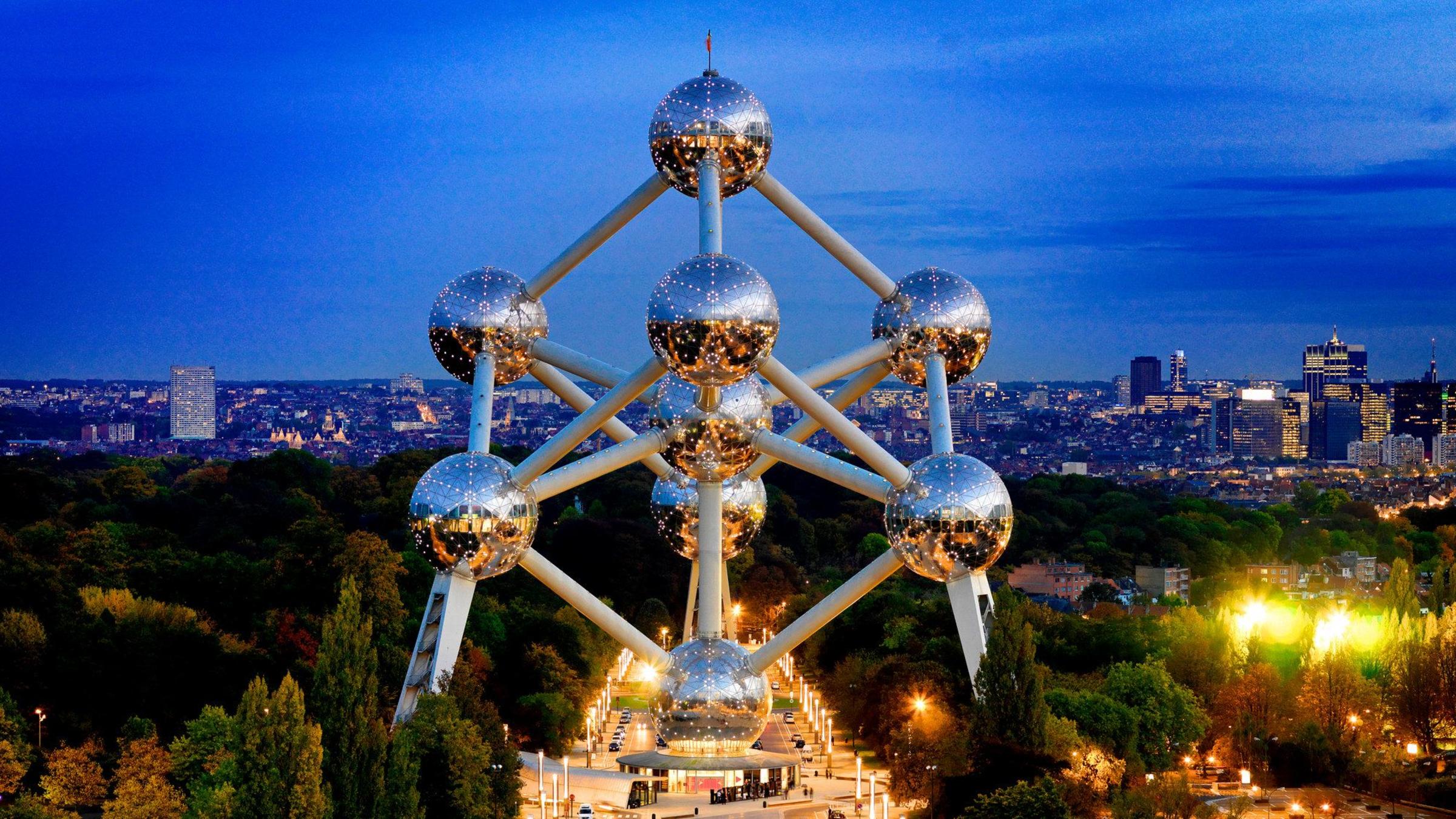
The Atomium is one of the most famous landmarks in Brussels, the capital city of Belgium. It is a building like no other, shaped like a giant model of an iron crystal, magnified 165 billion times. Its unique design makes it look futuristic, and it has become a symbol of Brussels and Belgium as a whole. People often recognize it immediately because of its shiny spheres and connecting tubes that form a strange but exciting shape in the city skyline.
The Atomium was built for Expo 58, the 1958 World’s Fair. The fair was meant to showcase progress, technology, and human creativity after the difficult years of World War II. Architects wanted a design that would represent science, modern life, and optimism for the future. The Atomium, with its futuristic shape, successfully captured this idea. It was designed by engineer André Waterkeyn and architects André and Jean Polak. Their goal was to create a monument that would inspire wonder and show that humans could combine science and art in extraordinary ways.
The structure is 102 meters (around 335 feet) tall and is made of nine large spheres connected by tubes. Each sphere is about 18 meters in diameter and is covered with stainless steel, giving it a shiny, reflective surface. People can walk inside the Atomium through the tubes, which contain escalators and stairs, connecting the spheres. This makes the building not just a monument to look at but also a space to explore. Visitors can travel from one sphere to another and see exhibitions, displays, and beautiful views of Brussels from the top. (atomium.be)
The Atomium represents an iron crystal, magnified billions of times, which shows the connection between science and art. The spheres symbolize atoms, and the tubes are the bonds that hold them together. This design was very unusual at the time, as most buildings were rectangular or traditional in shape. The Atomium looked like something from a science-fiction story, which excited visitors and helped it become a lasting symbol of the city.
Inside the Atomium, there are exhibitions about science, design, and history. Some spheres show the history of the Atomium itself, how it was built, and its importance in Belgian culture. Other spheres host temporary art and cultural exhibitions, making each visit unique. There is also a restaurant at the top, where visitors can enjoy food while looking out over Brussels. The panoramic view from the top is amazing, allowing people to see the city, parks, and even the distant countryside.
The Atomium was built with a combination of concrete and steel. Originally, the spheres were covered with aluminum, but during renovations, they were replaced with stainless steel, which is more durable and shiny. The building was intended to be temporary for the World’s Fair, but it became so popular and beloved that it stayed permanently. Over the years, it has been renovated several times to maintain its structure and appearance.
One of the most exciting aspects of the Atomium is how visitors move through it. Escalators in the tubes connect some spheres, and in others, elevators take people up to the top. Walking through the tubes feels like traveling inside a futuristic sculpture. The design creates a sense of discovery, as each sphere holds surprises, whether exhibitions, interactive displays, or viewing platforms.
The Atomium has become an important cultural icon. It is used in postcards, movies, and tourist guides to represent Brussels. For locals, it is a source of pride and a symbol of progress, innovation, and creativity. Many events are held nearby, and it often lights up at night in different colors to celebrate holidays or important events.
The building was revolutionary because it combined art, architecture, and science in a single project. At the time, few people had seen a structure that looked like a giant molecule. It challenged the idea of what a building could be and inspired architects and engineers around the world to think creatively. Today, the Atomium is studied by students and professionals as an example of imaginative architecture that works practically while being visually striking.
The location of the Atomium is in Heysel, a part of Brussels with large parks and exhibition spaces. The surrounding area was designed to host Expo 58, so the Atomium sits among open spaces, making it visible from far away. Its futuristic look stands out against the natural surroundings, creating an interesting contrast. Visitors often take photographs from different angles, capturing the reflections of sunlight on the spheres or the shadows they cast.
At night, the Atomium becomes even more impressive. Lights illuminate the spheres, highlighting their round shapes and shiny surfaces. Special light shows are sometimes arranged for celebrations, giving the building a magical feel. People from all over the world come to see it both during the day and at night, making it a must-visit attraction in Brussels.
The Atomium also teaches visitors about the power of imagination. It shows that architecture can be more than just functional; it can tell a story, inspire curiosity, and connect people to science and culture. Its bold design was unusual for the 1950s, and it continues to inspire creative thinking today.
Even decades after it was built, the Atomium remains relevant. Renovations have updated its interiors, reinforced its structure, and improved accessibility. Interactive exhibitions use modern technology to engage visitors, making the experience enjoyable for people of all ages. Families, students, tourists, and locals all visit the Atomium to learn, explore, and admire its design.
The Atomium has a special place in Belgian culture. It is not just a building but a symbol of national pride. It represents a moment in history when Belgium hosted the World’s Fair, showing the world its creativity and innovation. It also reflects human curiosity and the desire to explore both the physical world and the world of ideas.
In conclusion, the Atomium is much more than a building. Its unusual design, shiny spheres, and futuristic appearance make it a symbol of science, creativity, and progress. Built for Expo 58, it continues to attract millions of visitors from around the world. People come to explore the spheres, enjoy panoramic views of Brussels, and experience a piece of architectural history. The Atomium shows how bold ideas and imagination can create something unforgettable, making it a true icon of Brussels and a testament to human ingenuity.
Read Also: Keep your face towards the sunshine and shadows will fall behind you
Watch Also: https://www.youtube.com/@TravelsofTheWorld24






Leave a Reply