
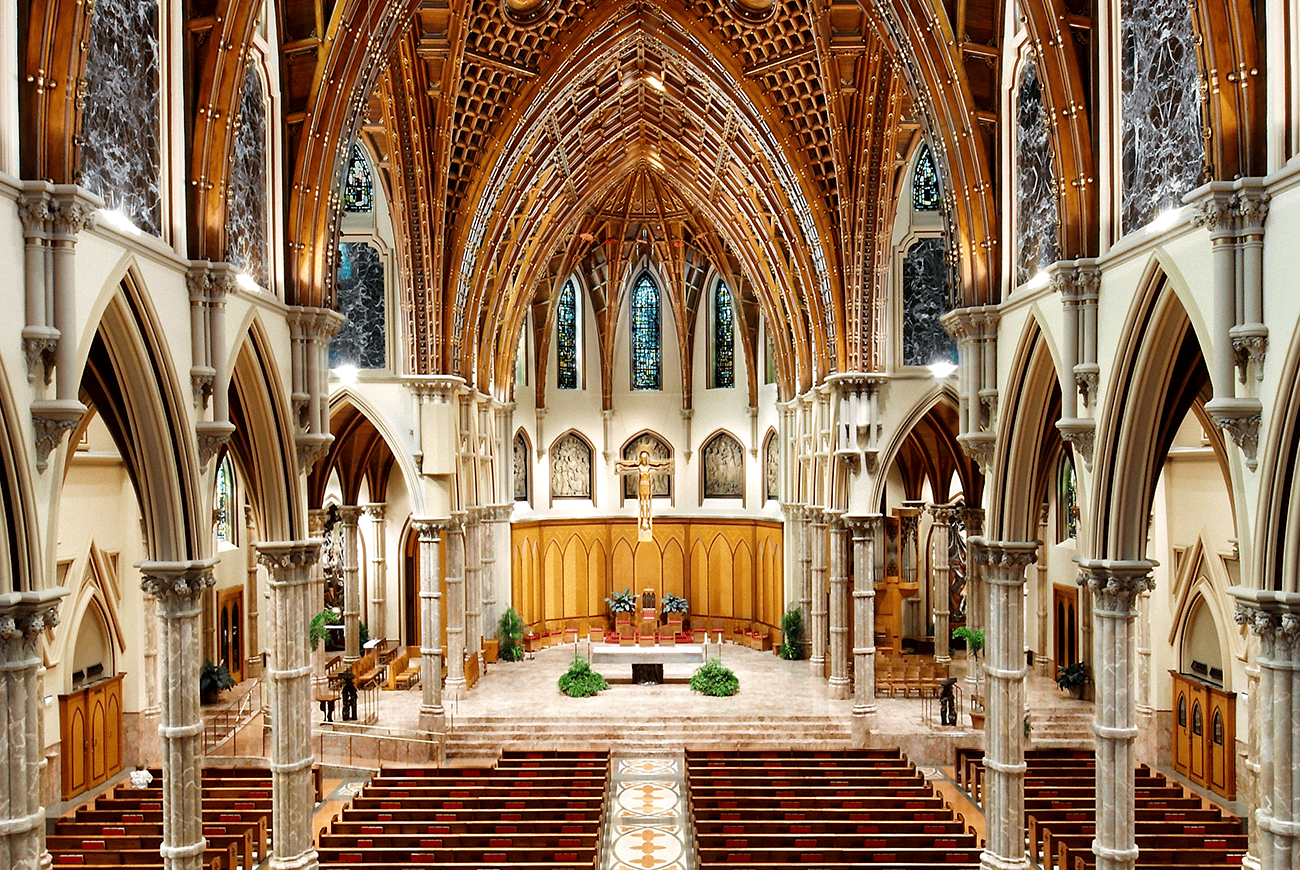
Holy Name Cathedral was built to replace St. Michael’s Church, which was destroyed in the Great Chicago Fire of 1871. Construction began in 1874 and was completed in 1875, with later additions enhancing its grandeur. The cathedral was designed to serve the growing Catholic population in Chicago and to reflect the importance of faith in the city’s recovery after the fire.
The cathedral has witnessed many important events in Chicago’s history, including funerals for notable figures, religious ceremonies, and community gatherings. It remains a symbol of resilience, faith, and the city’s rich cultural heritage.
Architectural Style
Holy Name Cathedral is designed in the Gothic Revival style, a popular choice for churches in the 19th century. This style emphasizes verticality, pointed arches, and elaborate ornamentation. Key architectural features include:
-
Twin spires: These towers rise high above the street, giving the cathedral a dramatic presence in the skyline.
-
Pointed arches: Characteristic of Gothic design, arches are used in windows, doorways, and structural elements.
-
Detailed stonework: Intricate carvings and decorative elements adorn the facade.
-
Rose window: A large circular stained glass window above the entrance adds both beauty and spiritual symbolism.
The cathedral’s design reflects both European influences and the local craftsmanship of Chicago builders in the late 19th century.
Exterior Features
The exterior of Holy Name Cathedral is made of limestone and features elaborate Gothic detailing. The twin spires and pointed arches create a sense of height and grandeur. Decorative statues and carvings adorn the facade, often depicting religious figures and scenes.
The cathedral’s location on State Street makes it a focal point for the neighborhood. Its presence is enhanced by the surrounding streetscape, which includes historic buildings and urban landscaping. Visitors often stop to admire the exterior before entering to explore the interior.
Interior Design
Inside, Holy Name Cathedral is just as impressive. The interior combines beauty, artistry, and spiritual function:
-
Vaulted ceilings: The high ceilings draw the eye upward, creating a sense of awe and reverence.
-
Stained glass windows: Depicting biblical stories, saints, and religious symbols, the windows fill the interior with colorful light.
-
Marble altars and statues: These elements add elegance and highlight the sacred focus of the space.
-
Ornate woodwork: Detailed pews, railings, and decorative elements enhance the richness of the interior.
The cathedral can accommodate large congregations, making it suitable for daily mass, weddings, and significant religious celebrations.
Religious and Cultural Significance
As the seat of the Archdiocese of Chicago, Holy Name Cathedral plays a central role in the Catholic community. It hosts regular services, special ceremonies, and events that serve thousands of parishioners.
Beyond its religious function, the cathedral has cultural significance. It has been a site for community gatherings, historical celebrations, and events that honor Chicago’s heritage. Its presence connects modern Chicago with its historical roots, particularly following the devastation of the Great Fire.
Memorials and Artwork
Holy Name Cathedral contains numerous memorials and artworks that tell stories of faith and history:
-
Saints and religious figures: Statues and carvings throughout the cathedral honor important saints.
-
Memorial plaques: Commemorating clergy, parishioners, and historical events.
-
Paintings and murals: Artistic depictions of biblical events enhance the interior’s spiritual ambiance.
These elements create a rich visual experience that blends artistry with religious meaning, making the cathedral both a place of worship and a cultural treasure.
Community Role
The cathedral is active in serving the local community. It hosts educational programs, outreach initiatives, and charity events. These activities strengthen the bond between the church and the city, ensuring that Holy Name Cathedral remains a living part of Chicago’s social and cultural life.
It also attracts visitors from across the country and internationally. Tourists come to admire the architecture, learn about Chicago’s history, and experience the cathedral’s serene atmosphere.
Preservation and Restoration
Preserving Holy Name Cathedral is an ongoing effort. Restoration projects over the years have focused on:
-
Cleaning and repairing the stone facade and spires
-
Restoring stained glass windows and interior artwork
-
Updating electrical, plumbing, and safety systems without compromising historical integrity
-
Maintaining the overall structure to withstand Chicago’s weather
These efforts ensure that the cathedral remains both a functional place of worship and a historic landmark for future generations.
Visitor Experience
Visitors to Holy Name Cathedral can explore its exterior and interior, attend services, or join guided tours. Photography, quiet reflection, and participation in religious ceremonies allow visitors to appreciate both the architectural beauty and spiritual significance of the cathedral.
Its central location in Chicago makes it easy to include in a city tour, alongside other historic sites, museums, and cultural landmarks. The cathedral is often featured in cultural guides and architectural studies of the city.
Final Thoughts
Holy Name Cathedral stands as a testament to Chicago’s resilience, architectural skill, and religious heritage. Its Gothic Revival design, twin spires, and richly decorated interior make it one of the most beautiful and significant buildings in Illinois.
Visiting Holy Name Cathedral offers insight into Chicago’s history, the development of Gothic Revival architecture in America, and the enduring role of faith in the city. Its blend of artistry, history, and spirituality ensures it remains a cherished landmark for both worshippers and visitors.
Read Also: Keep your face towards the sunshine and shadows will fall behind you
Watch Also: https://www.youtube.com/@TravelsofTheWorld24











Leave a Reply