
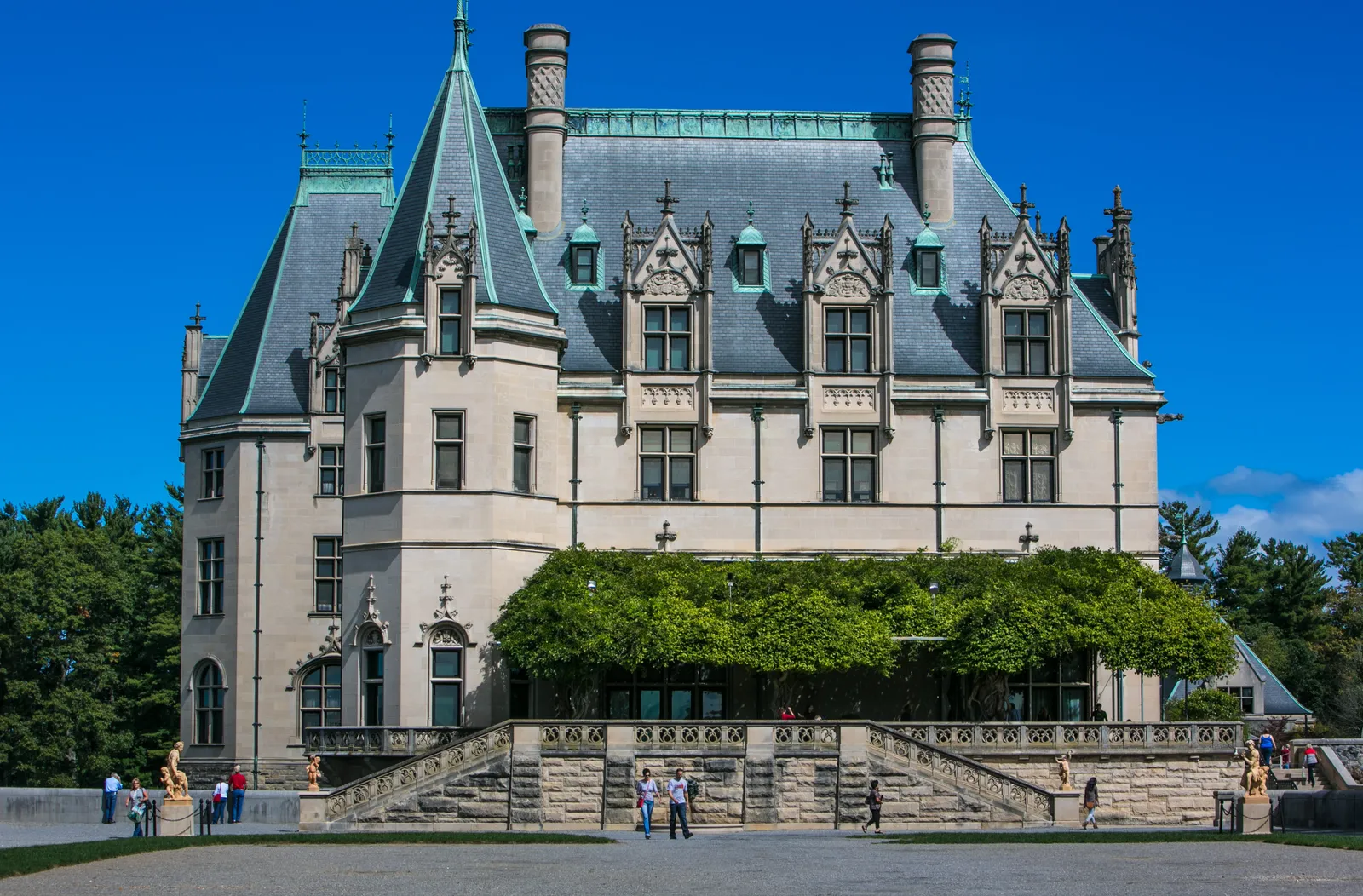
Construction of Biltmore began in 1889 and was completed in 1895. Vanderbilt wanted a grand estate that reflected his family’s status and love of art and architecture. The design was inspired by French Renaissance chateaux, showcasing ornate details, symmetry, and luxurious living spaces.
The estate was not only a home but also a working property. Vanderbilt employed hundreds of workers for construction, landscaping, and maintenance. The estate included farms, gardens, and later, a winery. Biltmore was designed to be self-sufficient, demonstrating Vanderbilt’s vision of combining beauty with functionality.
Architectural Style
Biltmore’s architecture is heavily influenced by French Renaissance design. Key features include:
-
Steeply pitched roofs: Characteristic of chateaux, these roofs add drama and elegance.
-
Turrets and towers: Decorative elements create vertical interest and grandeur.
-
Symmetrical facades: Balanced design emphasizes harmony and refinement.
-
Ornate stonework and carvings: Detailed sculptural elements decorate doors, windows, and exterior walls.
-
Large windows: These allow natural light to illuminate the interior and provide views of the surrounding estate.
The interior complements the exterior with lavish materials, including marble, fine wood, and intricate plasterwork. Biltmore’s design combines elegance with comfort, making it both visually impressive and livable.
Interior Highlights
Inside Biltmore, visitors can explore dozens of rooms, each with its own unique features:
-
Banquet hall: The grand hall features a massive fireplace, chandeliers, and a high vaulted ceiling.
-
Library: A two-story room with thousands of books, elegant woodwork, and a cozy reading atmosphere.
-
Bedrooms and sitting rooms: Lavishly decorated with antique furniture, tapestries, and artwork.
-
Indoor pool and bowling alley: Innovative amenities for the time, highlighting luxury living.
-
Grand staircase: A sweeping staircase that connects the main levels with elegance and style.
The interior design reflects Vanderbilt’s love of art, European influences, and the Gilded Age’s opulence. Many rooms are preserved to show how the family lived and entertained guests.
The Estate and Grounds
Biltmore is set on a massive estate spanning 8,000 acres, with beautifully landscaped gardens and woodlands. The grounds were designed by Frederick Law Olmsted, who also designed New York’s Central Park. Features include:
-
Formal gardens: Symmetrical flowerbeds, fountains, and pathways reflect European influences.
-
Woodlands and trails: Natural landscapes provide space for walking and exploration.
-
Vineyards and winery: Later additions include a vineyard and wine production facility.
-
Outdoor sculptures and fountains: Art enhances the beauty and elegance of the estate.
The combination of architecture and landscaping makes Biltmore a complete experience, blending indoor luxury with outdoor beauty.
Cultural and Historical Significance
Biltmore represents the Gilded Age in America, a period of great wealth, industrial growth, and cultural development. It showcases the lifestyle of the Vanderbilt family, one of the richest families in American history. The estate reflects their interest in art, European architecture, and horticulture.
Today, Biltmore serves as both a museum and a tourist attraction, educating visitors about American history, architecture, and design. It also hosts cultural events, concerts, and seasonal celebrations, keeping the estate relevant and active in modern times.
Tourism and Visitor Experience
Visitors to Biltmore can explore the mansion, gardens, winery, and grounds. Guided tours provide historical context and highlight architectural details, interior decoration, and landscaping. Seasonal events, such as Christmas celebrations or flower shows, enhance the visitor experience.
Photography is popular on the estate, with views of the mansion framed by gardens, mountains, and natural landscapes. The estate’s size and variety ensure that there is something for everyone, from history enthusiasts to casual tourists.
Preservation and Restoration
Maintaining Biltmore is a major effort. Restoration projects focus on:
-
Preserving original interiors, furniture, and artwork
-
Maintaining the stone facade, roofs, and decorative elements
-
Upkeeping gardens and grounds according to Olmsted’s original design
-
Modernizing facilities without altering historical authenticity
These efforts ensure that Biltmore continues to inspire visitors and educate them about American history and architecture.
Architectural Influence
Biltmore has influenced architecture in the United States, particularly in designing large estates, luxury homes, and public gardens. Its combination of French Renaissance design, lavish interiors, and landscaped grounds serves as a benchmark for grand residential architecture.
Architects and designers study Biltmore for its attention to detail, use of space, and integration of indoor and outdoor environments. It remains a prime example of the Gilded Age’s architectural ambition.
Final Thoughts
Biltmore is more than just a mansion; it is a symbol of history, art, and architectural excellence. Its combination of French-inspired design, opulent interiors, and expansive gardens creates an unforgettable experience.
Visiting Biltmore offers insight into the lifestyle of one of America’s wealthiest families, the Gilded Age, and the evolution of American architecture. It stands as a testament to vision, craftsmanship, and the enduring appeal of elegance and beauty.
Read Also: Keep your face towards the sunshine and shadows will fall behind you
Watch Also: https://www.youtube.com/@TravelsofTheWorld24










Leave a Reply