
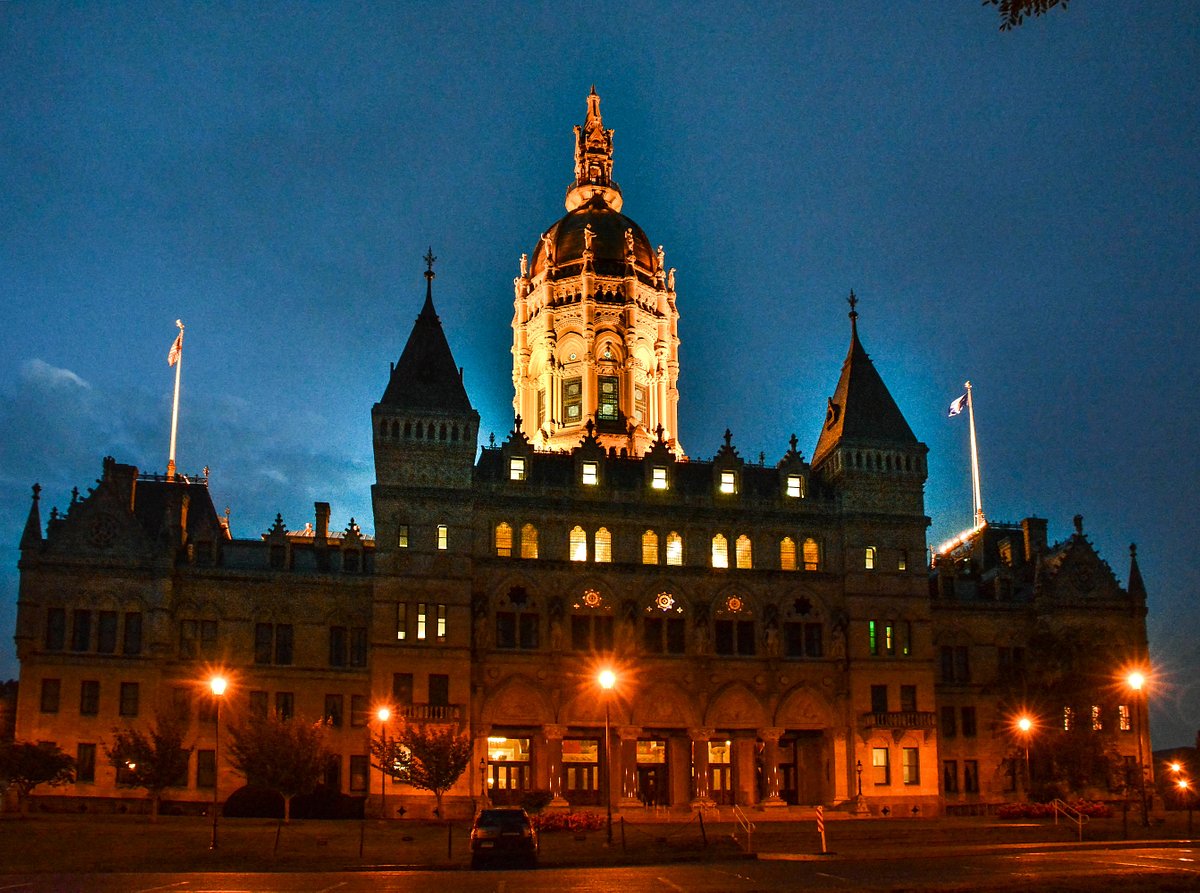
The Connecticut State Capitol was completed in 1878 after nearly a decade of construction. It was designed by the prominent architect Richard M. Upjohn, who was known for his work in Gothic Revival architecture. The building replaced earlier statehouses that had become too small for the growing needs of the state government.
The construction of the Capitol reflected the prosperity and civic ambition of late 19th-century Connecticut. Builders used high-quality materials such as marble, granite, and limestone, which contribute to the building’s grandeur and durability. Its location on a landscaped hill provides a commanding view of Hartford and emphasizes its importance in the city.
Architectural Style
The Connecticut State Capitol is primarily designed in the High Victorian Gothic style, making it one of the few state capitols in the United States built in this distinctive architectural style. Key features include:
-
Central dome: The gold-leafed dome rises prominently above the building, serving as a symbol of government authority and elegance.
-
Ornate towers and turrets: These elements provide a Gothic flair and make the building visually dynamic.
-
Intricate carvings and statues: Figures representing law, commerce, agriculture, and history decorate the exterior.
-
Pointed arches and windows: Characteristic of Gothic Revival design, these features create a sense of verticality and grandeur.
The building’s design blends functionality with artistry, ensuring that it is both a working government building and a visually striking landmark.
Exterior Features
The exterior of the Connecticut State Capitol is remarkable for its detailed craftsmanship and use of diverse materials. Red brick walls are complemented by white marble trim, creating a dramatic contrast that highlights the building’s architectural features. Statues of historical figures and symbolic representations line the facade, illustrating the state’s heritage and values.
The gold-leafed dome glimmers in sunlight, making it visible from many parts of Hartford. Its multi-tiered design, topped with a statue of the Genius of Connecticut, serves as a visual focal point for the city and reflects the building’s symbolic importance.
Landscaped grounds surround the Capitol, including pathways, fountains, and green spaces, which enhance its visual appeal and create a welcoming environment for visitors.
Interior Design
Inside, the Connecticut State Capitol continues to impress with its grandeur and detailed craftsmanship. The interior features include:
-
Rotunda and dome interior: The central rotunda beneath the dome is adorned with murals, decorative plasterwork, and elegant staircases.
-
Legislative chambers: Both the House of Representatives and Senate chambers feature ornate woodwork, decorative ceilings, and stained glass windows.
-
Historical artwork: Paintings, murals, and sculptures throughout the building depict key events and figures in Connecticut’s history.
-
Grand hallways and corridors: Wide hallways with intricate detailing allow for ceremonial functions and guided tours.
The interior balances beauty with practicality, allowing legislators to carry out their duties while providing a visually inspiring environment.
Symbolism and Statues
The Connecticut State Capitol features numerous statues and symbolic elements that reflect the state’s identity. On the exterior, statues represent important historical figures and virtues such as justice, wisdom, and industry. The Genius of Connecticut atop the dome symbolizes the state’s spirit and serves as a reminder of its achievements and aspirations.
Inside, murals depict significant historical events, from colonial times to the Civil War, helping visitors connect with Connecticut’s rich heritage. Each decorative element was carefully chosen to tell a story about the state’s development and values.
Role in Government and Civic Life
As the seat of Connecticut’s government, the Capitol houses the offices of the governor, legislature, and other key state officials. It is the site of legislative sessions, public hearings, and important governmental decisions. Beyond its practical function, the building serves as a symbol of democracy and civic engagement, hosting ceremonies, commemorations, and public events.
The Capitol is also a site for education and tourism. Schools, civic groups, and visitors can tour the building to learn about state government, history, and architecture. Guided tours highlight both the functional and artistic aspects of the building, making it accessible and informative for all audiences.
Preservation and Restoration
Preservation of the Connecticut State Capitol is a continuous effort. Restoration projects over the years have included:
-
Cleaning and repairing the marble and stone exterior
-
Restoring murals, paintings, and decorative details
-
Updating infrastructure and safety systems without compromising historical integrity
-
Maintaining the gold-leafed dome and statues
These efforts ensure that the building remains both a functional government facility and a treasured historic landmark.
Visitor Experience
Visitors to the Connecticut State Capitol can enjoy a comprehensive experience. The landscaped grounds provide a scenic setting for photography, while the building itself offers insight into 19th-century architecture and Connecticut’s history. Inside, guided tours provide historical context and highlight architectural features, from the grand rotunda to the legislative chambers.
Special events, such as public celebrations, holiday displays, and cultural programs, allow visitors to engage with the building in unique ways. Its accessibility and educational offerings make it an important part of Hartford’s cultural and civic life.
Architectural Influence
The Connecticut State Capitol has influenced other public buildings in the region. Its Gothic Revival style, use of statues and murals, and emphasis on a prominent central dome have inspired architects designing government buildings, universities, and civic structures. Its blend of artistry and functionality demonstrates how public architecture can convey both authority and beauty.
Final Thoughts
Connecticut State Capitol stands as a masterpiece of Gothic Revival architecture and a symbol of Connecticut’s history, culture, and government. Its gold-domed exterior, intricate statues, and ornate interior spaces reflect the ambitions of 19th-century America and the state’s civic pride.
Visiting the Capitol offers insight into the workings of state government, the rich history of Connecticut, and the beauty of historic architecture. It remains a vital part of Hartford’s skyline, a center of civic life, and a treasured landmark for both residents and visitors.
Read Also: Keep your face towards the sunshine and shadows will fall behind you
Watch Also: https://www.youtube.com/@TravelsofTheWorld24











Leave a Reply