
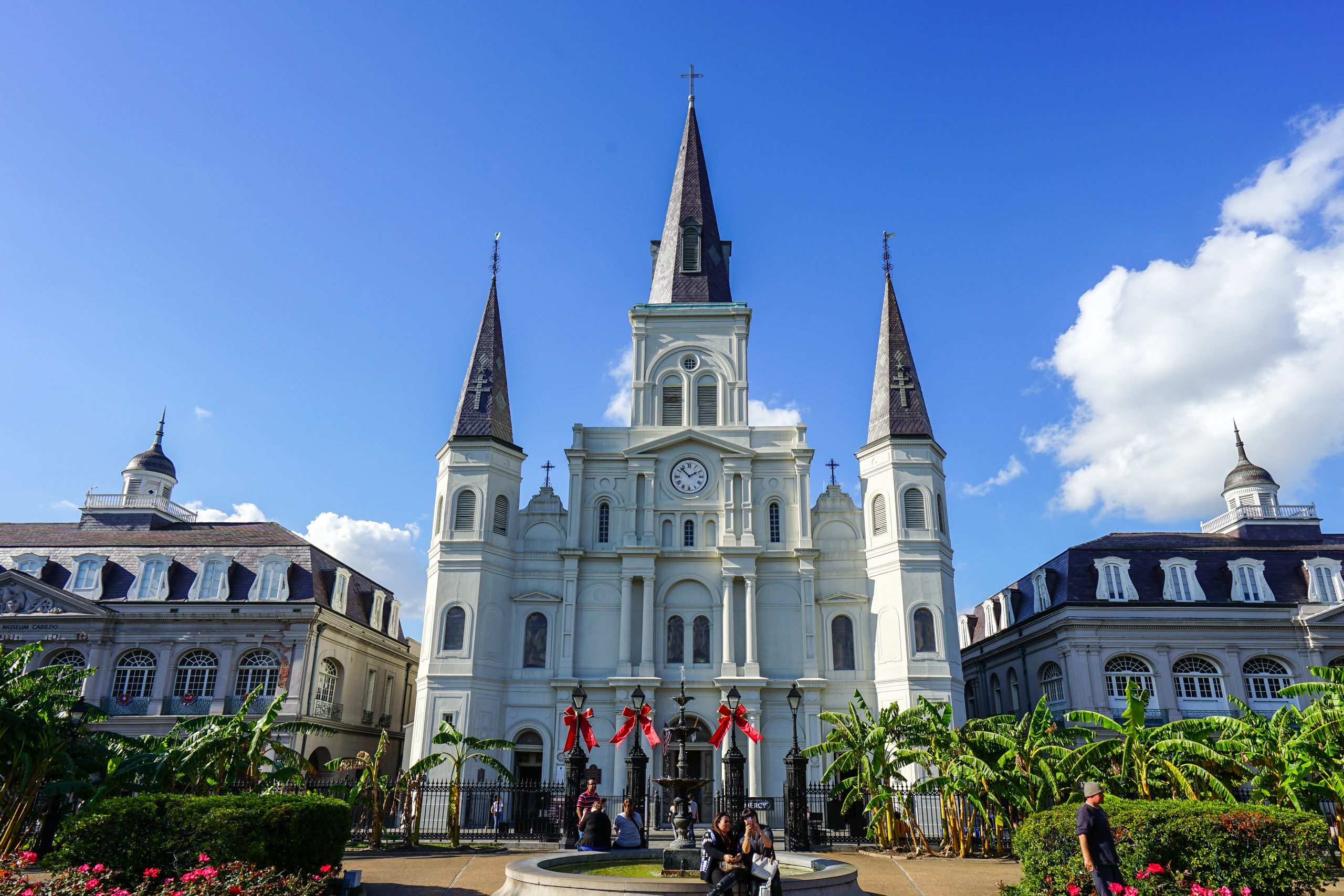
The site of St. Louis Cathedral has been home to a church since the early 18th century. The first church was built in 1718, shortly after the founding of New Orleans. Over the years, the structure was rebuilt and expanded several times, due to fire damage and the city’s growing population. The current cathedral, completed in the 1850s, is the third major church on this historic site.
Named after King Louis IX of France, who was canonized as Saint Louis, the cathedral reflects the deep French influence on New Orleans’ culture and history. It has witnessed countless events, from religious ceremonies to political gatherings, and has served as a spiritual center for the city for generations.
Architectural Style
St. Louis Cathedral features a mix of Gothic Revival and French Colonial architectural styles. Its most distinctive elements include:
-
Three spires: The central spire towers above the square, flanked by two smaller spires, creating a dramatic silhouette against the New Orleans skyline.
-
White exterior: The pristine white facade contrasts beautifully with the surrounding colorful buildings of the French Quarter.
-
Ornate detailing: Decorative elements around windows, doors, and spires reflect European influences and craftsmanship.
-
Stained glass windows: Beautifully colored glass adds both artistic beauty and spiritual significance to the interior spaces.
The combination of Gothic Revival verticality with French Colonial elegance gives the cathedral a unique charm. Its design has inspired countless artists, photographers, and visitors who capture its beauty from Jackson Square and beyond.
Interior Features
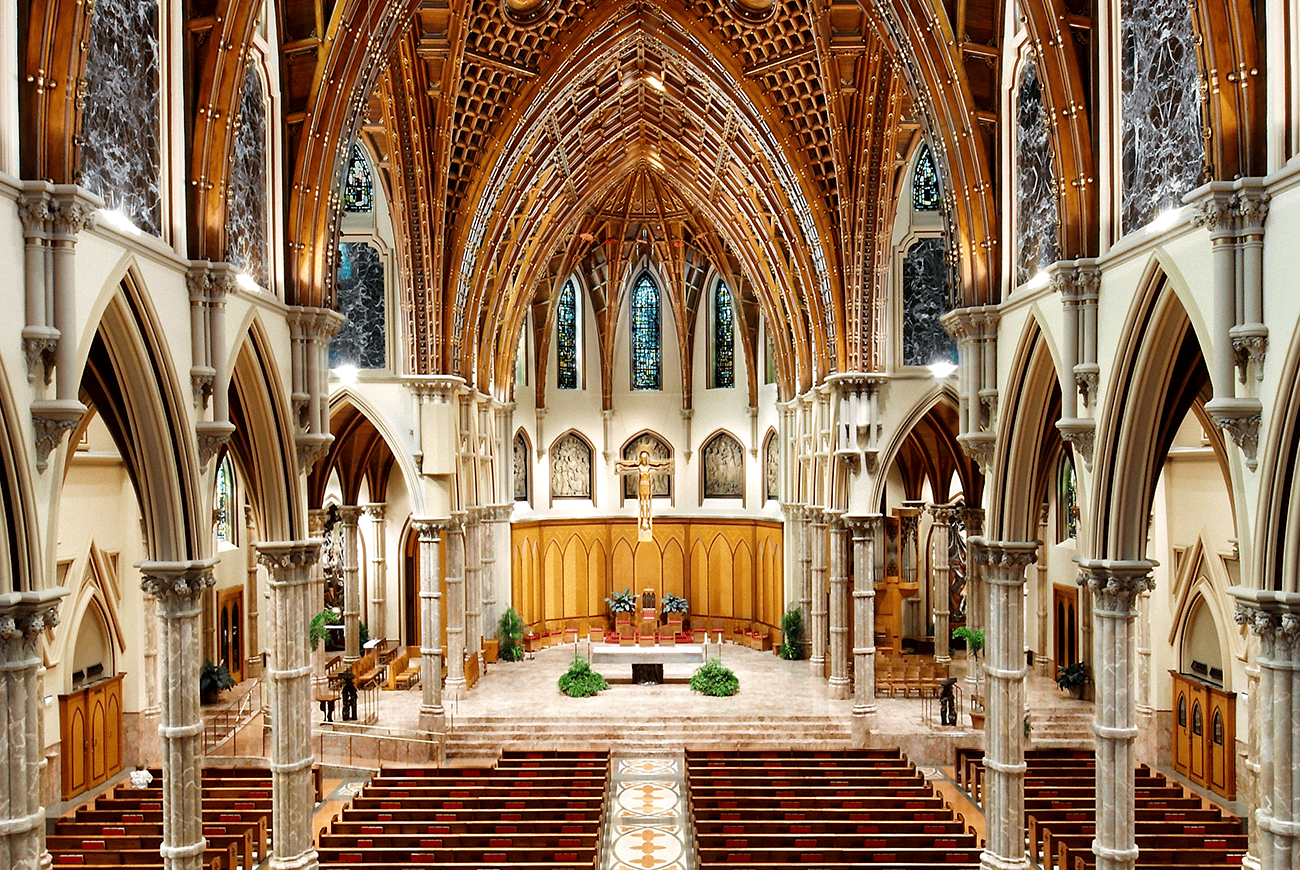
Inside, St. Louis Cathedral is just as impressive as the exterior. The interior design emphasizes both grandeur and reverence:
-
High vaulted ceilings: These create a sense of openness and verticality, drawing the eye upward toward the heavens.
-
Altar and religious art: The main altar is ornately decorated, surrounded by statues, paintings, and religious symbols.
-
Chandeliers and lighting: Elegant lighting fixtures enhance the ambiance and highlight architectural details.
-
Seating and layout: Pew arrangements and open aisles allow large congregations while maintaining sightlines for ceremonies.
Visitors often remark on the peaceful atmosphere inside, despite the cathedral’s central location in a busy urban area. The interior combines spiritual significance with artistic expression.
Jackson Square and the Cathedral’s Location
St. Louis Cathedral faces the famous Jackson Square, one of the most visited public spaces in New Orleans. The square’s vibrant life—street performers, artists, and local vendors—creates a lively contrast to the solemnity of the cathedral. Its central location makes the cathedral a focal point of the French Quarter.
The open space of Jackson Square allows unobstructed views of the cathedral’s spires, making it an ideal spot for photography, sightseeing, and cultural events. Tourists often gather here to admire the cathedral from a distance before stepping inside to explore its interior.
Religious and Cultural Significance
St. Louis Cathedral has been a center of Catholic worship for centuries. It serves as the seat of the Archdiocese of New Orleans and hosts daily masses, weddings, baptisms, and other religious ceremonies. Its spiritual role extends beyond the Catholic community, symbolizing the city’s history, resilience, and cultural diversity.
The cathedral has also been part of important historical events. It witnessed political changes, celebrations, and public gatherings, including speeches and commemorations. Its presence in New Orleans’ civic life reinforces its status as both a religious and cultural landmark.
Restoration and Preservation
Over the years, St. Louis Cathedral has undergone several restoration projects to preserve its beauty and structural integrity. These efforts include:
-
Repairing and reinforcing the spires and roof
-
Restoring stained glass windows and decorative elements
-
Cleaning and maintaining the exterior facade
-
Upgrading interior facilities while respecting historical design
Preservation ensures that the cathedral continues to inspire future generations and maintains its role as a key part of New Orleans’ heritage.
Tourism and Visitor Experience
Today, St. Louis Cathedral is one of New Orleans’ most visited landmarks. Tourists can explore its interior, attend mass, or simply admire its exterior from Jackson Square. Guided tours provide historical context, sharing stories of the cathedral’s construction, renovations, and significance in the city’s development.
The cathedral’s proximity to other attractions, including the French Market and Café du Monde, makes it an easy stop on any sightseeing itinerary. Its beauty, accessibility, and historical importance contribute to its status as a top destination in Louisiana.
Influence on Art and Photography
St. Louis Cathedral has inspired countless artists, photographers, and filmmakers. Its distinctive spires, white facade, and central location in Jackson Square make it a subject of artistic interpretation in paintings, postcards, and photography. During festivals like Mardi Gras, the cathedral often appears in images capturing the city’s festive atmosphere, blending architectural elegance with cultural vibrancy.
Community Role
Beyond tourism and religious services, the cathedral plays an important role in the local community. It hosts events, concerts, and educational programs that connect residents with their city’s history and culture. Its presence in the French Quarter provides a sense of continuity, linking modern life with centuries of tradition.
Final Thoughts
St. Louis Cathedral stands as a shining example of historic architecture, cultural significance, and spiritual heritage. Its mix of Gothic Revival and French Colonial design, combined with a prime location on Jackson Square, makes it one of the most beautiful buildings in Louisiana and the United States.
Visiting the cathedral offers a glimpse into New Orleans’ past, its religious traditions, and its artistic legacy. From its soaring spires to its intricate interior, St. Louis Cathedral continues to captivate and inspire all who come to see it, making it a timeless symbol of faith, history, and beauty.
Read Also: Keep your face towards the sunshine and shadows will fall behind you
Watch Also: https://www.youtube.com/@TravelsofTheWorld24











Leave a Reply