
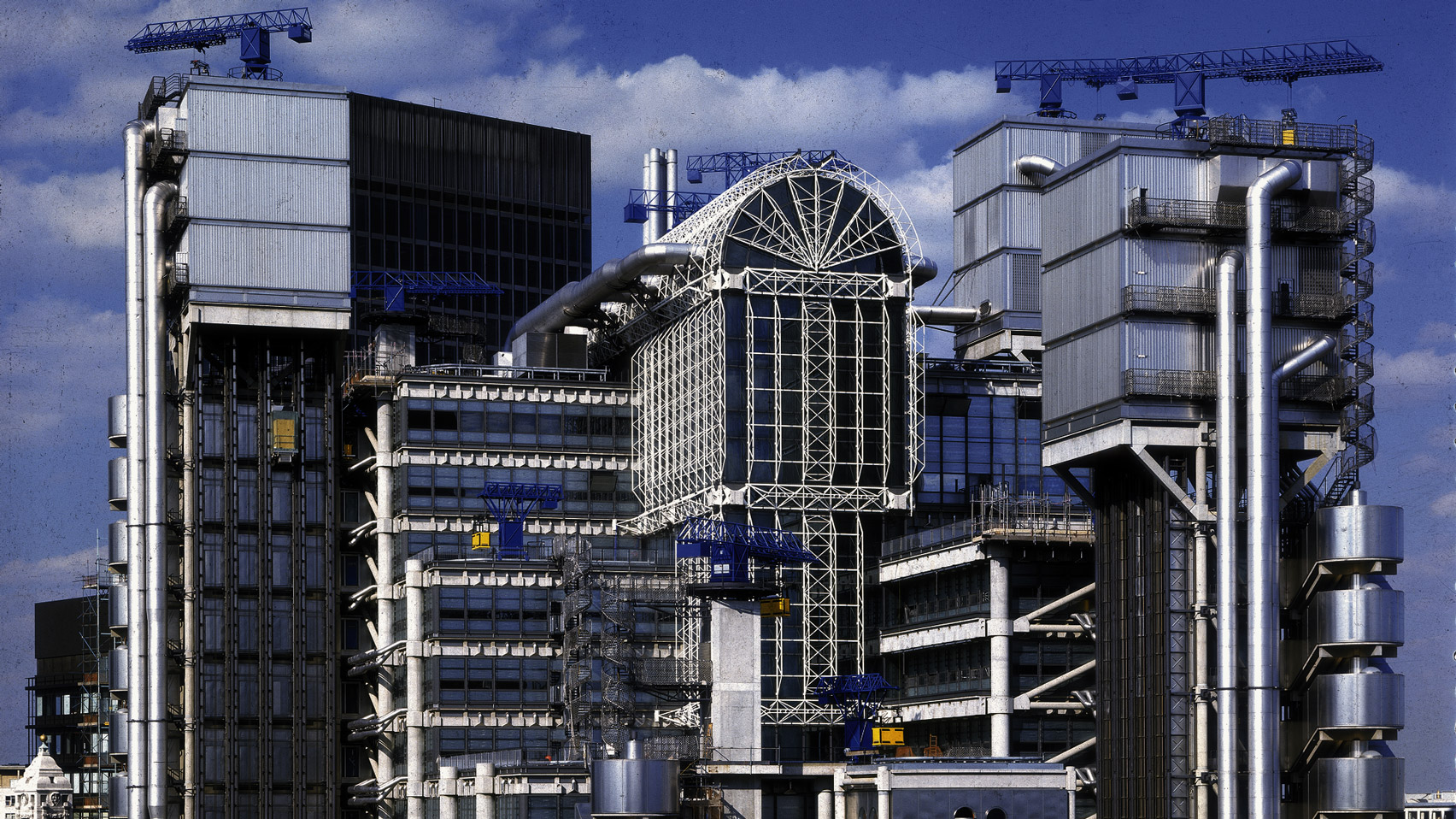
The Lloyd’s Building is one of the most unusual and eye-catching buildings in London. At first glance, it looks almost like a giant machine rather than a traditional office tower. Pipes, elevators, staircases, and metal structures are all visible on the outside. Because of this inside-out design, many people call it the “inside-out building.”
It stands in the historic financial district of the city, an area full of banks, offices, and old streets. Despite being surrounded by modern skyscrapers and ancient buildings, the Lloyd’s Building still stands out because nothing else looks quite like it.
Built for Lloyd’s of London
The building was created as the headquarters for Lloyd’s of London, one of the world’s most famous insurance markets. Unlike a normal insurance company, Lloyd’s is a place where many insurers and brokers meet to do business. People gather there to discuss risks, sign agreements, and arrange coverage for everything from ships and airplanes to famous artworks.
Because this work involves constant communication and movement, the building had to be designed to support busy daily activity. It needed large open spaces inside and easy access between floors.
The Architect’s Bold Idea
The building was designed by Richard Rogers, a well-known architect famous for modern and creative designs. He wanted to make something completely different from ordinary office buildings.
Instead of hiding functional parts like elevators, air ducts, and pipes inside the structure, he placed them on the outside. This freed up the interior space and created a flexible open area inside. If the needs of the company changed in the future, the inside could be reorganized easily without major rebuilding.
When the design was first shown, many people were surprised. Some loved it, while others thought it looked strange or too industrial. Over time, however, it became one of London’s most admired modern landmarks.
Construction and Opening
Building the Lloyd’s Building was a huge project. Construction began in the late 1970s and was completed in 1986. The site is located on Leadenhall Street, in the heart of the financial district.
Because of the complex design, engineers had to carefully plan every detail. Large steel sections were built off-site and then assembled like pieces of a giant puzzle. The external pipes and elevator towers required special materials to withstand weather and pollution.
When it opened, the building immediately attracted attention from around the world.
The Inside-Out Design
The most striking feature of the Lloyd’s Building is that almost everything usually hidden inside a building is placed outside instead. This includes:
-
Elevators (glass lifts that move up and down the exterior)
-
Staircases
-
Air conditioning systems
-
Electrical cables
-
Water pipes
By moving these elements outside, the interior remains open and uncluttered. The main floors have large spaces without many columns, allowing desks and meeting areas to be arranged freely.
The glass elevators are especially popular with visitors because they offer a clear view of the city as they move.
A High-Tech Style
The building is an example of high-tech architecture. This style celebrates engineering and technology rather than hiding it. Metal surfaces, exposed structures, and visible mechanics become part of the design.
Instead of decoration like carvings or statues, the beauty comes from the materials and construction itself. Stainless steel, glass, and concrete create a clean, modern look.
At night, lights reflect off the metal surfaces, giving the building a futuristic appearance.
The Huge Central Hall
Inside the building is a massive central space called the underwriting room. This is where most business activity takes place. It is several stories tall and filled with desks, screens, and meeting areas.
Natural light enters from above through a large glass roof, making the space bright even during cloudy days. Balconies from upper floors overlook this central hall, creating a sense of connection between levels.
The design encourages communication, which is essential for the work done there.
The Famous Lutine Bell
One of the most historic objects inside the building is the Lutine Bell. This large bell has been used for centuries to announce important news. Traditionally, it rang once for good news and twice for bad news, especially concerning ships insured by Lloyd’s.
Although modern communication has replaced its practical use, the bell remains a powerful symbol of the organization’s history.
Blending Old and New
Despite its modern appearance, the Lloyd’s Building also connects to the past. Some historic elements from earlier Lloyd’s offices were carefully preserved and placed inside the new structure.
This combination shows respect for tradition while embracing innovation. It reminds visitors that even forward-thinking institutions are built on long histories.
Reaction from the Public
When the building first opened, reactions were mixed. Some people loved its bold and futuristic style, while others thought it looked too industrial or out of place among London’s historic architecture.
Over time, opinions changed. Today, many consider it one of the most important modern buildings in the city. It has even been granted protected status, meaning it cannot be easily altered or demolished.
A Landmark of Modern London
London is famous for its historic landmarks like palaces, churches, and bridges. The Lloyd’s Building represents a different side of the city — modern, innovative, and forward-looking.
It stands near other contemporary structures, creating a skyline that blends old and new. This mix is part of what makes London unique among world cities.
Not a Typical Tourist Site
Unlike some famous buildings, the Lloyd’s Building is primarily a working office. This means public access is limited. However, guided tours are sometimes available, allowing visitors to see the interior and learn about the history of Lloyd’s.
Even from the outside, the building is worth seeing because of its unusual design. Photographers often capture it from different angles to highlight its mechanical beauty.
Engineering Challenges
Designing a building with so many exposed parts was not easy. Engineers had to ensure that pipes and elevators could handle rain, wind, temperature changes, and pollution.
Special materials were chosen to resist rust and wear. Maintenance is also more visible, so regular cleaning and repairs are necessary to keep the building looking good.
Despite these challenges, the structure has performed well for decades.
Environmental Improvements
Over the years, updates have been made to improve energy efficiency. Modern systems help reduce power use while maintaining comfort inside.
These upgrades show that even older modern buildings can adapt to new environmental standards without losing their original design.
Influence on Architecture
The Lloyd’s Building influenced many later designs around the world. It showed that office buildings do not have to look traditional. Function and structure can become art in themselves.
Architects studying modern design often visit or analyze the building because of its importance in architectural history.
The View from Outside
Walking around the building reveals different details from each side. Some parts look like giant silver tubes, while others resemble towers attached to the main structure. The glass elevators move constantly, adding a sense of motion.
On sunny days, reflections from the metal surfaces make the building shine. On cloudy days, it appears more serious and industrial.
Night Appearance
At night, lights inside the building glow through the glass, and exterior lighting highlights the structural elements. The effect is dramatic and futuristic, almost like a spaceship landed among traditional city buildings.
This nighttime view is especially striking in contrast with nearby historic streets.
Why It Matters
The Lloyd’s Building is more than just an office. It represents a shift in how people think about architecture. Instead of hiding the practical parts of a building, it celebrates them.
It also shows how businesses can express identity through design. Lloyd’s of London wanted a headquarters that reflected openness, efficiency, and innovation, and this building achieves that goal.
Final Thoughts
The Lloyd’s Building is one of the boldest architectural statements in modern London. Its inside-out design, exposed machinery, and futuristic appearance make it unforgettable. While some may find it unusual, many see it as a masterpiece of modern engineering and creativity.
Standing among both ancient and modern structures, it symbolizes the city’s ability to honor its past while embracing the future. Whether admired for its design, its history, or its role in global finance, the Lloyd’s Building remains one of London’s most distinctive landmarks.
It proves that architecture does not always need decoration or tradition to be beautiful. Sometimes, the honest display of structure and function can create something just as powerful — a building that looks alive, dynamic, and completely unique.
Read Also: Keep your face towards the sunshine and shadows will fall behind you
Watch Also: https://www.youtube.com/@TravelsofTheWorld24








Leave a Reply