
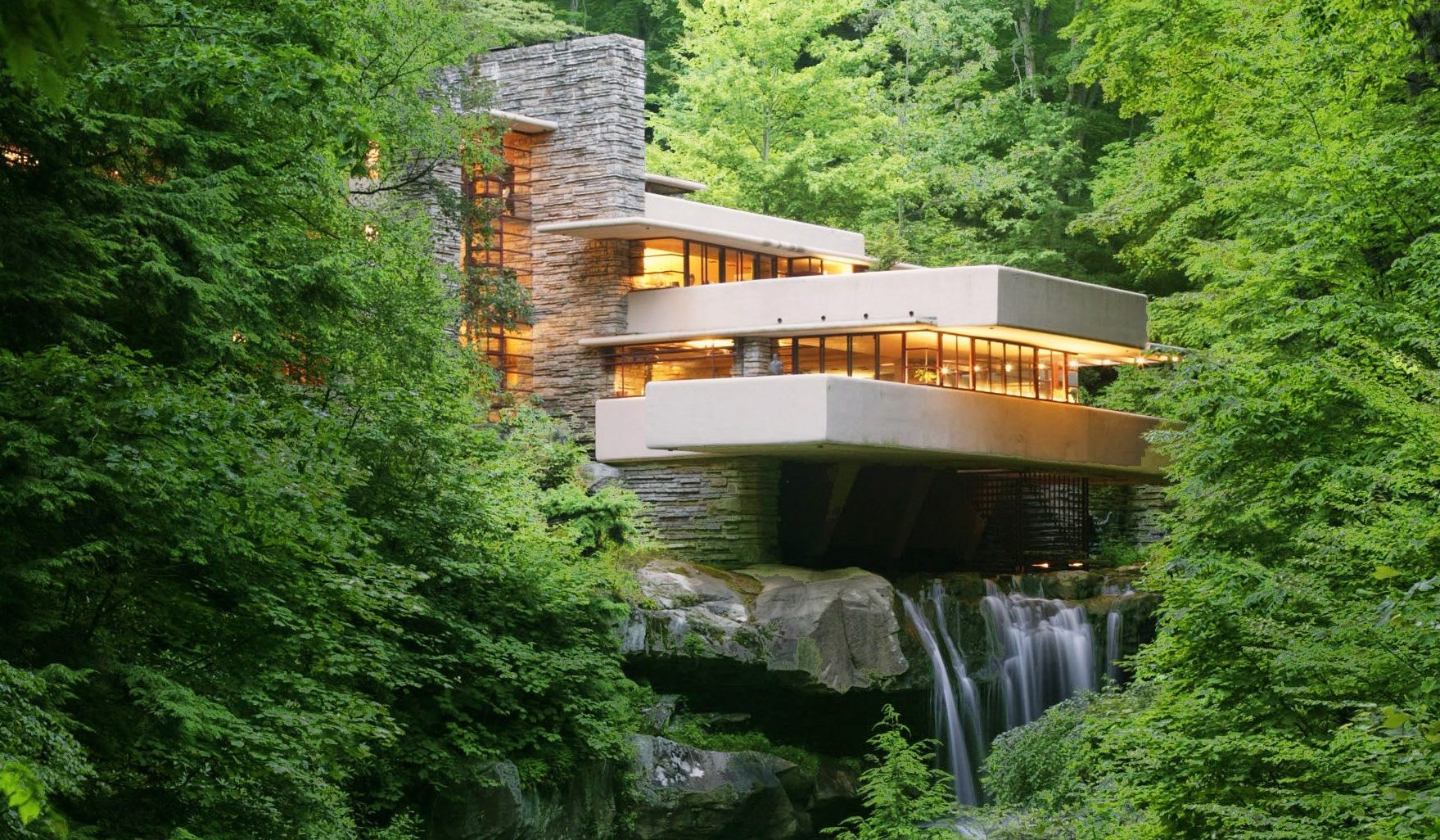
Fallingwater is one of the most famous houses in the world, celebrated for its unique architecture and harmony with nature. Designed by the American architect Frank Lloyd Wright in 1935, the house is built over a waterfall, blending the natural environment with modern design. Fallingwater is considered a masterpiece of organic architecture, where buildings are designed to be in harmony with the land around them.
Located in rural southwestern Pennsylvania, Fallingwater sits on the Bear Run property in the Laurel Highlands. The house has become a major tourist attraction and a symbol of Wright’s philosophy of designing structures that work with nature rather than against it.
The Vision of Frank Lloyd Wright
Frank Lloyd Wright wanted to create a home that felt part of the natural landscape. He designed Fallingwater for the Kaufmann family, who owned a department store in Pittsburgh. They requested a vacation home in the woods, near the waterfall, and Wright envisioned a building that extended over the water rather than sitting beside it.
Wright used natural materials, such as local stone, wood, and concrete, to connect the house with the surrounding forest and rocks. His design incorporated terraces, cantilevers, and open spaces that blurred the line between inside and outside.
Architecture and Design
Fallingwater is a multi-level home with cantilevered terraces that stretch over the waterfall below. The use of reinforced concrete allowed Wright to create the overhanging structures that seem to float above the water.
The interior is open and airy, with large windows and terraces that provide views of the surrounding forest. The living room has a stone fireplace, built directly from the rock of the site, reinforcing the connection between the house and nature.
The house has three main floors and several smaller terraces. Wright carefully placed each room to align with the rocks, trees, and water. The sound of the waterfall can be heard throughout the house, creating a sense of calm and unity with nature.
Harmony with Nature
Fallingwater is designed to complement, not dominate, its surroundings. The terraces follow the natural lines of the rocks, and the house seems to emerge naturally from the forest.
The use of natural light and open spaces allows the outdoors to feel part of the interior. Wright believed architecture should reflect the landscape, and Fallingwater is a perfect example of this philosophy.
Structural Innovation
Wright used advanced engineering techniques for the time. The cantilevered terraces were designed with reinforced concrete and steel beams, allowing them to extend outward without support from below. This innovative approach created dramatic overhangs and a bold, modern appearance.
Despite initial concerns about stability, later reinforcements ensured that Fallingwater remains safe and durable. The house has inspired architects worldwide with its creative combination of engineering and aesthetics.
Interior Features
The interior of Fallingwater is warm and inviting, with wood-paneled walls, built-in furniture, and open living spaces. Large windows and glass doors allow light to flood the rooms, offering uninterrupted views of the forest and waterfall.
The kitchen, bedrooms, and living areas are connected through open layouts, making the house feel spacious despite its modest size. Stone floors and natural materials maintain the connection to the surrounding environment.
Influence on Architecture
Fallingwater is considered one of the greatest achievements in modern architecture. It demonstrates Wright’s idea of organic architecture, where buildings blend with nature rather than imposing upon it.
Architects around the world study Fallingwater for its innovative use of materials, cantilevered design, and integration with the environment. It remains a reference point for anyone designing homes that respect and highlight the natural landscape.
Public Access
Fallingwater is open to the public as a museum and cultural site. Visitors can tour the house, terraces, and surrounding forest, learning about Wright’s design philosophy and the history of the Kaufmann family.
Guided tours highlight the architectural features, the construction process, and Wright’s innovative approach. The sound of the waterfall, the view of the forest, and the harmony of the design create an unforgettable experience for visitors.
Preservation and Legacy
Fallingwater has been carefully preserved to maintain its original appearance and structural integrity. Restoration efforts include reinforcing terraces, maintaining wood and stone elements, and protecting the house from environmental damage.
Its designation as a National Historic Landmark recognizes Fallingwater’s importance in American architecture and culture. It continues to inspire architects, designers, and visitors worldwide.
Cultural Significance
Fallingwater represents the union of art, nature, and engineering. It showcases Frank Lloyd Wright’s vision of creating spaces that enhance human experience while respecting the environment.
The house has appeared in countless books, articles, and documentaries, becoming a symbol of American creativity and architectural innovation. It demonstrates that buildings can coexist with nature while providing beauty, comfort, and function.
Final Thoughts
Fallingwater is a masterpiece of modern architecture and a testament to Frank Lloyd Wright’s genius. Its bold cantilevers, natural materials, and harmony with the surrounding forest make it a unique and inspiring place.
From the sound of the waterfall to the view from the terraces, every element of Fallingwater reflects careful planning, creativity, and respect for nature. It is a living example of how architecture can connect people with the environment, providing a timeless inspiration for generations.
Read Also: Keep your face towards the sunshine and shadows will fall behind you
Watch Also: https://www.youtube.com/@TravelsofTheWorld24













Leave a Reply