
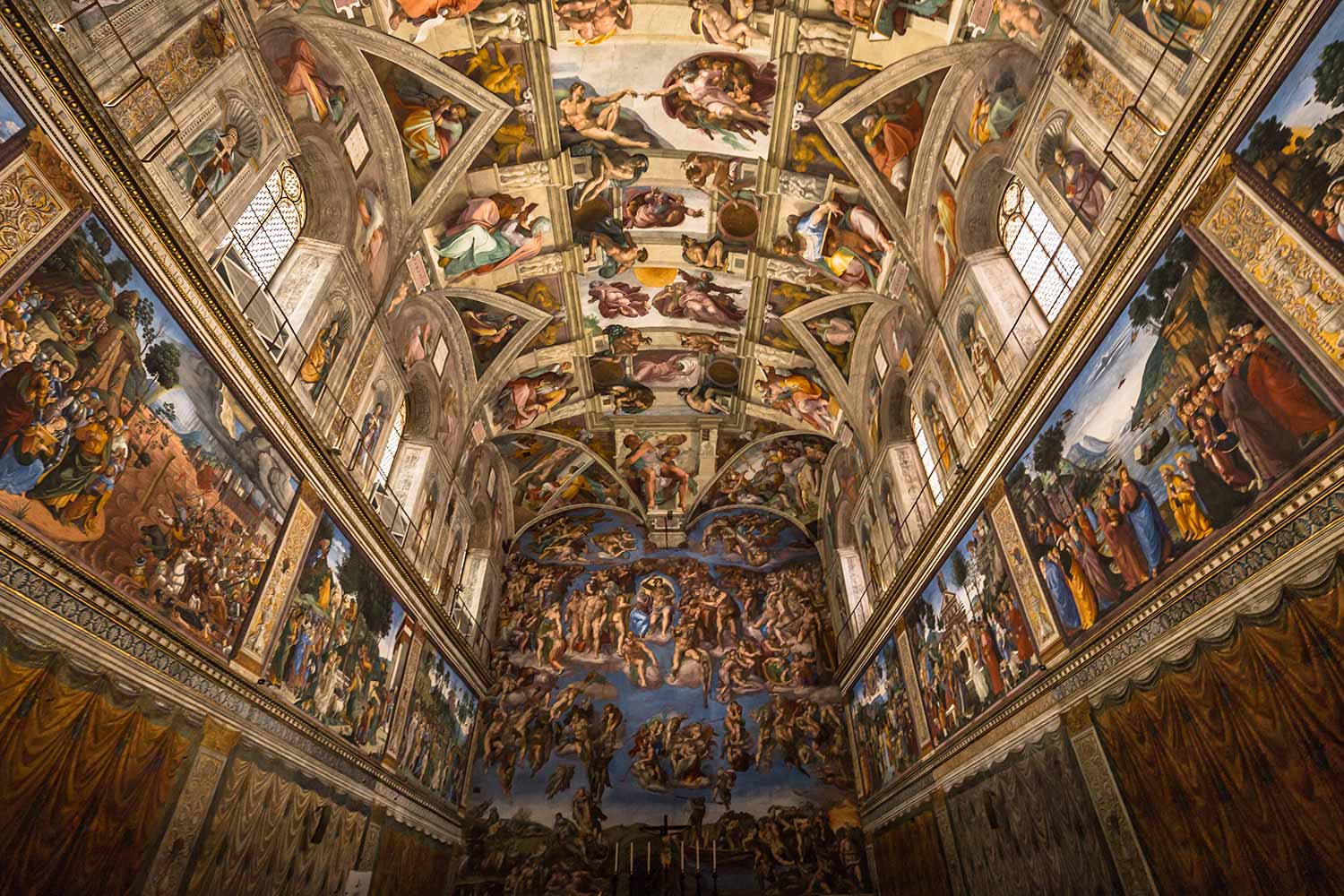
The Sistine Chapel is one of the most famous religious and artistic landmarks in the world. Located in Vatican City, it is renowned for its stunning frescoes, particularly the ceiling painted by Michelangelo. The chapel is part of the Vatican Museums and serves as the site of important religious ceremonies, including the papal conclave where new popes are elected.
The Sistine Chapel attracts millions of visitors every year, who come to admire its incredible artwork, historical significance, and spiritual atmosphere. Its location within Vatican City places it at the heart of the Roman Catholic Church and near other landmarks such as St. Peter’s Basilica and the Vatican Museums.
History and Construction
The Sistine Chapel was built between 1473 and 1481 under the commission of Pope Sixtus IV, after whom the chapel is named. It was intended to serve as the pope’s private chapel and a venue for important ceremonies.
Designed in the Renaissance style, the chapel is rectangular, measuring approximately 40 meters (131 feet) long and 14 meters (46 feet) wide, with a height of around 20 meters (66 feet). Its proportions were carefully planned to reflect the harmony and balance characteristic of Renaissance architecture.
Early decorations were done by prominent artists of the time, including Botticelli, Perugino, and Ghirlandaio, who painted frescoes depicting biblical stories along the walls. These works set the stage for the later masterpieces that would transform the chapel into a world-renowned artistic site.
Michelangelo’s Ceiling
Between 1508 and 1512, Michelangelo painted the chapel’s ceiling, creating one of the greatest artistic achievements in history. The ceiling depicts scenes from the Book of Genesis, including the Creation of Adam, the Fall of Man, and the Flood.
Michelangelo worked lying on scaffolding, painting directly onto wet plaster using the fresco technique. His use of perspective, human anatomy, and expressive figures revolutionized art and inspired countless artists for generations. The ceiling covers over 500 square meters and contains more than 300 figures, each full of emotion and vitality.
The central panels are surrounded by images of prophets, sibyls, and ancestors of Christ, blending classical and biblical themes. Michelangelo’s mastery of composition, color, and storytelling makes the ceiling a profound visual narrative of human and divine interaction.
The Last Judgment
Between 1536 and 1541, Michelangelo returned to the Sistine Chapel to paint The Last Judgment on the altar wall. This monumental fresco depicts the second coming of Christ and the final judgment of souls.
Figures of angels, saints, and the damned are portrayed in dynamic, dramatic poses, emphasizing the emotional intensity of the scene. The Last Judgment reflects both Michelangelo’s artistic genius and his deep engagement with theological themes.
The work sparked both admiration and controversy, particularly for its portrayal of nudity, but it remains one of the most important and influential paintings in Western art.
Other Wall Frescoes
The walls of the Sistine Chapel are adorned with frescoes by Renaissance masters such as Botticelli, Perugino, Signorelli, and Ghirlandaio. These frescoes illustrate the lives of Moses and Jesus, drawing parallels between the Old and New Testaments.
The combination of narrative clarity, emotional expression, and intricate detail makes the chapel’s walls a gallery of biblical storytelling. These works complement Michelangelo’s ceiling and Last Judgment, creating a comprehensive visual program that guides viewers through the history of salvation.
Religious Importance
The Sistine Chapel is more than an art gallery; it is an active religious space. It hosts papal masses, ceremonies, and the conclave where cardinals elect a new pope.
The chapel’s spiritual significance is reflected in its sacred art, which combines biblical themes, theological concepts, and moral lessons. Visitors are encouraged to experience both the artistic and religious dimensions of the space, appreciating its role in Catholic worship and history.
Architectural Features
The chapel’s architecture follows a simple rectangular plan with a barrel-vaulted ceiling. Its proportions are inspired by the Temple of Solomon, reflecting a sense of divine harmony.
The floor, walls, and ceiling are designed to guide the viewer’s gaze upward, enhancing the impact of the frescoes. Light enters through high windows, illuminating the paintings and creating a sense of depth and movement.
The altar, located on the eastern wall, serves as the focal point for religious ceremonies, while the nave accommodates large gatherings of clergy and worshippers.
Visiting the Sistine Chapel
Visitors can explore the chapel as part of the Vatican Museums tour. Photography is generally not allowed, encouraging guests to focus on the experience of viewing the art.
The chapel’s grandeur, combined with the historical and spiritual significance of its artworks, offers a unique opportunity to connect with Renaissance culture, religious history, and human creativity.
Preservation and Restoration
Over the centuries, the Sistine Chapel has undergone careful preservation and restoration to protect its frescoes from deterioration.
Major restorations took place in the 1980s and 1990s, cleaning the paintings and revealing Michelangelo’s original vibrant colors. Modern climate control and lighting systems help maintain the chapel’s condition while allowing millions of visitors to experience its beauty each year.
Cultural Impact
The Sistine Chapel has influenced countless artists, architects, and writers. Michelangelo’s ceiling, in particular, set new standards for artistic achievement, inspiring Renaissance and modern art.
Its depiction in literature, films, and media has cemented its status as a cultural icon. Scholars and tourists alike continue to study its composition, symbolism, and artistic techniques, ensuring its influence endures across generations.
Final Thoughts
Sistine Chapel is a masterpiece of art, architecture, and spiritual expression. From its Renaissance frescoes to its role in papal ceremonies, the chapel combines religious devotion with unparalleled artistic achievement.
Its ceiling, The Last Judgment, and wall frescoes demonstrate the heights of human creativity, while its continued use in worship connects the past with the present. The Sistine Chapel remains a symbol of faith, art, and the enduring power of human imagination.
Read Also: Keep your face towards the sunshine and shadows will fall behind you
Watch Also: https://www.youtube.com/@TravelsofTheWorld24







Leave a Reply