
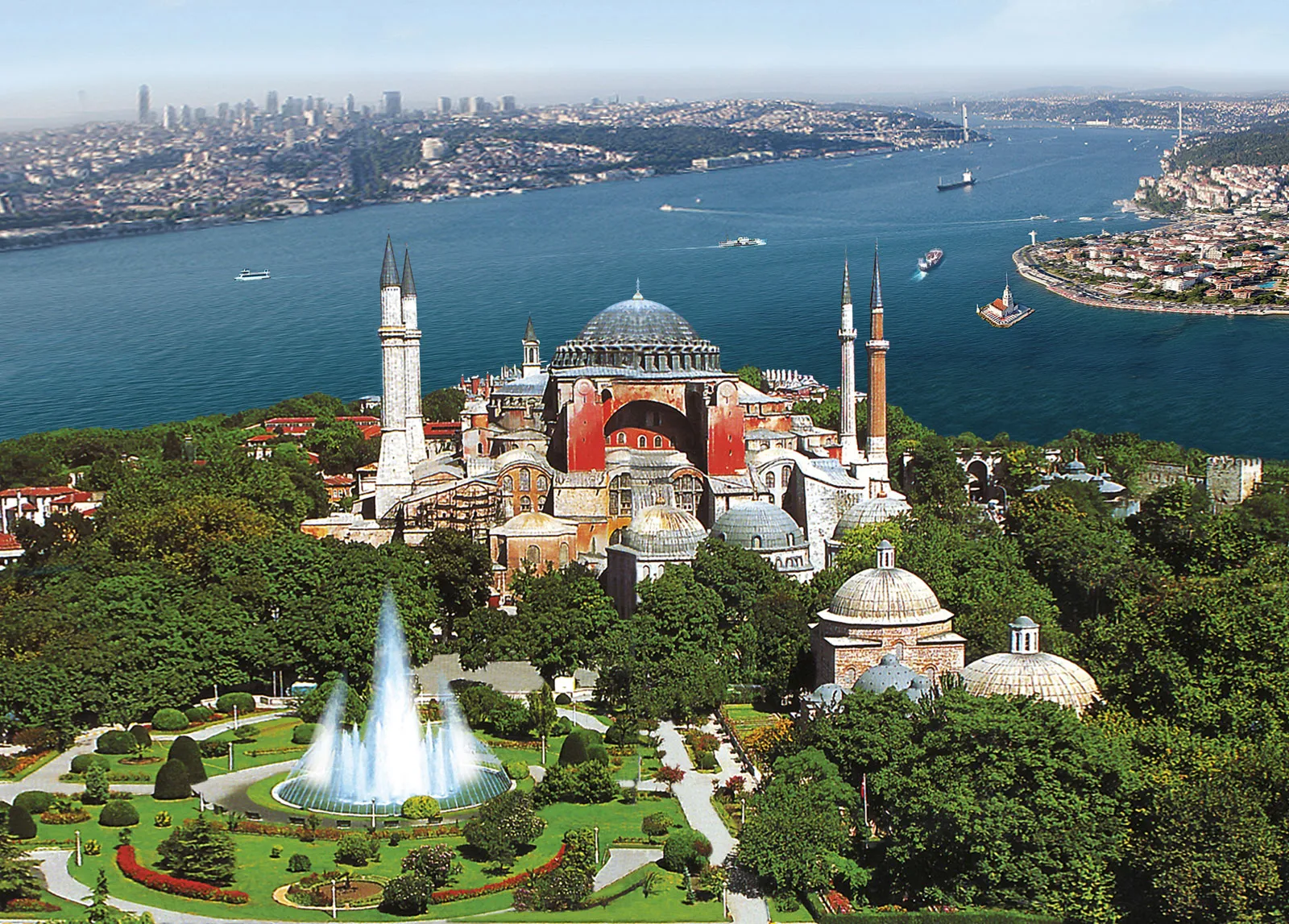
The Hagia Sophia is one of the most remarkable buildings in the world, known for its history, architecture, and cultural significance. Located in Istanbul, it has served as a cathedral, mosque, and now a museum that attracts millions of visitors each year. Its massive dome, intricate mosaics, and historical importance make it a symbol of both the Byzantine and Ottoman empires.
Standing in the heart of Istanbul, Hagia Sophia is near other famous landmarks such as the Blue Mosque and Topkapi Palace. Its location and grandeur make it a centerpiece of the city’s historic area and a key part of Istanbul’s skyline.
https://youtu.be/jXJiRsBLVRc?si=y5CLAkyJv_d0gTRV
Origins and Construction
Hagia Sophia was originally built as a cathedral by the Byzantine Emperor Justinian I in 537 AD. The goal was to create the largest and most magnificent church in the Christian world. Architects Anthemius of Tralles and Isidore of Miletus designed the building, combining a traditional basilica layout with a massive central dome that seemed to float above the interior space.
The dome, which spans over 31 meters (102 feet) in diameter, was considered an engineering marvel for its time. The architects used innovative techniques, including pendentives — triangular sections that allow a circular dome to rest on a square base — to achieve stability and elegance.
Hagia Sophia as a Cathedral
For nearly 1,000 years, Hagia Sophia served as the primary cathedral of the Eastern Orthodox Church. It was the center of religious, political, and cultural life in Constantinople (modern Istanbul). Emperors were crowned here, and countless ceremonies and celebrations took place within its walls.
The interior is adorned with mosaics depicting religious figures, saints, and emperors. These mosaics were created with tiny pieces of colored glass and gold leaf, capturing light and giving the space a glowing, spiritual atmosphere.
The central dome seems to float above the nave, supported by massive piers and arches. Light enters through windows at the base of the dome, creating an effect that gives the impression of a heavenly space.
Conversion to a Mosque
In 1453, Constantinople was conquered by the Ottoman Sultan Mehmed II. Hagia Sophia was converted into a mosque, reflecting the city’s new Islamic identity. Minarets were added to the structure, allowing the call to prayer to be made. Other Islamic elements, such as mihrabs (prayer niches), minbars (pulpits), and decorative calligraphy, were incorporated into the building.
Despite these changes, much of the original Byzantine decoration, including mosaics, was preserved, often covered with plaster and later revealed. This blending of Christian and Islamic art makes Hagia Sophia unique in the world.
Architecture and Design
Hagia Sophia combines different architectural styles. The central dome, supported by pendentives and massive piers, gives the impression of floating above the main hall. Surrounding semi-domes and arches distribute the weight of the structure, creating both stability and a harmonious interior space.
The building measures about 82 meters long, 73 meters wide, and 55 meters high at the dome. Its combination of scale, symmetry, and decoration makes it a masterpiece of Byzantine architecture.
Inside, mosaics, marble columns, and ornate decorations fill the space. The use of light is particularly notable: sunlight streams through the windows, highlighting the golden mosaics and creating a sense of divine presence.
Historical Importance
Hagia Sophia has witnessed countless historical events, from coronations and religious ceremonies to invasions and restorations. Its role as both a cathedral and mosque illustrates the city’s changing history and culture.
Over centuries, the building has survived earthquakes, fires, and other disasters. Restoration projects have helped preserve its structure, mosaics, and architectural details for future generations.
The building has been an inspiration for architects worldwide. Ottoman mosques, such as the Blue Mosque in Istanbul, were directly influenced by Hagia Sophia’s design, especially its large central dome and semi-domes.
Cultural Significance
Hagia Sophia represents the blending of cultures and religions. Its mosaics reflect Christian heritage, while its minarets, calligraphy, and prayer areas reflect Islamic tradition. This unique combination makes it a symbol of Istanbul’s diverse history and a testament to human creativity.
Visitors from around the world come to see its beauty, learn its history, and experience the sense of awe it inspires. The building’s historical and cultural value led UNESCO to designate it a World Heritage Site, recognizing it as a treasure of human civilization.
Restoration and Preservation
Over the years, Hagia Sophia has undergone multiple restorations. These efforts preserve its structural integrity, mosaics, and decorative elements. Modern techniques help protect the building from earthquakes, environmental damage, and aging materials.
Restoration work is often careful to respect the building’s layered history, maintaining both Byzantine and Ottoman elements. This approach ensures that visitors can experience the full historical depth of the monument.
Visiting Hagia Sophia
Today, Hagia Sophia is a major tourist attraction. Visitors can explore the vast interior, admire the mosaics, climb to galleries to see views of the nave, and walk around the exterior to appreciate the building’s scale and domes.
The nearby Hagia Sophia Square provides views of the structure along with fountains, gardens, and access to other historic sites in Istanbul. Visitors often combine their trip with visits to the Blue Mosque and Topkapi Palace, experiencing the richness of the city’s history.
Architectural Influence
Hagia Sophia has influenced religious and secular architecture around the world. Its large dome, semi-domes, and use of light inspired Ottoman mosques and even modern buildings in Europe and the Middle East. Architects continue to study its design for lessons in proportion, engineering, and aesthetics.
Its combination of engineering innovation, decorative art, and functional space makes it a model of architectural excellence across centuries.
Final Thoughts
The Hagia Sophia is more than a building; it is a story of human history, faith, and creativity. From its construction under Emperor Justinian I to its transformation under Sultan Mehmed II, it has been a center of worship, culture, and inspiration.
Its massive dome, golden mosaics, and intricate decorations continue to awe visitors. Hagia Sophia stands as a symbol of Istanbul’s layered history, blending Byzantine and Ottoman legacies, and remains one of the greatest architectural achievements in the world.
Read Also: Keep your face towards the sunshine and shadows will fall behind you
Watch Also: https://www.youtube.com/@TravelsofTheWorld24






Leave a Reply