
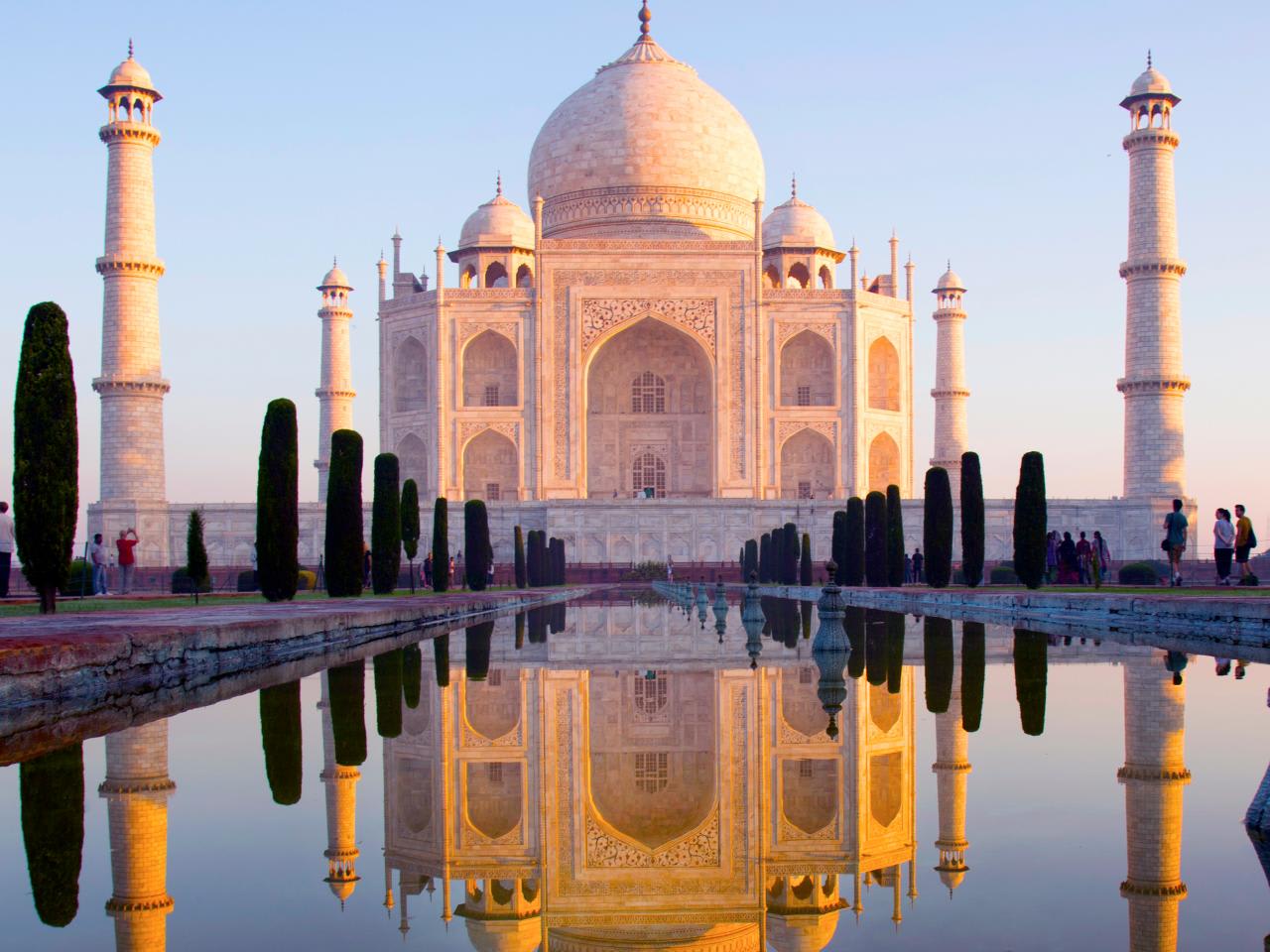
The Taj Mahal is one of the most beautiful buildings in the world. Its white marble walls, shining domes, and intricate designs make it a symbol of love, art, and the Mughal era in India. People from all over the globe travel to see it, drawn by its elegance and the story behind its creation.
It is located on the banks of the Yamuna River in the city of Agra. The surrounding gardens, fountains, and reflecting pools add to the serene beauty of the monument. Even today, hundreds of years after it was built, the Taj Mahal continues to inspire admiration for its craftsmanship and grandeur.
The Story of Love Behind the Taj Mahal
The Taj Mahal was built by Shah Jahan, the emperor of the Mughal Empire, in memory of his beloved wife Mumtaz Mahal. Mumtaz Mahal passed away in 1631 while giving birth to their fourteenth child. Shah Jahan was deeply saddened by her death and decided to create a monument that would honor her and their love forever.
Construction of the Taj Mahal began in 1632 and was completed around 1653. Thousands of artisans, craftsmen, and laborers worked on it. The project brought together the best artists and architects from across the Mughal Empire and beyond, including specialists from Persia, Central Asia, and India.
Architecture and Design
The Taj Mahal is an example of Mughal architecture, which combines Islamic, Persian, Ottoman Turkish, and Indian styles. It is famous for its symmetry, decorative elements, and use of white marble. The main building is a large square structure with four minarets at each corner, rising to nearly 40 meters (130 feet) high.
The central dome is the most striking feature. Shaped like an onion, it rises majestically and is surrounded by smaller domes. The exterior walls are decorated with carved patterns, inlaid gemstones, and calligraphy from the Quran. Precious stones such as jade, crystal, turquoise, and lapis lazuli are used to create intricate floral designs.
The reflection of the Taj Mahal in the long rectangular pool in front adds to its magical appearance, making it look almost as if it is floating above the water.
The Gardens and Surroundings
The Taj Mahal sits in a large garden, divided into four parts by walkways and water channels, following the Charbagh layout of Persian gardens. This layout symbolizes paradise in Islamic tradition. Trees, fountains, and flowerbeds are carefully arranged to complement the symmetry of the building.
The entrance to the complex is through a large red sandstone gate called the Darwaza-i Rauza. Visitors pass through this gate, cross the gardens, and finally reach the main tomb, creating a dramatic and emotional experience.
Interior of the Taj Mahal
Inside the central dome is the tomb of Mumtaz Mahal. The chamber is made of white marble and decorated with delicate carvings and inlay work. Shah Jahan’s tomb was later added beside Mumtaz Mahal’s. Interestingly, the actual graves are in a lower chamber; the main chamber holds symbolic cenotaphs.
The floor patterns, marble screens, and calligraphy create a sense of peace and beauty. Light enters through delicate lattice windows, casting soft patterns on the walls and floor.
Symbolism and Meaning
The Taj Mahal is more than just a tomb. It symbolizes eternal love, devotion, and beauty. Every element of the design carries meaning. The minarets tilt slightly outward to protect the main tomb in case of collapse. The symmetry of the building represents harmony, while the gardens evoke the Islamic idea of paradise.
The inscriptions from the Quran remind visitors of faith and spirituality, blending religious significance with the story of love.
Construction Challenges
Building the Taj Mahal was a massive task. Large quantities of white marble were transported from Makrana in Rajasthan, hundreds of kilometers away. Skilled artisans carved delicate patterns and inlaid precious stones by hand. Wooden scaffolding, cranes, and pulleys were used to lift heavy stones to great heights.
Workers included masons, stonecutters, calligraphers, painters, and laborers. Coordinating thousands of people over more than twenty years required careful planning and management, reflecting the organizational skills of the Mughal court.
Artistic Details
The inlay work, called pietra dura, is one of the most famous features. Flowers, vines, and geometric patterns are carefully cut from colored stones and inserted into the marble. Calligraphy is done with black marble, elegantly curving around arches and doorways.
Even small details, such as the carved lotus motifs on the domes or the symmetrical patterns on the floor, show extreme precision and artistic vision.
The Minarets
Each of the four minarets stands at a corner of the platform. They are not just decorative; they were designed with structural safety in mind. In case of an earthquake, the minarets would fall outward, away from the main tomb, protecting it.
These towers are divided into three sections, with a balcony on each level. Their slim shape and elegant design add balance to the overall structure.
The Impact of the Taj Mahal
The Taj Mahal has inspired countless buildings, artworks, and stories around the world. It is often considered a symbol of India and appears in movies, literature, and travel guides. Architects admire it for its perfect proportions, symmetry, and attention to detail.
Visitors often feel awe at the scale and beauty of the monument, imagining the dedication and effort required to build it.
Preservation and Tourism
Over the centuries, the Taj Mahal has faced threats from pollution, weathering, and nearby industrial activity. Efforts have been made to protect the marble and restore damaged sections. Modern measures include limiting vehicle traffic nearby and using special cleaning techniques to prevent yellowing of the white marble.
Millions of tourists visit each year. The site is managed to balance preservation with public access, ensuring future generations can enjoy its beauty.
Night Views and Lighting
While most visitors see the Taj Mahal during the day, moonlit nights are especially magical. On full moon nights, the marble glows softly, creating a romantic and mystical atmosphere. Special viewing arrangements are sometimes offered, allowing visitors to experience this unique perspective.
The reflection of the building in the water under moonlight adds another layer of charm, enhancing its reputation as one of the most beautiful structures ever built.
Cultural Significance
The Taj Mahal is not only a masterpiece of architecture but also a cultural icon. It reflects the wealth, art, and religion of the Mughal era. It demonstrates how architecture can communicate emotion and tell a story that transcends centuries.
UNESCO recognized it as a World Heritage Site in 1983, ensuring international attention for its preservation and significance.
Visiting Experience
Walking through the gates, crossing the gardens, and seeing the main building creates a memorable journey. Visitors often pause to take photos, admire details, or simply reflect on the story of Shah Jahan and Mumtaz Mahal. The combination of symmetry, marble beauty, gardens, and river views creates an experience that feels peaceful and inspiring.
Tour guides often explain the history, architecture, and artistic details, helping visitors appreciate the full meaning of the monument.
Influence on Art and Architecture
The Taj Mahal has influenced both Indian and global architecture. Its domes, minarets, and decorative styles appear in later palaces, mosques, and public buildings. Artists continue to recreate its images in paintings, sculptures, and photography.
Its ability to combine beauty, function, and emotion makes it a timeless source of inspiration.
Final Thoughts
The Taj Mahal is a masterpiece of human creativity. Its story of love, architectural brilliance, and cultural significance makes it one of the most admired buildings in history. From its marble walls to its gardens, from the central dome to the reflecting pools, every element speaks of care, devotion, and artistry.
Visiting the Taj Mahal allows people to experience a sense of wonder, imagining the love and effort behind its creation. It is a monument to human skill and emotion, standing gracefully on the banks of the Yamuna River and reminding the world that beauty and love can endure for centuries.









Leave a Reply