
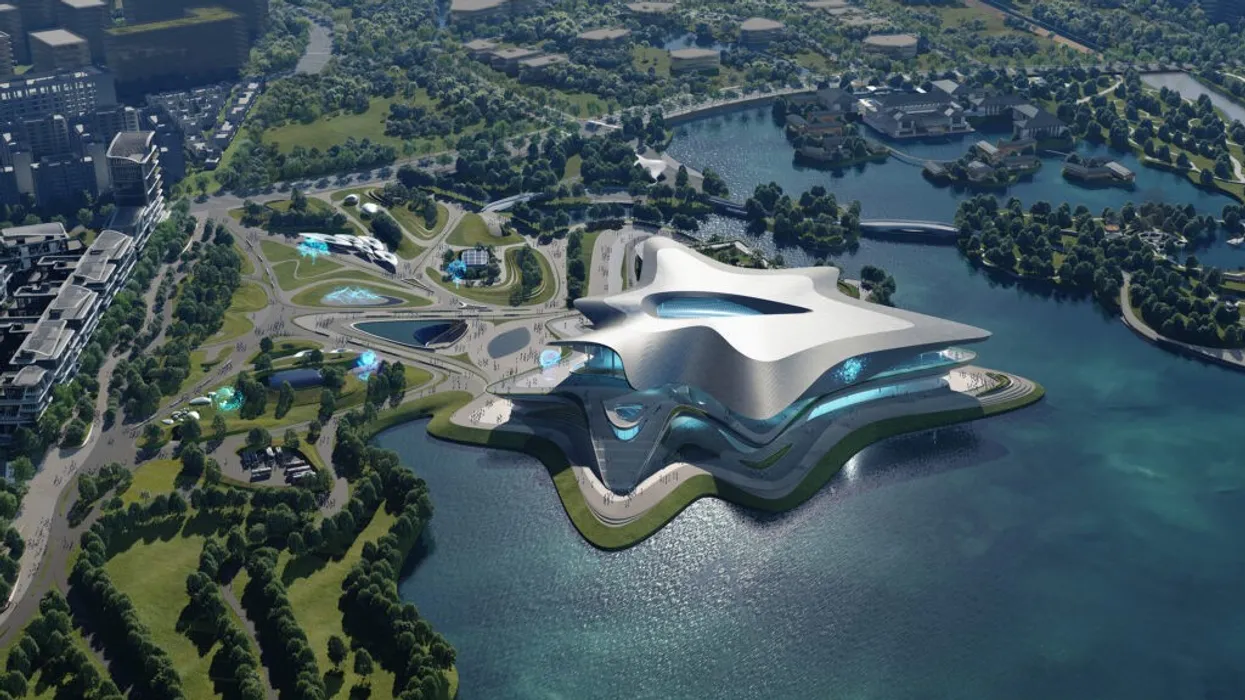
The Chengdu Science Fiction Museum is a striking new cultural landmark in Chengdu, a major city in southwestern China known for its history, innovation, and creative energy. It opened recently with great excitement by hosting the World Science Fiction Convention (Worldcon) and the Hugo Awards, marking the first time these events have taken place in China.
This museum isn’t just another building — it’s a bold architectural work that expresses imagination, science, and creativity all in one place. Designed by the internationally famous firm Zaha Hadid Architects, the museum reflects both the spirit of science fiction and the natural beauty of its location on the edge of Jingrong Lake in Chengdu’s Science & Innovation New City.
A Museum for the Future
The idea behind the Chengdu Science Fiction Museum is to celebrate stories about the future — from books and films to technology and visionary ideas. Chengdu itself has a strong connection to science fiction; the city has produced influential writers and hosts events that bring science fiction fans together from around the world.
Visitors can expect exhibitions that explore different aspects of science fiction, including imaginative worlds, technological advances, and the cultural impact of sci-fi literature and media. Beyond exhibits, the museum also includes spaces for performances, conferences, workshops, and gatherings, making it a lively place for fans and creators alike.
The Story of Its Design
What makes this museum stand out is its architecture. The building’s form was created to look like an expanding star cloud, with sweeping roof shapes that seem to radiate outward from a central point like light from a nebula. This design idea connects directly to the theme of science fiction — exploring the cosmos, the unknown, and human imagination.
The structure sits on the edge of Jingrong Lake, and from certain angles it appears to float above the water’s surface, giving it an almost otherworldly presence in the park-like surroundings. Its fluid lines and dynamic surfaces make it feel alive, like a ship ready to travel through space.
This kind of bold, expressive architecture is typical of Zaha Hadid Architects, who are known for creating buildings that look futuristic and memorable.
Connecting With Nature
The museum doesn’t stand alone — it connects with the natural landscape around it. Walkways extend through gardens and parkland from the city and nearby metro station, leading visitors on a gentle path toward the building. These paths move between outdoor plazas and indoor spaces, creating a sense of journey and discovery before visitors even enter the exhibitions.
Inside, a large central atrium — open to the sky — lets light pour in, while a huge window frames views of Xiling Mountain in the distance. This connection between inside and outside helps unify the building with its environment, making visitors feel part of both nature and imagination.
What Is Inside the Museum
The Chengdu Science Fiction Museum covers about 59,000 square meters of space, which makes it large enough to host a wide range of activities and events. Within its walls are:
-
Exhibition galleries that tell stories about science fiction, technology, and future ideas.
-
A theatre and function halls for performances, talks, film screenings, or presentations.
-
Educational spaces where visitors can learn and experience concepts related to science, imagination, and creative thinking.
-
Cafes and public spaces that provide meeting places and relaxation areas for families, visitors, and fans.
Everything inside is designed to be flexible, meaning the museum can adapt to changes in exhibitions, new technologies, and future events.
A Sustainable Building
The museum was designed with the environment in mind. It meets the highest standards of China’s Green Building Program, which means it was planned to use energy efficiently and to work well with the local climate.
Features like natural hybrid ventilation help keep the building cool and comfortable without relying too heavily on artificial systems. Photovoltaic panels on the roof generate some of the building’s power needs, while the roof’s shape helps shade glass walls during hot months.
The landscape around the museum also plays a role in environmental design. Native plants help collect and filter rainwater, and the lake itself is part of a larger system designed to reduce flooding and support local biodiversity.
A Hub for Imagination and Innovation
The Chengdu Science Fiction Museum is more than a place to look at displays — it’s planned as a cultural hub where ideas can grow, people can meet, and imagination can be celebrated. Hosting the World Science Fiction Convention (Worldcon) and the Hugo Awards underlines this goal, bringing the global sci-fi community together in Chengdu for the first time.
Science fiction fans, students, architects, and curious travelers alike can explore the building’s design, learn about influential authors and works, and engage with creative projects that imagine possible futures.
Final Thoughts
The Chengdu Science Fiction Museum reflects a new kind of museum — one that mixes art, science, storytelling, and nature in a beautiful setting. It stands as a powerful reminder that architecture can expand imagination and bring people together around ideas of possibility and wonder.
From its sweeping “star cloud” design to its connection with the natural lake and mountains, this museum captures both the spirit of science fiction and the creative character of Chengdu. Its exhibitions, events, and spaces will continue to attract visitors who are excited about the future and curious about the world of sci-fi.
Read Also: Keep your face towards the sunshine and shadows will fall behind you
Watch Also: https://www.youtube.com/@TravelsofTheWorld24






Leave a Reply