
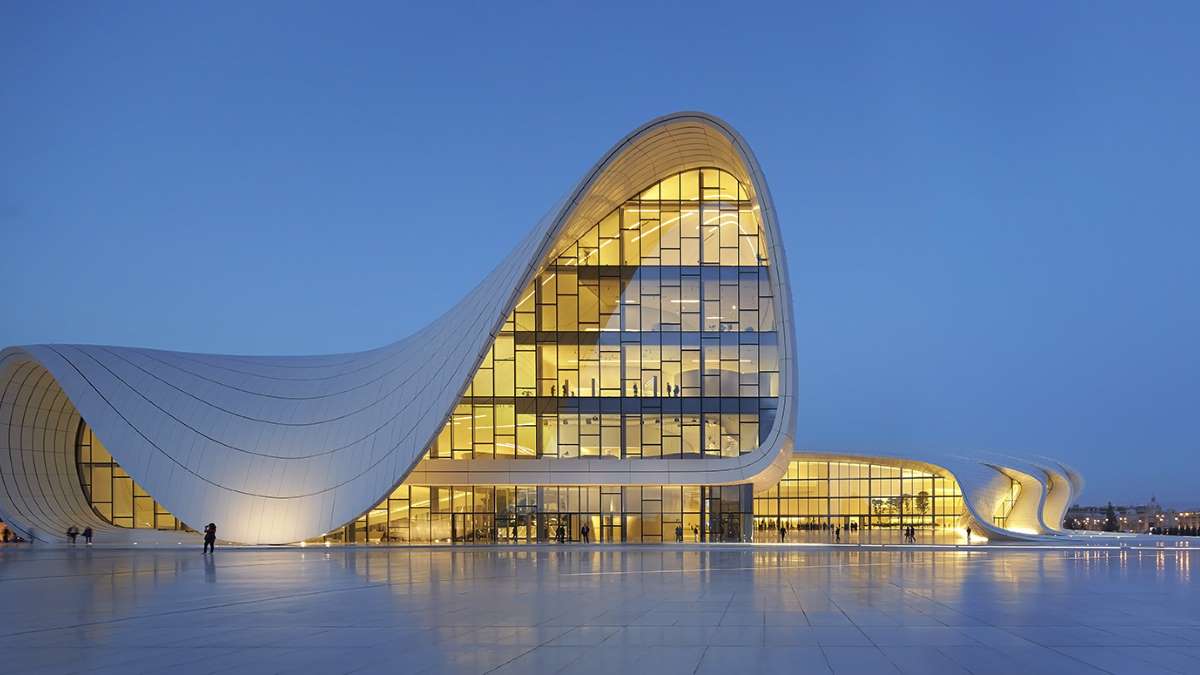
Heydar Aliyev Center is one of the most iconic modern buildings in the world, celebrated for its fluid, futuristic design and innovative architecture. Located in Baku, Azerbaijan, the center serves as a cultural hub, hosting exhibitions, concerts, and events that promote art, culture, and innovation. Designed by Zaha Hadid, the building is a striking example of contemporary architecture that defies traditional forms.
Historical Background
The Heydar Aliyev Center was commissioned to honor Heydar Aliyev, a former president of Azerbaijan, and to serve as a cultural and social landmark. Construction began in 2007, and the center officially opened in 2012. The project aimed to create a building that reflected Azerbaijan’s modern identity while serving as a space for education, cultural exchange, and public engagement.
Zaha Hadid’s design philosophy—emphasizing fluidity, organic shapes, and innovation—shaped every aspect of the center. Her vision transformed the building into a symbol of progress and creativity, blending architecture and art seamlessly.
Architectural Design
The Heydar Aliyev Center is renowned for its flowing, wave-like structure that eliminates sharp angles and traditional forms.
1. Exterior Design
The building’s exterior features smooth, curved surfaces made of glass-fiber reinforced concrete and steel. Its continuous, flowing form creates a sense of movement and dynamism, appearing almost like a sculpture rather than a conventional building.
Key design elements include:
-
A fluid, undulating roof that seems to rise naturally from the ground
-
Seamless transitions between walls, roof, and exterior surfaces
-
Minimal joints and visible structural interruptions, creating a smooth appearance
-
Reflective surfaces that interact with sunlight, enhancing visual impact
2. Interior Spaces
Inside, the center offers flexible and open spaces designed for exhibitions, performances, and public gatherings. Features include:
-
Large galleries with modular walls for adaptable exhibition layouts
-
An auditorium and performance hall for concerts, lectures, and events
-
Public areas and lounges that encourage interaction and exploration
-
Natural lighting from skylights and glass walls, enhancing the sense of openness
The design ensures that the interior matches the fluidity and elegance of the exterior, creating a cohesive and immersive experience.
3. Landscaping and Integration
The center is surrounded by landscaped plazas, walkways, and open spaces that complement its architectural form. The surrounding environment enhances the building’s aesthetic while providing areas for relaxation, public gatherings, and outdoor events.
Engineering and Construction
Creating the Heydar Aliyev Center required advanced engineering techniques due to its complex curves and large-scale surfaces.
-
Structural Framework: A steel space-frame structure supports the building’s flowing shape.
-
Materials: Glass-fiber reinforced concrete panels allow smooth curves while providing strength and durability.
-
Precision Fabrication: Computer-aided design and digital modeling guided the construction, ensuring accuracy and consistency.
-
Sustainability: Energy-efficient systems, natural lighting, and climate control technologies reduce environmental impact.
These innovations allowed the realization of a design that would be impossible with traditional construction methods.
Cultural and Social Significance
The Heydar Aliyev Center is more than an architectural landmark; it is a cultural and social hub for Azerbaijan. It serves as a venue for:
-
Art exhibitions and cultural programs
-
Public lectures, workshops, and educational events
-
Performances, concerts, and festivals
-
International collaborations in art, design, and architecture
The center promotes cultural engagement, creativity, and public access to the arts, positioning Baku as a modern cultural destination.
Awards and Recognition
The Heydar Aliyev Center has received global recognition for its design and architectural innovation:
-
Numerous international architecture awards for excellence and creativity
-
Praise from critics and architects for its seamless curves and sculptural form
-
Recognition as one of Zaha Hadid’s most iconic and influential projects
The building is considered a milestone in contemporary architecture, demonstrating how form, function, and artistic expression can coexist.
Tourism and Visitor Experience
Visitors to the Heydar Aliyev Center experience both architecture and culture. Highlights include:
-
Exploring fluid interior galleries with contemporary art and interactive exhibitions
-
Attending concerts, performances, and cultural events
-
Observing the innovative design from various angles, both inside and outside
-
Learning about modern architecture, engineering, and cultural development in Azerbaijan
The center’s design encourages visitors to move freely, explore spaces, and engage with art and architecture simultaneously.
Architectural Legacy
The Heydar Aliyev Center has influenced architects and designers worldwide, showing how architecture can break free from traditional constraints. Its legacy includes:
-
Inspiring organic and fluid architectural forms
-
Demonstrating the potential of digital design and advanced engineering in construction
-
Serving as a model for cultural and public architecture in urban development
Zaha Hadid’s design exemplifies how architecture can be both functional and sculptural, blending art, technology, and culture.
Conclusion
The Heydar Aliyev Center in Baku is a landmark of modern architecture, celebrated for its innovative design, cultural significance, and social impact. Its flowing curves, seamless forms, and integrated spaces make it a masterpiece of contemporary design.
More than just a building, it represents Azerbaijan’s cultural ambitions, global vision, and commitment to creativity. By combining architecture, art, and public engagement, the Heydar Aliyev Center continues to inspire architects, designers, and visitors around the world.
Read Also: Keep your face towards the sunshine and shadows will fall behind you
Watch Also: https://www.youtube.com/@TravelsofTheWorld24






Leave a Reply