
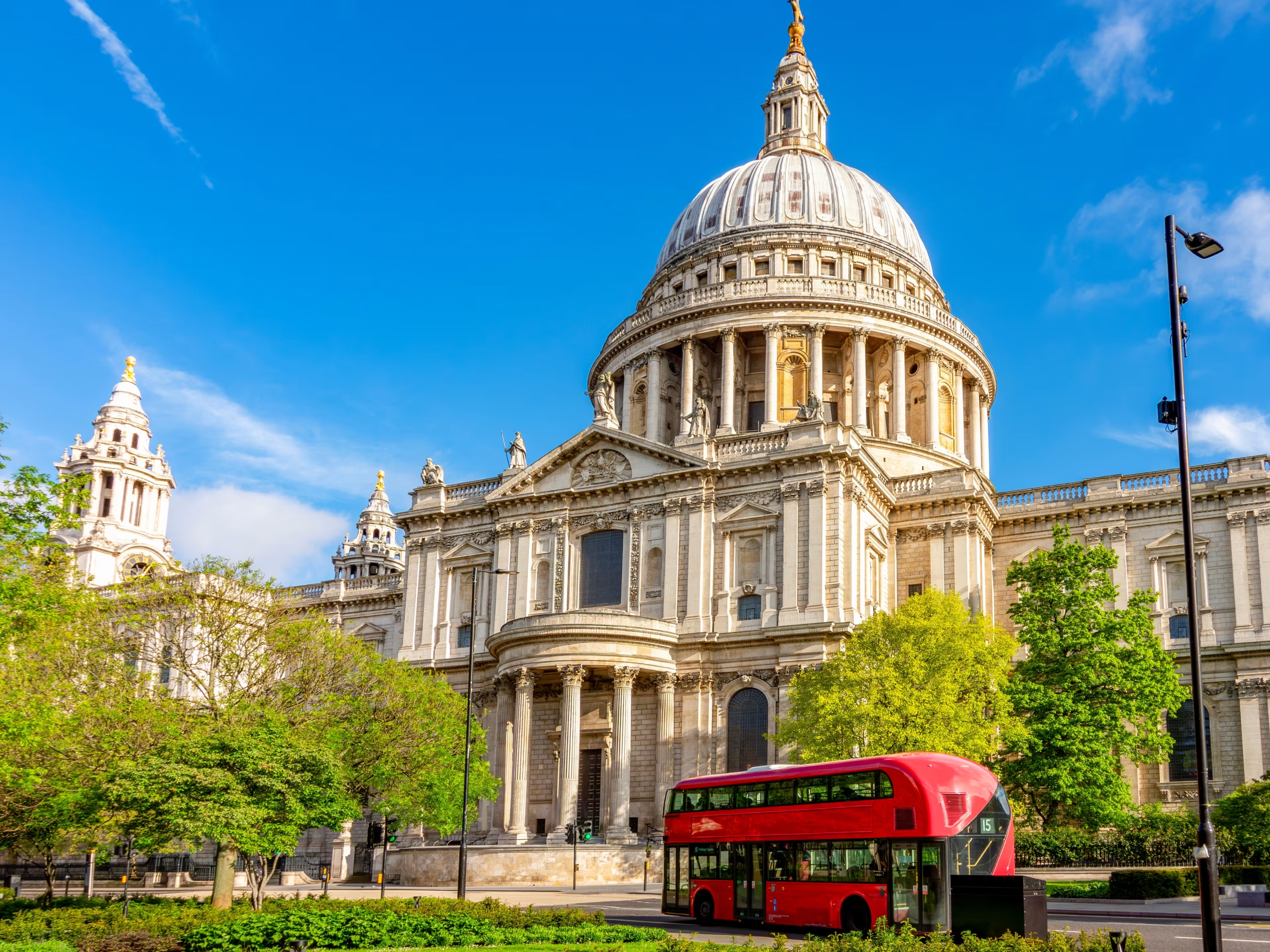
Imagine walking through a city where, suddenly, a huge stone building rises before you, shining in the sunlight. Its giant dome sits above everything around it like a great crown. People slow down to look at it, take photos, or just stand quietly for a moment. That building is St Paul’s Cathedral — one of the most famous and important churches in the world.
St Paul’s is more than just a church. It’s a place of history, beauty, faith, and stories. It has stood in the heart of London for centuries and has seen kings and queens, war and peace, celebrations and quiet moments of prayer. Whether you care about religion or not, St Paul’s makes people feel something — awe, calm, inspiration, or wonder.
In this write‑up, I’ll take you through the history of St Paul’s, how it was built, what’s inside, why it’s important, interesting stories, and what it means today — all in easy language.
Where Is St Paul’s Cathedral?
St Paul’s Cathedral is in the center of London, England, close to the river Thames. London is a huge, busy city with history, culture, art, and people from all over the world. But right in the middle of all that modern life, St Paul’s stands tall as a reminder of long ago.
If you walk near it, you notice the streets change a bit — they slow down. People look up. Street noise softens when you get closer to the steps of the cathedral. It feels like a peaceful island in a busy city.
What Is St Paul’s Cathedral?
St Paul’s Cathedral is a Christian church, and it is the most important church of the Church of England. The head bishop — called the Bishop of London — works here, and many big events happen in this cathedral.
The building we see today is not the very first church on this site. There have been churches here for more than 1,400 years. But the St Paul’s we know now was mostly built after a terrible fire in 1666, called the Great Fire of London.
The cathedral is famous for its huge dome, one of the largest in the world, and for its beautiful interior and grand design.
Why Was St Paul’s Cathedral Built?
Churches were built to be places where people can come together — to pray, to think, to celebrate life events, and to be part of a community. St Paul’s Cathedral was especially important for Londoners.
After the Great Fire of London destroyed much of the city including the old cathedral, the people needed a new symbol of hope and rebirth. The new St Paul’s was meant to be strong, beautiful, and lasting — something people could look at and feel proud of.
It also became a place for big national events: royal weddings, funerals of famous people, thanksgiving services after wars, and other important moments in British history.
Who Designed St Paul’s Cathedral?
The architect behind the current St Paul’s Cathedral was Sir Christopher Wren — one of the most famous architects in English history.
When the Great Fire destroyed the old cathedral, Wren was invited to design a new one. He was young but incredibly talented, and his design for St Paul’s became one of the greatest architectural achievements of his time.
Wren didn’t just design St Paul’s — he helped rebuild many buildings in London after the fire. But St Paul’s became his masterpiece.
When Was St Paul’s Cathedral Built?
Work on the new St Paul’s Cathedral began in 1675 and was completed in 1710, so it took about 35 years to build.
Back then, building something this big was slow work. Every stone had to be carefully cut and placed. Workers climbed high scaffolding with no safety gear like we have today. Rain, wind, and cold weather slowed progress. But bit by bit, the cathedral rose.
When it was finally finished, people felt like they were seeing something grand and timeless.
How Big Is St Paul’s Cathedral?
St Paul’s Cathedral is huge. The dome is about 111 meters (365 feet) tall — that’s almost as tall as a 35‑story building. From the outside, the cathedral looks balanced and striking. The dome sits in the middle, flanked by two towers.
Inside, the space is grand and open. The floor is huge, and the ceilings seem to reach the sky. The dome itself forms a giant circle of light and decoration when you stand below it.
The cathedral can hold thousands of people during services and events.
What’s Inside St Paul’s Cathedral?
Walking into St Paul’s is like walking into a giant work of art. Every corner has something beautiful to see.
1. The Nave
The nave is the central area where people sit for services. It is high and long, lined with columns that give a sense of strength and peace. When sunlight filters through the windows, the light feels warm and calm.
2. The Dome
Under the dome is one of the most beautiful spaces. Around the base of the dome are paintings and decorations showing scenes from the Bible and Christian history. The design makes you feel lifted up — literally and spiritually.
3. The Whispering Gallery
Inside the dome is a special place called the Whispering Gallery. The walls are shaped so that a whisper against the wall on one side can be heard on the other side. People love trying it out — it feels like a fun secret!
4. The Crypt
Underneath the main floor is the crypt, where many famous people are buried, including Sir Christopher Wren himself. There are tombs and memorials for soldiers, writers, admirals, and historic figures who shaped British history.
5. Beautiful Art and Memorials
Throughout the cathedral, you see paintings, sculptures, and memorial plaques that tell stories of people and events. Each piece is made with care and holds a memory of someone important.
Special Events at St Paul’s Cathedral
St Paul’s has been the site of many big moments in British history:
Royal Ceremonies
Members of the royal family have had weddings and special services here. One famous wedding was in 1981, when Prince Charles and Lady Diana Spencer got married.
Funerals and Memorials
Many national figures have had funerals or memorial services here, including leaders and war heroes.
Thanksgiving Services
After major events like the end of wars, services of thanksgiving are held here to honor those who fought and to pray for peace.
St Paul’s During World War II
One of the most powerful stories about St Paul’s happened during World War II. London was bombed many times by enemy forces, and most of the city was damaged or burned. But St Paul’s survived, even though fires raged all around it.
There’s a famous photo of the cathedral standing strong while smoke fills the sky around it. For many people, that image became a symbol of strength and hope — a reminder that even in the darkest times, beauty and courage remain.
Why Is the Dome So Important?
The dome is the heart of St Paul’s Cathedral. It’s not just tall and beautiful — it’s also symbolic. Domes have long been used in architecture to represent heaven or the universe, and at St Paul’s, the dome rises high, as if lifting your spirit up.
The dome has three layers:
-
The inner layer, which you see from inside.
-
A middle layer that adds strength.
-
The outer layer, which you see from outside.
This clever design was both beautiful and strong — a brilliant idea for its time.
Why Do People Love St Paul’s Cathedral?
People love St Paul’s for many reasons:
1. Its Beauty
The cathedral is incredibly beautiful inside and out. Its design inspires awe and peace.
2. Its History
It has stood through fire, war, and generations of change. Walking inside feels like crossing into history.
3. Its Spiritual Meaning
For many people, St Paul’s is a place of peace, prayer, and reflection. Its space invites calm thoughts and quiet moments.
4. Its Stories
From royal weddings to wartime survival, the cathedral carries stories that connect people to life’s big moments.
Interesting Facts About St Paul’s Cathedral
Here are some fun and cool things you might like:
-
It took 35 years to build.
-
The dome is one of the largest in the world.
-
There’s a Whispering Gallery where you can hear whispers from far away.
-
The cathedral survived heavy bombing during World War II.
-
Many famous people are buried in the crypt.
-
It has been the site of national celebrations and ceremonies for centuries.
St Paul’s Cathedral and London Today
Today, St Paul’s is a major landmark in London. People come from all over the world to visit — tourists, artists, history lovers, and those who want a quiet place to reflect. It’s not just a church — it’s a cultural treasure that tells the story of London and England over hundreds of years.
The area around St Paul’s also bustles with life — shops, cafes, offices, and walkways full of people exploring the city.
Visiting St Paul’s Cathedral Today
If you visit London, most people put St Paul’s on the top of their list. Here’s what you can expect:
Tours
Guided tours help visitors understand the history, art, and special parts of the cathedral.
Climbing the Dome
You can climb steps up to the dome (all the way to the top) and see amazing views of London from above. They also tell you about the Whispering Gallery and the views from different levels.
Special Services
If you want a quiet moment, you can attend one of the daily services. The sound of the choir and organ fills the space with beauty.
Exhibitions
Inside, there are exhibitions that show how the cathedral was built and restored over time.
Why St Paul’s Cathedral Matters to the World
St Paul’s Cathedral is not just important to London — it matters to the whole world because:
-
It represents human creativity and courage.
-
It shows how beauty can give strength in hard times.
-
It connects past generations to today’s visitors.
-
Its architecture influenced many buildings around the world.
People of different cultures and beliefs come here and feel connected to something bigger than themselves — that shows how powerful a place can be.
Summary: Why St Paul’s Cathedral Is Amazing
Let’s finish with a simple recap:
-
St Paul’s Cathedral is one of London’s most famous landmarks.
-
It was built after the Great Fire of London in the 1600s.
-
Sir Christopher Wren designed it, and it took 35 years to complete.
-
The huge dome and beautiful interior are symbols of peace, faith, and strength.
-
It survived World War II, becoming a sign of hope.
-
Inside, the Whispering Gallery, the crypt, and the art make the place unforgettable.
-
People from around the world visit to see history, beauty, and meaning.
St Paul’s is not just a building — it’s a story made of stone, time, and human courage.
Read Also:Reykjavik’s Harpa: A Landmark of Design and Performance
Watch Also:www.youtube.com/@bollywoodshorts2124







Leave a Reply