
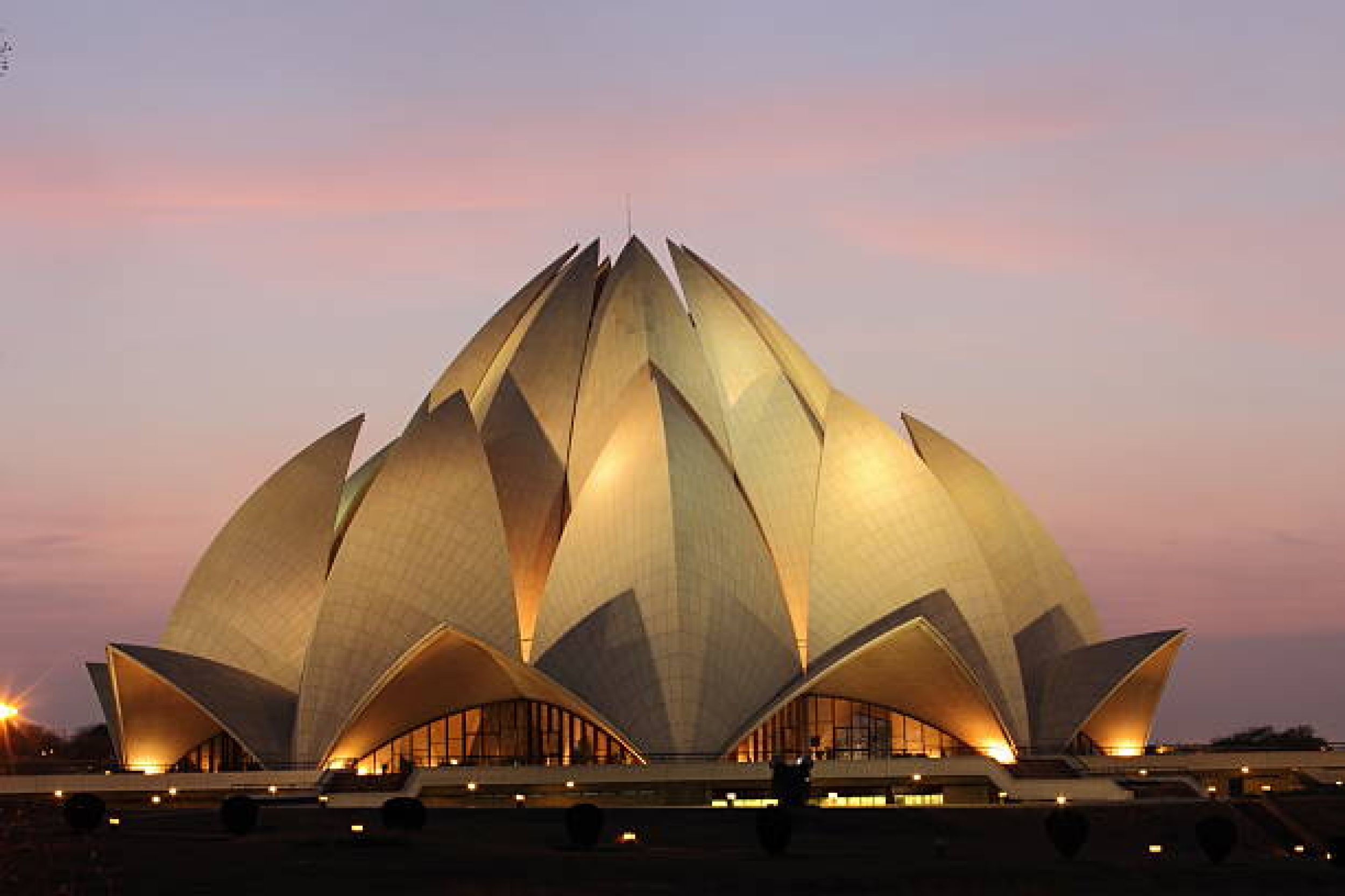
Lotus Temple is one of India’s most iconic architectural landmarks, known for its unique flower-like design and status as a Baháʼí House of Worship. Located in New Delhi, the temple attracts millions of visitors each year, offering a space for meditation, prayer, and interfaith harmony.
Historical Background
The Lotus Temple was completed in 1986, designed by Iranian architect Fariborz Sahba. It serves the Baháʼí Faith, which emphasizes the unity of all religions and humanity.
The temple’s design was inspired by the lotus flower, a symbol of purity, peace, and spiritual awakening in Indian culture. Since its inauguration, it has become a prominent landmark in New Delhi, blending modern architecture with spiritual significance.
Architectural Design
The Lotus Temple is renowned for its distinctive petal-shaped structure and harmonious proportions.
1. Exterior Features
-
Lotus Shape: The building consists of 27 free-standing marble-clad “petals” arranged in clusters of three, forming nine sides.
-
Material: Constructed primarily of white marble from Mount Penteli in Greece, giving it a luminous appearance.
-
Nine Entrances: Symbolizing the nine major religions of the world, the temple welcomes people of all faiths.
-
Landscaping: Surrounding gardens, ponds, and reflecting pools enhance the temple’s serene and meditative ambiance.
The overall design evokes a sense of balance, harmony, and connection with nature.
2. Interior Spaces
Inside, the temple features a vast, open prayer hall with no idols, images, or religious symbols:
-
Central Hall: Can accommodate up to 2,500 people, with natural light filtering through gaps between the petals.
-
Quiet Meditation Areas: Encourage reflection and spiritual contemplation.
-
Minimalist Design: Focuses on simplicity and openness, creating a calming atmosphere.
The interior emphasizes the Baháʼí principle of unity, promoting spiritual experience without barriers.
3. Symbolism and Spiritual Significance
-
The lotus flower symbolizes purity, enlightenment, and divine beauty.
-
The nine sides represent inclusivity, acknowledging the world’s major religions.
-
Open spaces and flowing design encourage inner peace and connection with the divine.
-
The temple embodies the Baháʼí principles of unity, harmony, and interfaith understanding.
Engineering and Construction
Building the Lotus Temple required innovative engineering solutions:
-
Petal Design: Concrete and steel were used to create the curved, free-standing petals.
-
Marble Cladding: Each petal is covered in marble, requiring precision alignment and structural support.
-
Structural Integrity: The design ensures stability while allowing an airy, open form.
-
Lighting: Natural light penetrates the gaps between petals, reducing the need for artificial illumination and enhancing the spiritual ambiance.
These innovations make the temple both visually stunning and structurally sound.
Cultural and Social Significance
The Lotus Temple is more than a place of worship; it is a cultural and social landmark:
-
Interfaith Center: Welcomes people of all religions for meditation and reflection.
-
Tourist Attraction: Millions of visitors from India and abroad visit each year.
-
Educational Programs: Offers insight into the Baháʼí Faith, architecture, and cultural values.
-
Urban Landmark: Contributes to New Delhi’s identity as a city of diverse cultural and spiritual heritage.
Its inclusive approach promotes tolerance, dialogue, and unity among people of different faiths.
Urban Context
Situated in South Delhi, the Lotus Temple complements its urban surroundings while standing out as a landmark:
-
Its gardens, reflecting pools, and walkways create a tranquil environment in the bustling city.
-
The temple is accessible via main roads and public transportation, encouraging visitors and worshippers to engage with its space.
-
Its open design and landscaping integrate architecture with nature, providing a peaceful retreat for city dwellers.
Tourism and Visitor Experience
Visitors to the Lotus Temple can enjoy:
-
Exploring the marble-clad petals and serene gardens
-
Participating in silent meditation and prayer
-
Observing the innovative architectural design up close
-
Learning about the Baháʼí Faith and its principles of unity and inclusivity
The temple combines spiritual experience, architectural beauty, and cultural education.
Awards and Recognition
The Lotus Temple has received worldwide acclaim:
-
Recognized for architectural excellence and innovative design
-
Featured in international magazines, documentaries, and architectural studies
-
Celebrated as one of the most photographed buildings globally
-
Symbolizes India’s rich cultural and spiritual heritage on the world stage
Its design is often cited as an example of modern religious architecture blending symbolism, functionality, and aesthetic appeal.
Architectural Legacy
The Lotus Temple demonstrates the potential of modern religious architecture:
-
Shows how form, symbolism, and spirituality can be integrated seamlessly
-
Inspires architects to experiment with organic shapes and natural forms
-
Encourages inclusive, interfaith spaces that serve both spiritual and public purposes
-
Promotes harmony between architecture and the surrounding environment
Its enduring legacy highlights the power of architecture to inspire, educate, and bring people together.
Conclusion
The Lotus Temple in New Delhi is more than a building; it is a symbol of spiritual harmony, architectural innovation, and cultural unity. Its lotus-inspired design, marble-clad petals, and serene interior create a space for reflection, meditation, and connection.
As a place of worship, cultural landmark, and architectural marvel, the Lotus Temple continues to inspire visitors, architects, and spiritual seekers alike, standing as a testament to the power of design to unify and elevate human experience.
Read Also:Reykjavik’s Harpa: A Landmark of Design and Performance
Watch Also:www.youtube.com/@bollywoodshorts2124









Leave a Reply