
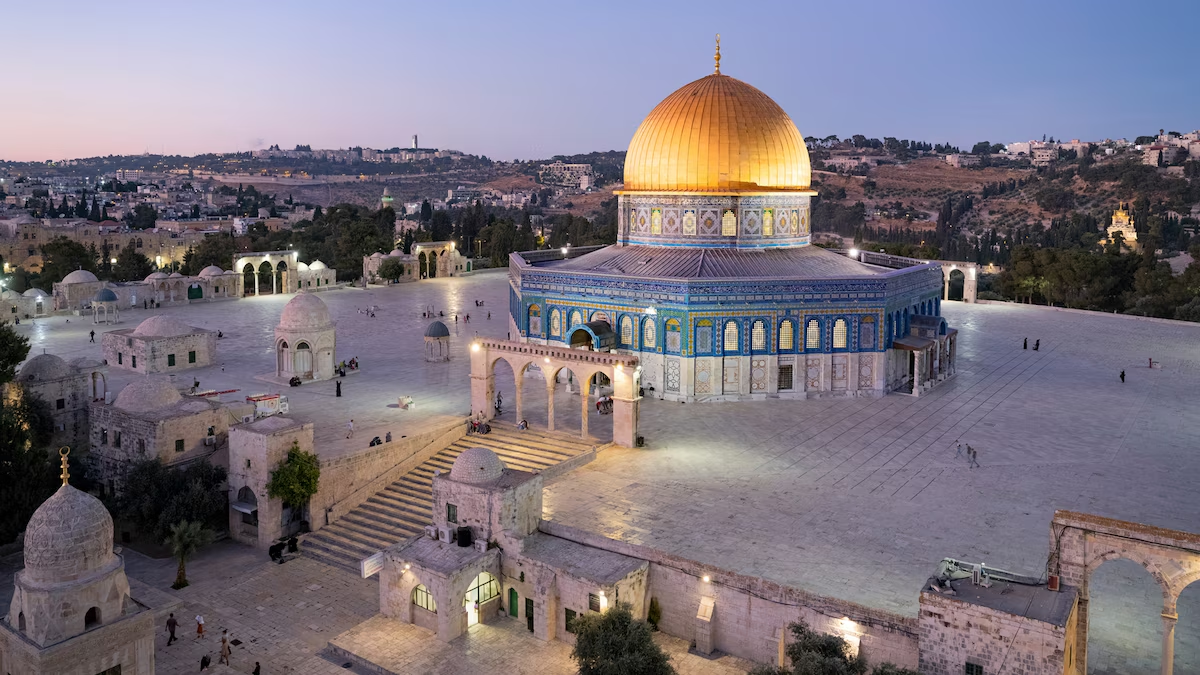
The Dome of the Rock is one of the most famous and visually striking religious structures in the world. Located in the Old City of Jerusalem, it stands as a symbol of faith, art, and history for multiple religions. Built over 1,300 years ago, the Dome of the Rock continues to draw pilgrims, tourists, and scholars from around the globe, reflecting the city’s spiritual and cultural significance.
Historical Background
Construction of the Dome of the Rock began in 687 CE under the Umayyad Caliph Abd al-Malik and was completed in 691 CE. It is one of the earliest examples of Islamic architecture and remains one of the oldest existing Islamic monuments.
The structure was built on the Temple Mount, a site sacred to Jews, Christians, and Muslims alike. According to Islamic tradition, the rock at the center of the Dome marks the spot from which the Prophet Muhammad ascended to heaven during the Isra and Mi’raj. In Jewish tradition, the rock is believed to be the location of the Holy of Holies in the ancient Jewish Temple. This layered history gives the site immense religious and cultural importance.
Architectural Features
The Dome of the Rock is a masterpiece of Islamic art and architecture, blending religious symbolism with geometric and decorative sophistication.
1. The Dome
The most recognizable feature is its large, golden dome, which rises approximately 20 meters above the structure and spans 20 meters in diameter. The original dome was made of wood and covered with gold leaf in later restorations. Today, the dome shines as a symbol of Jerusalem and Islamic architecture worldwide.
2. Octagonal Structure
Unlike traditional circular domes, the Dome of the Rock sits on an octagonal base. This shape is significant in Islamic architecture and allows for symmetry, stability, and aesthetic harmony. Each of the eight sides is adorned with arches, columns, and intricate mosaics.
3. Interior Decoration
The interior is richly decorated with mosaics, marble, and inscriptions from the Qur’an. These inscriptions emphasize monotheism and the spiritual significance of the site. Geometric patterns and arabesques cover the walls and ceilings, reflecting the Islamic preference for non-figurative art in religious spaces.
4. Exterior Design
The exterior walls feature colored tiles and mosaics added in later restorations, particularly during the Ottoman period in the 16th century. The vibrant blues, greens, and golds enhance the building’s visual impact, making it a centerpiece of the Jerusalem skyline.
Religious and Cultural Significance
The Dome of the Rock is sacred to multiple faiths:
-
Islam: It is considered the third holiest site in Islam after Mecca and Medina. The rock at the center marks the Prophet Muhammad’s miraculous night journey and ascent to heaven.
-
Judaism: The site is traditionally associated with Mount Moriah, the location of the First and Second Temples. It is a place of deep historical and spiritual importance.
-
Christianity: The site is linked to biblical events and the city’s early Christian history, adding layers of significance.
This shared importance makes the Dome of the Rock a symbol of Jerusalem’s rich religious tapestry.
Influence on Islamic Architecture
The Dome of the Rock has had a lasting impact on Islamic architecture:
-
Its octagonal plan and central dome became models for later mosques and religious structures.
-
Use of mosaics, inscriptions, and geometric patterns influenced Islamic decorative art for centuries.
-
The structure demonstrates early mastery of large-scale domes, inspiring architectural innovation across the Islamic world.
Many later mosques, including the Dome of the Chain and the Mosque of Omar in Jerusalem, show clear influence from this landmark.
Restoration and Preservation
Over the centuries, the Dome of the Rock has undergone multiple restorations due to natural wear, earthquakes, and political changes. Major restoration efforts occurred during the Ottoman period and in the 20th century, including the addition of new tiles and gold covering for the dome.
Preservation is ongoing to maintain both the structural integrity and artistic details, ensuring that the site continues to inspire visitors and pilgrims.
Tourism and Pilgrimage
The Dome of the Rock attracts millions of visitors annually. While access to the interior is generally limited to Muslims, the surrounding area allows non-Muslims to view and appreciate its architectural beauty. Pilgrims come to pray, reflect, and connect with the site’s deep religious significance, while tourists admire its historical, artistic, and cultural value.
The location atop the Temple Mount provides stunning views of Jerusalem and other nearby landmarks, including the Al-Aqsa Mosque and the Western Wall.
Symbolism and Legacy
The Dome of the Rock is not just a building—it is a symbol of faith, unity, and artistic achievement. Its golden dome is instantly recognizable worldwide and represents the spiritual heart of Jerusalem.
Architecturally, it demonstrates the early Islamic mastery of geometry, decoration, and spatial planning. Culturally, it reflects the city’s complex religious history and continues to play a central role in interfaith understanding and dialogue.
Conclusion
The Dome of the Rock in Jerusalem is more than an architectural marvel—it is a living monument to centuries of faith, art, and history. Its combination of octagonal design, golden dome, and rich mosaics make it a masterpiece of Islamic architecture.
As a sacred site for Muslims, Jews, and Christians alike, it embodies the spiritual significance of Jerusalem. Preservation efforts ensure that the Dome will continue to inspire awe and devotion for generations to come, standing as a testament to human creativity and devotion across time.
Read Also: Keep your face towards the sunshine and shadows will fall behind you
Watch Also: https://www.youtube.com/@TravelsofTheWorld24






Leave a Reply