
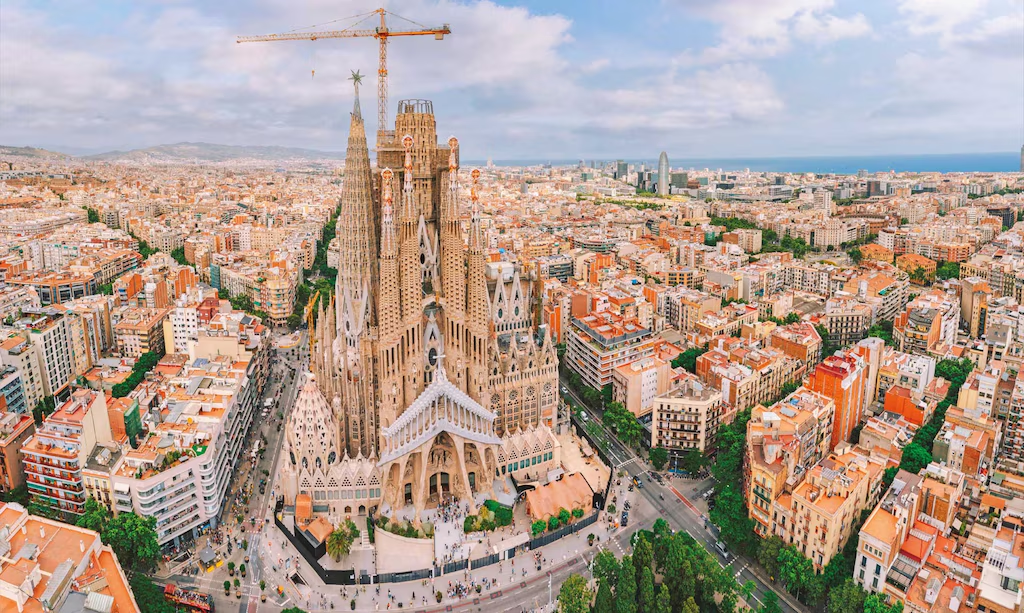
Sagrada Familia is one of the most famous and unique churches in the world. Located in Barcelona, Spain, it is a symbol of the city and a masterpiece of modernist architecture. Designed by Antoni Gaudí, the basilica combines religious symbolism, innovative design, and intricate artistry, making it a must-visit landmark for millions of visitors each year.
Historical Background
Construction of the Sagrada Familia began in 1882, initially under architect Francisco de Paula del Villar. Antoni Gaudí took over the project in 1883, dedicating much of his life to it. Gaudí’s vision transformed the church into a unique expression of nature, spirituality, and architectural innovation.
The basilica is still under construction today, more than 140 years later, making it one of the longest-running architectural projects in history. Gaudí’s original plans are being followed, using modern technology to realize his vision while respecting his distinctive style.
Architectural Design
Sagrada Familia is an example of Gaudí’s distinctive modernist style, blending Gothic and Art Nouveau elements with organic forms inspired by nature.
1. Facades
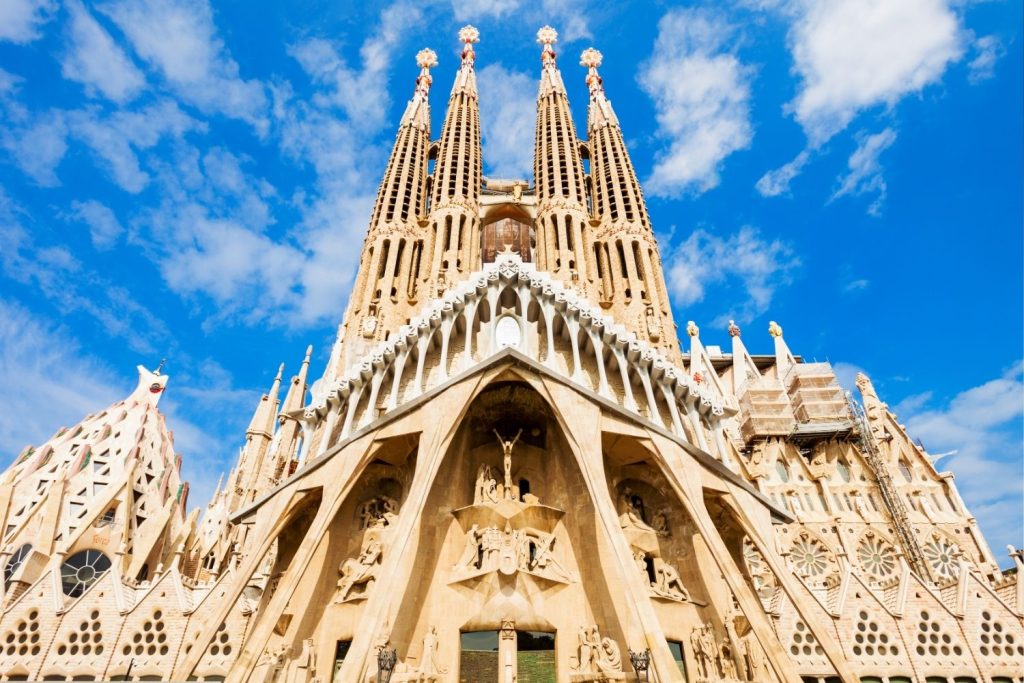
The basilica has three main facades, each representing a stage in the life of Jesus Christ:
-
Nativity Facade: Celebrates the birth of Jesus, adorned with intricate sculptures of nature, angels, and biblical figures.
-
Passion Facade: Depicts the suffering and death of Jesus, with stark, dramatic sculptures emphasizing emotion and sacrifice.
-
Glory Facade: Still under construction, it will represent Jesus’ eternal glory and the path to God.
Each facade is highly symbolic, reflecting Gaudí’s belief that architecture can tell a story and inspire spirituality.
2. Towers and Spires
The basilica will eventually have 18 towers, representing the Twelve Apostles, the Virgin Mary, the four Evangelists, and Jesus Christ. The tallest tower, dedicated to Jesus, will rise to 172.5 meters, making it the tallest religious building in Europe. The towers feature intricate designs, spiral staircases, and observation points for panoramic views of Barcelona.
3. Interior Design
Inside, the Sagrada Familia is filled with light, color, and organic forms. Columns branch like trees, creating a forest-like atmosphere. Stained glass windows fill the interior with colorful light that changes throughout the day, enhancing the spiritual experience. The nave, altars, and chapels are intricately decorated, reflecting both devotion and artistic creativity.
4. Symbolism and Nature
Gaudí’s design incorporates natural elements throughout the basilica. Animal motifs, plants, and geometric patterns inspired by nature are found in every corner. He believed that nature reflects God’s creation, and architecture should harmonize with the natural world.
Construction Techniques and Modern Innovations
Building the Sagrada Familia over more than a century has required evolving techniques:
-
Traditional Stone Carving: Many sculptures and facades are hand-carved from stone, preserving Gaudí’s original style.
-
3D Modeling and CAD: Modern technology helps architects interpret Gaudí’s plans and construct complex forms.
-
Reinforced Concrete: Used for structural support in newer sections while maintaining the integrity of the design.
-
Advanced Scaffolding and Cranes: Essential for working on the tall towers safely and efficiently.
Despite the long construction period, the project remains faithful to Gaudí’s original vision, blending craftsmanship with modern engineering.
Religious and Cultural Significance
The Sagrada Familia is a Catholic basilica, serving as a place of worship, pilgrimage, and cultural expression. It embodies Gaudí’s deep faith and his belief that architecture can inspire spirituality.
Beyond its religious role, the basilica has become a cultural icon of Barcelona and Spain. It attracts millions of tourists, influencing local art, tourism, and urban identity.
UNESCO World Heritage Status
Several parts of the Sagrada Familia were designated a UNESCO World Heritage Site in 2005, recognizing their architectural and cultural significance. The site reflects Gaudí’s innovative contribution to architecture and his ability to merge art, nature, and spirituality.
Tourism and Visitor Experience
Visitors to the Sagrada Familia experience both architectural marvel and spiritual ambiance. Key features for tourists include:
-
Access to towers and panoramic views of Barcelona
-
Guided tours explaining symbolism, history, and construction
-
Exhibition halls showcasing Gaudí’s models, sketches, and techniques
-
Observation of ongoing construction and modern engineering efforts
The basilica’s combination of beauty, history, and ongoing development creates a unique experience for visitors of all ages.
Sagrada Familia: Nature, Faith, and Innovation in Architecture
Architectural Legacy
Sagrada Familia has influenced architects, designers, and artists worldwide. Its innovative use of geometry, organic forms, and symbolism demonstrates how architecture can be both functional and profoundly expressive.
The project also illustrates the potential of long-term vision, blending traditional craftsmanship with modern technology to achieve ambitious artistic goals.
Conclusion
The Sagrada Familia in Barcelona is more than a building—it is a living testament to Antoni Gaudí’s genius, faith, and creativity. Its intricate facades, soaring towers, and nature-inspired interiors make it a masterpiece of modernist architecture.
As construction continues, the basilica remains a symbol of human ambition, devotion, and artistic expression. Visitors are drawn to its beauty, history, and spiritual significance, making the Sagrada Familia a landmark that inspires awe and admiration worldwide.
Read Also: Keep your face towards the sunshine and shadows will fall behind you
Watch Also: https://www.youtube.com/@TravelsofTheWorld24





Leave a Reply