
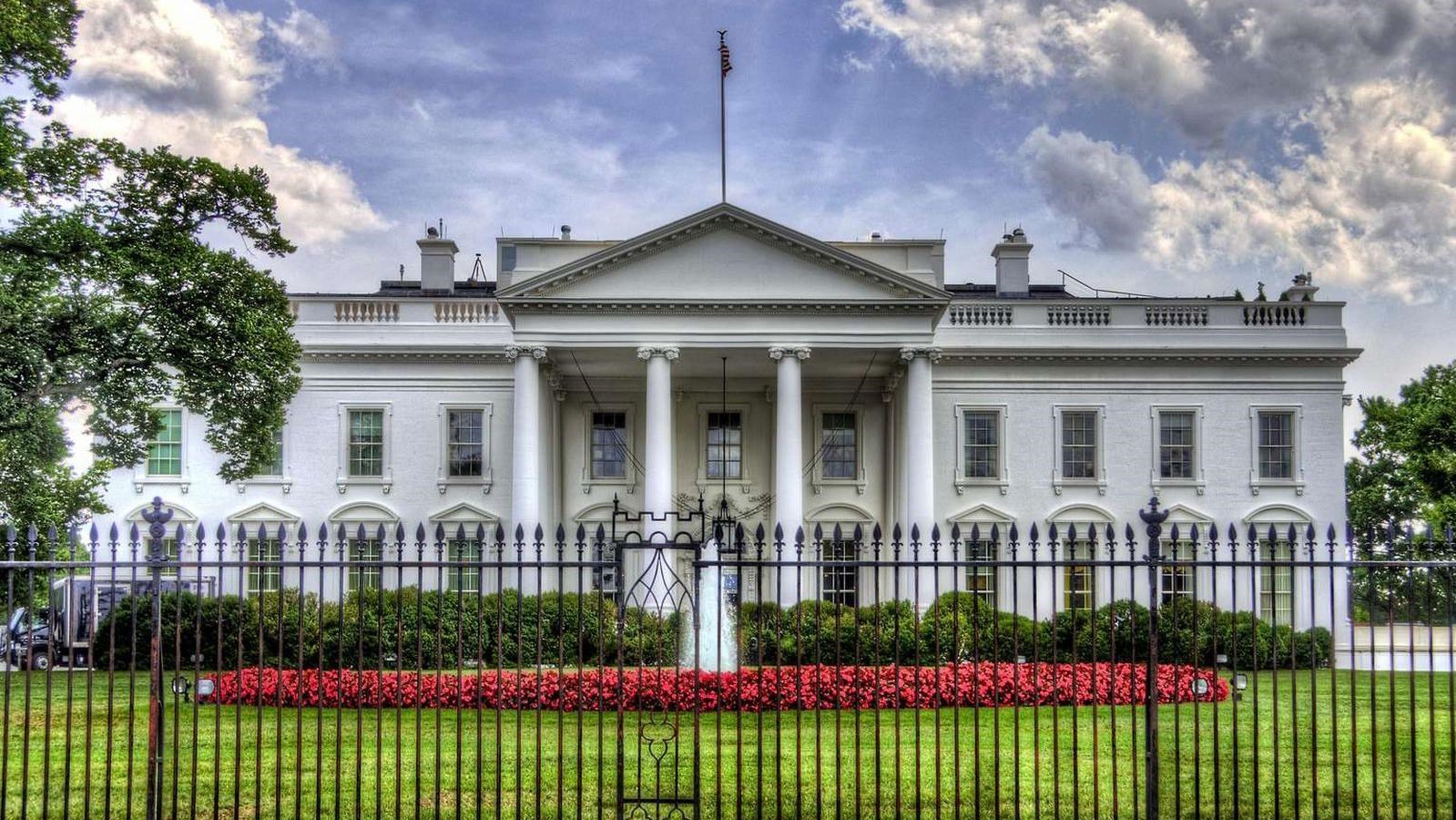
The White House is one of the most famous buildings in the world. It is where the President of the United States lives and works. It’s not just a house — it’s also the main place where decisions about running the country are made. People think of the White House as a symbol of the United States and its government because so many important events happen there.
The official address is 1600 Pennsylvania Avenue NW, Washington, D.C. Washington is the capital city of the United States, and the White House sits right in its heart.
Why It’s Famous
The White House is well known for a few big reasons:
-
It’s the home of the U.S. president.
-
It’s where the president meets leaders from around the world.
-
It’s been the center of American history for more than 200 years.
-
People from all over the world see it in photos, movies, and stories about American leaders.
Because of all this, the White House is not just a building — it represents history, power, and the way the United States is run.
How the White House Was Built
Long ago, after the United States became a country, leaders decided they needed a capital city and a home for the president. They picked a piece of land that would become Washington, D.C..
In 1791, the president at the time, George Washington, chose the exact spot where the White House should be built. A design competition was held, and an Irish‑born architect named James Hoban won with his plan. His idea was to make a strong and elegant building in a style called neoclassical, which was inspired by old European buildings.
The cornerstone was laid in 1792, and for eight years builders worked to complete the house. They used stone from nearby areas and used both local workers and skilled stonemasons.
In 1800, the second U.S. president, John Adams, moved into the house even though it wasn’t fully finished yet. His wife, Abigail Adams, was the first first lady to live there.
Despite George Washington choosing the site, he never lived in the White House — he finished his presidency before the building was ready.
What Happened in the Early Years
Not long after it was built, the White House faced one of its biggest challenges. In 1814, during a war between the United States and Britain, British troops marched into Washington and set fire to the presidential residence. The building was badly damaged and had to be rebuilt.
After the fire, architects and workers returned to restore the White House. By 1817, during the presidency of James Monroe, the house was ready for people to live in again.
Over the next few years, changes were made to the building. The famous South Portico (a large porch with columns that faces the gardens) was added in the 1820s, and the North Portico was finished in 1829.
What the Name Really Means
When it was first built, the White House was called different names like the “President’s Palace,” the “President’s House,” and the “Executive Mansion.” It wasn’t officially called the White House at first.
People used the name “White House” because the building is painted white, and that name stuck over time. But it didn’t become the official name until 1901, when President Theodore Roosevelt formally gave it that title.
Since then, the name “White House” has been used everywhere — in books, news, photos, speeches, and conversations around the world.
What It Looks Like
The White House is a large, elegant building with columns, tall windows, and wide steps. Its design is inspired by European buildings but has its own style that makes it special in the United States.
The main building is called the Executive Residence — this is where the president and the president’s family live. The house has:
-
132 rooms
-
35 bathrooms
-
6 floors
-
412 doors
-
147 windows
-
28 fireplaces
-
8 staircases
-
3 elevators
Around the White House are beautiful gardens, lawns, and paths. The South Lawn and North Lawn are especially famous because they host events, speeches, and celebrations.
Different Parts of the White House Complex
The White House is not just one building. It’s a whole group of connected buildings and offices that do many different jobs.
1. Executive Residence
This is the main house. It’s where the president’s family lives and sleeps. It also has big rooms for gatherings, dinners, and welcoming guests.
2. West Wing
This is where the president works. Most of the offices for the president’s helpers and advisors are here. The famous Oval Office — where the president does official work and talks to reporters — is in the West Wing.
3. East Wing
The East Wing was built later and used to have offices for the first lady and visitors. But recently it has been changed and demolished to make space for new building additions like a large event room.
Together, all these parts make the White House a place where both everyday life and big national decisions happen.
Life Inside the White House
Many people think the White House is just an office, but a family actually lives there too. Since 1800, every U.S. president and their family have lived in the White House.
Some presidents have lived there longer, some shorter, but every president since John Adams has called the White House home while in office.
Living here is unusual because it’s both a private home and a public workplace. The president’s kids may play on the lawns, but world leaders might also be visiting the same day.
The White House kitchen is big — big enough to serve dinner to about 140 guests and snacks to over 1,000 people at big events.
Inside, the building also has rooms used for state ceremonies, meetings with leaders, lunches, dinners, celebrations, and even official dances.
Cultural Importance and Symbolism
The White House is more than stone and paint. It stands for democracy, freedom, leadership, and government. People around the world recognize it instantly.
When major events happen — like elections, international meetings, or national announcements — the news often comes from the White House. That’s why people know it so well.
For many Americans, it represents the ideals of the country — even when times are hard or celebrations are joyful. It’s a place of history and a symbol of unity.
Public Access and Tours
In normal times, visitors from all over the United States and the world can tour parts of the White House for free. You usually need to request a tour through your government representatives in advance.
People can see rooms like the Blue Room, Red Room, Green Room, and the State Dining Room on these tours.
However, tours are sometimes paused for security reasons or big construction projects. For example, in recent years, plans to build a large new ballroom have caused tour schedules to be put on hold.
Still, the White House remains one of the few official homes of world leaders that people can visit almost for free and without paying a ticket.
Modern Changes and Preservation
Even though the outside looks much the same, the White House has changed over time. Presidents and builders have added new rooms, fixed damage, and updated things to fit modern life.
After World War II, the house was rebuilt from the inside because the structure was getting old and weak.
Today, there are plans for more changes, like a large ballroom and upgrades to the East Wing area. These new projects show that the White House is still evolving while keeping its historical look.
Final Thoughts — Why It Matters
The White House is not just an old building. It’s a living place where history continues every day. It’s where the leader of the United States lives and works. It’s where important decisions are made that affect people not only in America but sometimes around the world.
The White House brings together tradition and modern life. It connects the past with the present. And it stands as a reminder of the democratic ideas the United States was built on.
When you hear someone talk about the White House, you’re hearing about more than a house — you’re hearing about a place full of stories, responsibility, history, and meaning.
Read Also:Reykjavik’s Harpa: A Landmark of Design and Performance
Watch Also:www.youtube.com/@bollywoodshorts2124





Leave a Reply