
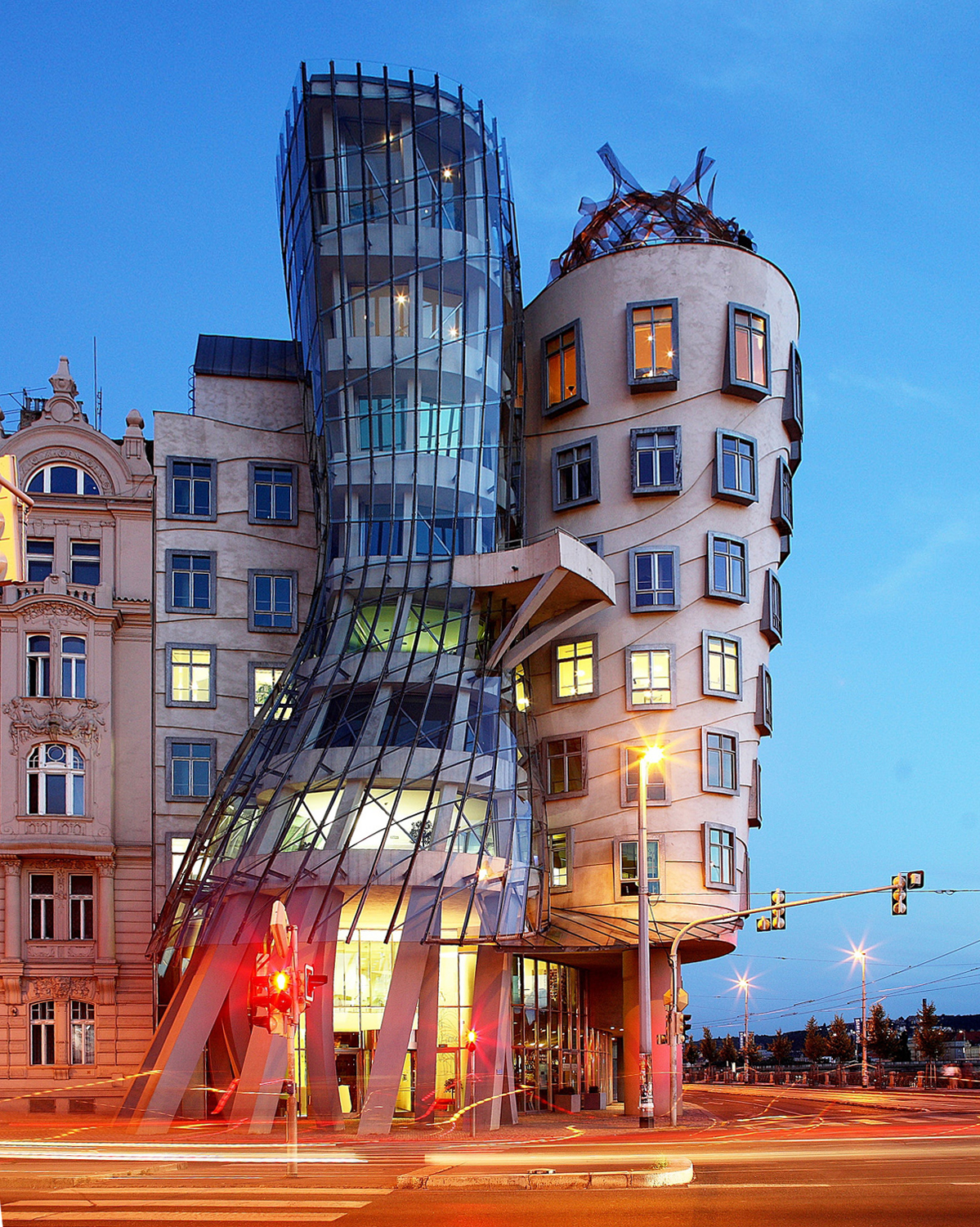
Dancing House is one of the most unique and iconic buildings in Prague, Czech Republic. Known for its unusual, curving design, the building stands out among the city’s historic architecture. Its playful form and modern style have made it a symbol of innovation and creativity in contemporary architecture.
Historical Background
The site of the Dancing House was originally home to several buildings that were destroyed during World War II. In the 1990s, Czech architect Vlado Milunić collaborated with Frank Gehry to design a modern building that would stand out while complementing Prague’s historic skyline.
Completed in 1996, the Dancing House reflects the city’s transition from a communist past to a modern, open society. Its design is sometimes referred to as “Fred and Ginger,” inspired by the famous dancing duo Fred Astaire and Ginger Rogers, symbolizing movement, fluidity, and energy.
Architectural Design
The Dancing House is a prime example of deconstructivist architecture, characterized by unusual shapes, non-linear forms, and a sense of motion.
1. Exterior Features
-
The building consists of two main structures: a static tower made of concrete and a dynamic, curving glass tower that seems to lean and twist.
-
The glass tower creates the impression of a dancing figure, interacting with the solid, upright tower.
-
Its asymmetrical lines, curved shapes, and irregular windows make the building appear lively and dynamic.
-
The facade combines concrete, steel, and glass, creating a contrast between solidity and transparency.
2. Interior Spaces
Inside, the building offers functional office spaces, a restaurant, and a gallery:
-
Offices: The floors are designed for flexible workspaces, making use of natural light and open layouts.
-
Gallery: Exhibitions of contemporary art and design are often displayed in the building.
-
Rooftop Café: Offers panoramic views of Prague’s historic skyline and the Vltava River.
The interior is designed to be practical while maintaining the building’s artistic and playful character.
3. Symbolism and Inspiration
-
The design symbolizes movement, change, and creativity, reflecting a modern, forward-looking society.
-
Named “Fred and Ginger,” the two towers are imagined as dancers, adding a human and cultural dimension to the building.
-
The curving forms contrast with the surrounding historic architecture, emphasizing Prague’s blend of tradition and modernity.
Engineering and Construction
Creating the Dancing House required innovative engineering solutions:
-
Complex steel framework supports the leaning and curving glass tower.
-
Special techniques were used to attach glass panels to irregular shapes without compromising structural integrity.
-
Advanced construction methods ensured that the building could withstand wind, weather, and structural stress while maintaining its unusual form.
These engineering innovations allow the building to appear dynamic while remaining safe and functional.
Cultural and Social Significance
The Dancing House has become a cultural landmark in Prague:
-
Tourism: Attracts thousands of visitors each year due to its unique design.
-
Art and Design: Frequently hosts exhibitions and events showcasing contemporary architecture and design.
-
Urban Identity: Represents Prague’s embrace of modernity alongside historic preservation.
-
Symbol of Creativity: Inspires architects, designers, and artists worldwide with its innovative form.
It has become an emblem of Prague’s cultural and architectural diversity.
Urban Context
Located on the Rašínovo Embankment along the Vltava River, the Dancing House complements the historic cityscape while standing out as a modern icon:
-
Its curving forms contrast with nearby Gothic, Baroque, and Art Nouveau buildings, creating a striking visual dialogue.
-
The rooftop café and terraces connect the building with the urban environment, offering views of bridges, the river, and surrounding landmarks.
-
Its location on the river emphasizes fluidity and movement, enhancing the symbolism of dance.
Tourism and Visitor Experience
Visitors to the Dancing House can enjoy:
-
Observing the unique architecture from street level or across the river
-
Visiting the rooftop café for panoramic city views
-
Exploring exhibitions and cultural events in the building
-
Learning about the collaboration between Vlado Milunić and Frank Gehry
Its playful design, combined with functional spaces, makes it both a sightseeing attraction and a working building.
Architectural Legacy
The Dancing House demonstrates the possibilities of contemporary architecture:
-
It shows how modern design can complement, rather than clash with, historic cityscapes.
-
It popularized deconstructivist architecture in Central Europe.
-
Inspires architects to experiment with movement, asymmetry, and unconventional forms.
-
Highlights the role of architecture in shaping cultural identity and urban aesthetics.
Its global recognition underscores the importance of creativity and innovation in modern urban design.
Conclusion
The Dancing House in Prague is more than just a building—it is a celebration of movement, creativity, and modern architecture. Its curving towers, playful design, and symbolic inspiration make it one of the city’s most distinctive landmarks.
By combining art, engineering, and functional space, the Dancing House demonstrates how architecture can inspire, entertain, and connect with the cultural identity of a city. It stands as a symbol of Prague’s dynamic character and commitment to innovation.
Read Also:Reykjavik’s Harpa: A Landmark of Design and Performance
Watch Also:www.youtube.com/@bollywoodshorts2124








Leave a Reply