
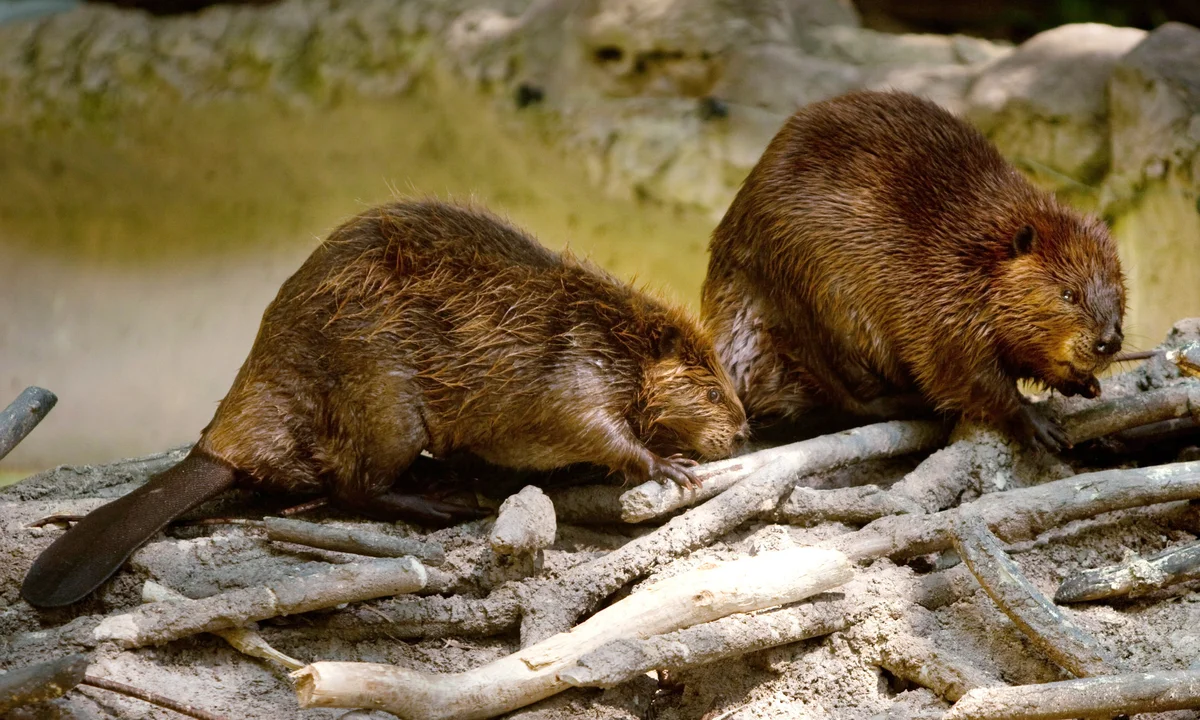
Beavers are large, semi-aquatic mammals known for building dams and lodges. They are famous for their strong teeth, flat tails, and amazing building skills. Beavers are some of the best natural engineers in the animal world.
They live near rivers, lakes, and streams. By building dams, they change the environment around them. In this article, we will learn about beavers in simple words, including their body features, habitat, food, behavior, family life, and importance in nature.
What Is a Beaver?
A beaver is a large rodent. In fact, it is one of the biggest rodents in the world. Beavers have:
-
Thick brown fur
-
Very strong front teeth
-
A wide, flat tail
-
Webbed back feet for swimming
An adult beaver can grow about 1 meter long, including its tail. It can weigh between 16 to 30 kilograms.
Their front teeth are orange and never stop growing. They use these teeth to cut down trees and chew wood.
Types of Beavers
There are two main types of beavers in the world:
1. North American Beaver
This species lives in Canada, the United States, and parts of Mexico. It is slightly larger and very common in North America.
2. Eurasian Beaver
This species lives in parts of Europe and Asia. It was once close to extinction, but conservation efforts have helped its population grow again.
Both species are very similar in appearance and behavior.
Where Do Beavers Live?
Beavers live near fresh water, such as:
-
Rivers
-
Streams
-
Lakes
-
Ponds
They prefer areas with trees nearby, especially willow, aspen, and birch trees. These trees provide both food and building material.
Beavers build two main structures:
Dams
Beavers build dams using wood, mud, stones, and branches. The dam blocks the flow of water and creates a pond.
Lodges
In the middle of the pond, beavers build a lodge. This is their home. The lodge has underwater entrances to keep them safe from predators.
What Do Beavers Eat?
Beavers are herbivores. They eat:
-
Tree bark
-
Leaves
-
Twigs
-
Aquatic plants
In winter, they store branches underwater near their lodge. This way, they have food even when the water surface freezes.
Their strong teeth help them chew through thick tree trunks.
Beaver Behavior
Beavers are mostly active at night. During the day, they rest inside their lodge.
They are excellent swimmers. Their webbed feet and strong tails help them move easily in water. Their tail also helps them balance while standing on land.
If a beaver senses danger, it slaps its tail loudly on the water. This warns other beavers nearby.
Family Life of Beavers
Beavers live in family groups. A family usually includes:
-
Two parents
-
Young beavers from the current year
-
Older young from the previous year
Baby beavers are called kits. The mother gives birth to 2 to 4 kits at a time.
Young beavers stay with their parents for about two years. During this time, they learn how to build dams and lodges.
Beavers are loyal and hardworking family animals.
Why Do Beavers Build Dams?
Beavers build dams to create deep ponds. These ponds protect them from predators like wolves and bears.
Deep water allows them to enter and leave their lodge safely. It also keeps the entrance hidden underwater.
Dams also help keep water levels stable. This makes it easier for beavers to store food and move around.
Importance of Beavers in Nature
Beavers play a very important role in the environment. They are called ecosystem engineers because they change their surroundings.
Here is how they help nature:
-
Their dams create wetlands.
-
Wetlands provide homes for birds, fish, frogs, and insects.
-
Dams slow down water flow and reduce flooding.
-
Wetlands improve water quality by trapping mud and dirt.
Because of beavers, many other animals get shelter and food.
Beavers and Humans
In the past, beavers were hunted heavily for their fur. This reduced their population.
Today, many countries protect beavers. Conservation programs have helped bring them back in some areas.
Sometimes, beaver dams can flood roads or farmland. In such cases, wildlife experts find safe ways to manage the situation without harming the animals.
Beavers are now seen as valuable animals because of the benefits they bring to ecosystems.
Interesting Facts About Beavers
-
Beaver teeth never stop growing.
-
They can stay underwater for up to 15 minutes.
-
Their tail stores fat and helps them swim.
-
They use mud and sticks to repair their dams regularly.
-
Beavers can cut down small trees in just a few hours.
-
They communicate using scent and tail slaps.
Are Beavers Dangerous?
Beavers are not dangerous to humans. They are peaceful animals.
If they feel threatened, they may bite to defend themselves, but this is rare. It is always best to watch wildlife from a distance.
Conclusion
Beavers are hardworking and intelligent animals. Their dam-building skills make them unique in the animal world.
By creating wetlands, they help many other animals survive. They improve water quality and protect areas from floods.
Even though they are simple animals, their work has a big impact on nature. Learning about beavers shows us how one animal can change the environment in a positive way.
Read Also: Keep your face towards the sunshine and shadows will fall behind you
Watch Also: https://www.youtube.com/@TravelsofTheWorld24





Leave a Reply