
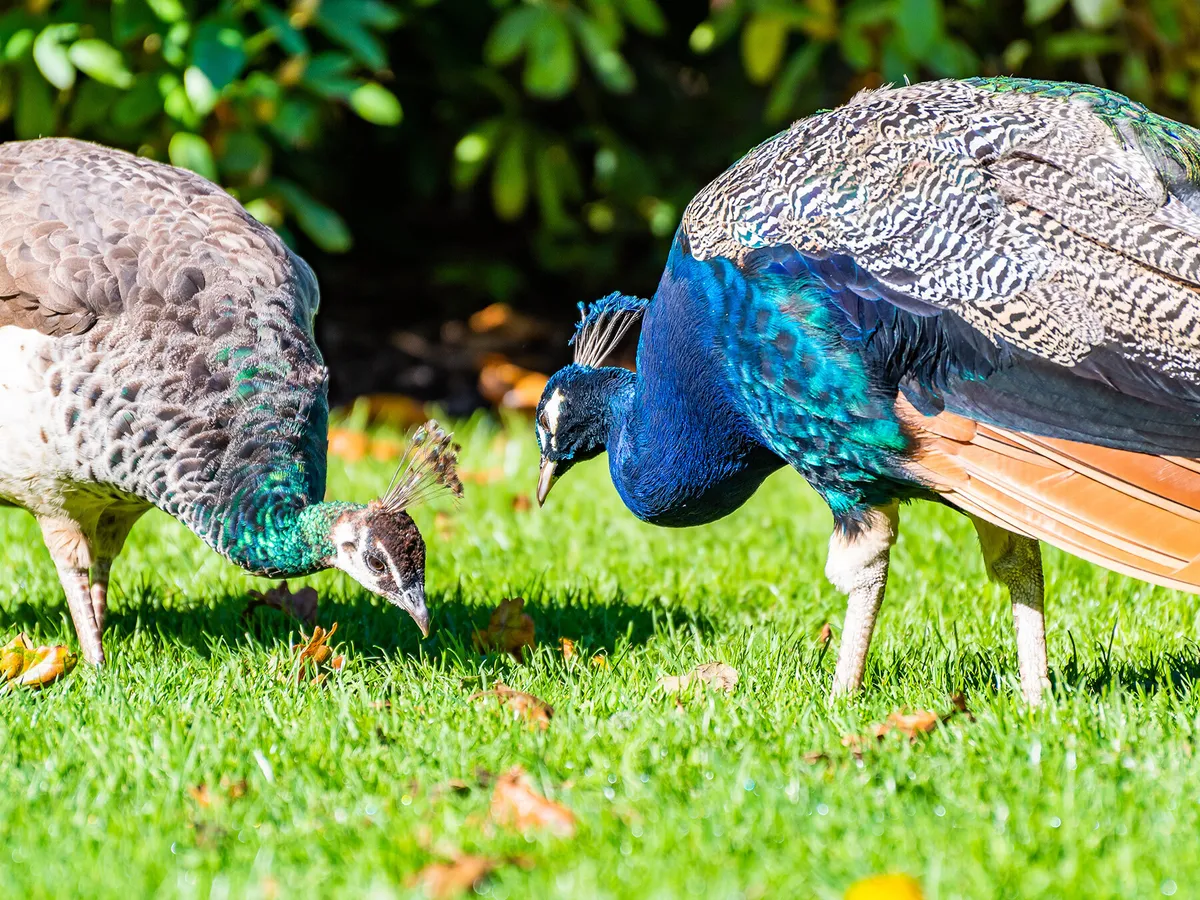
Peacocks are some of the most beautiful and fascinating birds in the world. Known for their bright feathers, long tails, and unique courtship displays, they have been admired by humans for centuries. This article explores everything about peacocks, including their appearance, behavior, habitat, diet, and importance in nature and culture.
What Is a Peacock?
The peacock is the male of the peafowl species, which belongs to the family Phasianidae. There are three main species:
-
Indian Peafowl (Pavo cristatus) – native to India and Sri Lanka.
-
Green Peafowl (Pavo muticus) – found in Southeast Asia.
-
Congo Peafowl (Afropavo congensis) – native to Africa.
The male peacock is famous for its long, colorful tail feathers, also called a “train,” which it spreads during courtship to attract females. The female, called a peahen, has shorter, dull-colored feathers for camouflage.
Physical Features of Peacocks
Peacocks have unique features that make them easy to recognize:
-
Size: Adult males are about 3–4 feet long, with tail feathers that can add another 4–5 feet.
-
Color: Bright blue, green, and gold feathers with eye-like patterns on the tail.
-
Crest: A crown of small feathers on top of the head.
-
Beak: Short, curved, and suitable for pecking food.
-
Legs: Strong legs with sharp spurs used for defense.
-
Eyes: Large, dark eyes that give good vision.
The female peahen has brown, greenish, and gray feathers, which help her stay hidden while nesting.
Where Do Peacocks Live?
Peacocks are found in forests, grasslands, and farmlands:
-
Indian Peafowl: Native to India and Sri Lanka, often near water and open forests.
-
Green Peafowl: Lives in Southeast Asia, prefers dense forests and bamboo areas.
-
Congo Peafowl: Found in the rainforests of Africa, rare and shy.
Peacocks are adaptable and can live near villages and farms where food and water are available.
What Do Peacocks Eat?
Peacocks are omnivores, meaning they eat both plants and animals:
-
Seeds, grains, and fruits
-
Insects, small reptiles, and amphibians
-
Flowers and plants
They forage on the ground and use their strong beaks to pick up food. Peacocks can eat a variety of foods depending on the season and availability.
Behavior of Peacocks
Peacocks have interesting and sometimes loud behaviors:
-
Courtship Display: Males spread their long tail feathers into a fan to attract peahens. The “eye” patterns and shimmering colors are meant to impress females.
-
Vocalizations: Peacocks make loud calls, especially during the breeding season, which can be heard from a distance.
-
Territorial: Males often defend their area from other males using loud calls and displays.
-
Roosting: Peacocks roost in trees at night to stay safe from predators.
-
Social Behavior: Outside breeding season, peacocks may form small groups, often with one male and several females.
Peacocks are strong and active birds, and their displays are one of the most spectacular sights in nature.
Reproduction and Life Cycle
Peacocks reproduce by laying eggs:
-
Mating season: Usually starts in spring, when males perform their displays.
-
Nesting: Peahens make simple nests on the ground, often hidden in grass or bushes.
-
Eggs: A female lays 3–5 eggs.
-
Incubation: The female incubates the eggs for about 28 days.
-
Chicks: Chicks are born covered in downy feathers and can walk and feed shortly after hatching.
Young peafowls, called peachicks, grow quickly, and males begin developing their long tail feathers at around two years of age.
Predators and Threats
Peacocks face natural threats from:
-
Tigers, leopards, and wild dogs
-
Large birds of prey
-
Humans (hunting and habitat destruction)
Despite these threats, peacocks are strong and alert. Their loud calls and early detection help them escape many predators.
Importance of Peacocks in Nature
Peacocks play an important role in their ecosystems:
-
Seed dispersal: By eating fruits, they help spread plant seeds.
-
Pest control: Eating insects helps keep populations in check.
-
Ecosystem balance: They are prey for predators, supporting the food chain.
Peacocks also help humans appreciate biodiversity and the beauty of wildlife.
Peacocks and Humans
Peacocks have a long history of interaction with humans:
-
Cultural significance: In India, peacocks are national birds and symbolize beauty, grace, and protection.
-
Mythology: Peacocks appear in Hindu, Buddhist, and other Asian myths.
-
Tourism: Their bright colors attract bird watchers and tourists.
-
Domestication: Peacocks are sometimes kept in parks, gardens, and palaces.
Peacocks are admired worldwide for their striking appearance and displays.
Unique Peacock Species
-
Indian Peafowl: Most common, bright blue males, native to India.
-
Green Peafowl: Found in Southeast Asia, greenish-blue with smaller displays.
-
Congo Peafowl: Rare African species, with reddish and blue feathers, less flamboyant.
Each species has adapted to its environment and developed unique colors and behaviors.
Fun Facts About Peacocks
-
The “eye” patterns on the tail feathers are called ocelli.
-
Peacocks can fly short distances despite their heavy tails.
-
They can live up to 20 years in the wild.
-
Peacocks make loud calls that can carry for a mile.
-
Only males have the long, colorful tail feathers; females are camouflaged.
Observing Peacocks
To observe peacocks safely:
-
Visit forests and national parks: They are easier to spot in the early morning.
-
Listen for calls: Peacocks are noisy, making them easier to find.
-
Use binoculars: Helps watch displays without disturbing them.
-
Respect their space: Avoid getting too close, especially during breeding season.
Watching peacocks in the wild shows their beauty, behavior, and role in the ecosystem.
Conservation of Peacocks
While peacocks are widespread, some species are threatened:
-
Habitat loss: Deforestation reduces their living space.
-
Hunting: In some regions, peacocks are hunted for feathers and meat.
-
Pollution: Human activity can harm food sources and nesting areas.
Conservation efforts include protecting forests, promoting awareness, and creating safe habitats.
Conclusion
Peacocks are majestic birds with incredible beauty, unique behaviors, and cultural importance. From their colorful tail feathers to their loud calls and courtship displays, they are a symbol of nature’s wonder.
By understanding peacocks, respecting their habitats, and supporting conservation, humans can help these amazing birds thrive for generations. Protecting peacocks ensures biodiversity, maintains ecosystems, and allows people to enjoy one of the most spectacular birds on Earth.
Read Also: Keep your face towards the sunshine and shadows will fall behind you
Watch Also: https://www.youtube.com/@TravelsofTheWorld24





Leave a Reply