
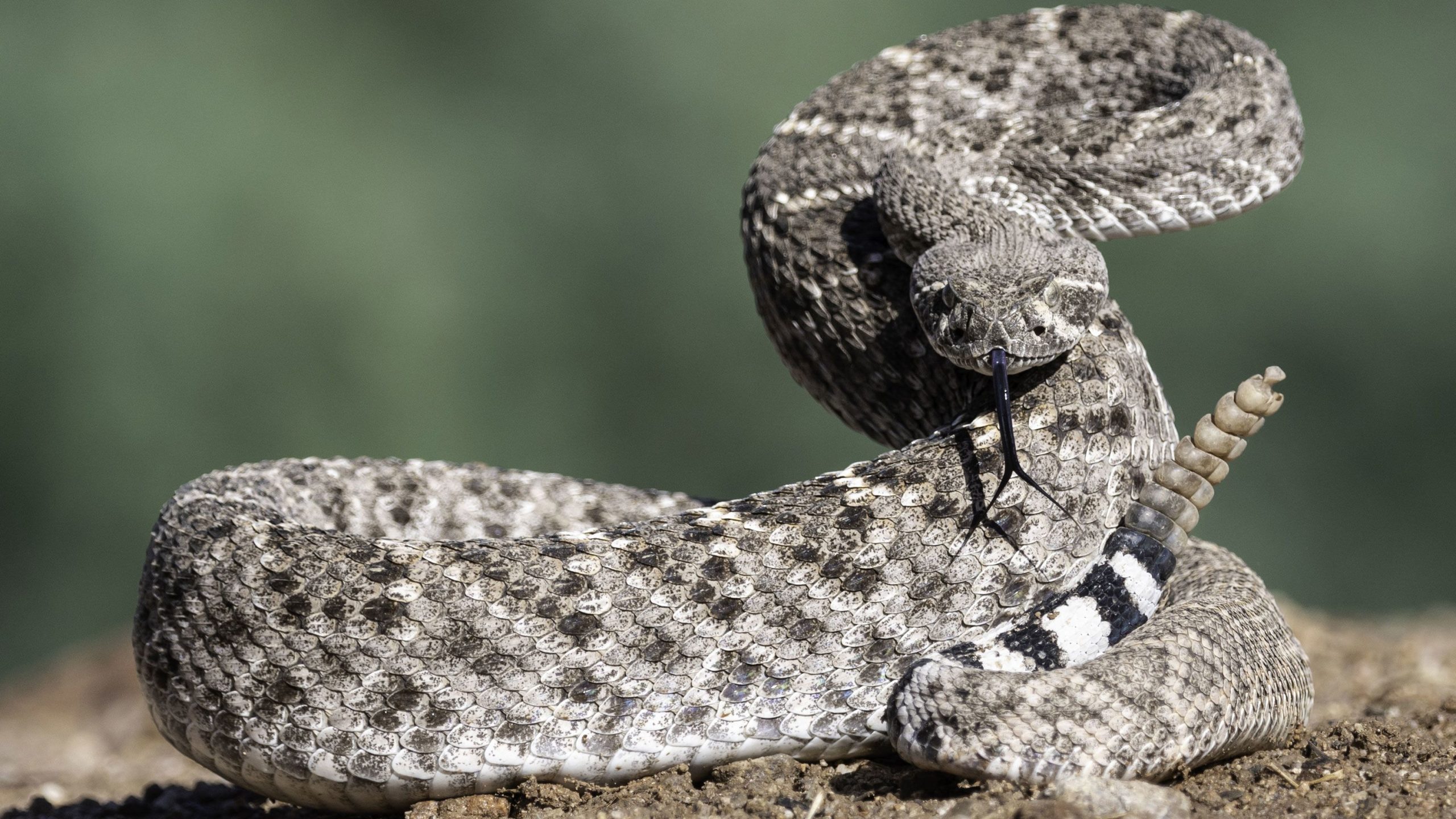
Rattlesnakes are some of the most well-known snakes in the world. They are famous for the loud buzzing sound made by the rattle at the end of their tail. This sound is a warning that tells predators — including humans — to stay away. Rattlesnakes are venomous, but they are not naturally aggressive. Most of the time, they prefer to avoid trouble and only bite when they feel threatened.
These snakes live mainly in North and South America, especially in dry and warm regions. They are important predators that help control rodent populations and keep ecosystems balanced.
Appearance
Rattlesnakes have thick, muscular bodies and triangular heads. Their size depends on the species. Some are small, around 50 centimeters (20 inches), while large species can grow over 2 meters (6.5 feet) long.
Their color usually matches their surroundings. Most rattlesnakes are brown, gray, tan, or olive with darker patterns such as diamonds, bands, or blotches. This camouflage helps them blend into rocks, sand, grass, or forest floors.
The most distinctive feature is the rattle at the tip of the tail. It is made of hollow segments of keratin — the same material as human fingernails. Each time the snake sheds its skin, a new segment is added.
How the Rattle Works
The rattle produces sound when the snake vibrates its tail rapidly. The segments knock against each other, creating a loud buzzing noise.
This warning system is very effective. It allows the snake to scare away large animals without needing to attack. In fact, the rattle helps prevent accidents between snakes and humans.
Young rattlesnakes are born with only one small segment, called a “button,” which does not make much sound. As they grow and shed skin, the rattle becomes louder.
Habitat
Rattlesnakes live in many types of environments, including:
-
Deserts
-
Grasslands
-
Forests
-
Rocky hills
-
Scrublands
-
Coastal areas
-
Swamps (for some species)
They are most common in warm climates. Many species live in the southwestern parts of United States and throughout Mexico. Some species are also found in southern Canada and parts of Central and South America.
During extremely hot weather, they often hide in burrows, under rocks, or in shade. In colder climates, they hibernate in winter in underground shelters called dens.
Diet
Rattlesnakes are carnivores and powerful predators. Their main food includes:
-
Mice
-
Rats
-
Rabbits
-
Ground squirrels
-
Birds
-
Lizards
-
Frogs (for some species)
Young rattlesnakes usually eat smaller prey until they grow large enough to hunt mammals.
Hunting Method
Rattlesnakes are ambush hunters. Instead of chasing prey, they wait patiently for an animal to come close. Their camouflage helps them remain invisible.
They use special heat-sensing pits on their face to detect body warmth. This allows them to hunt even in darkness.
When prey is within range, the snake strikes incredibly fast, injecting venom through its long fangs. The venom quickly weakens or kills the prey. The snake then follows the scent trail and swallows the animal whole.
Venom
Rattlesnake venom is a mixture of toxins designed to immobilize prey and begin digestion. It can damage tissue, affect blood clotting, and cause severe pain.
For humans, bites can be dangerous but are rarely fatal with modern medical treatment. Antivenom is very effective when given quickly.
Rattlesnakes can control how much venom they inject. Sometimes they deliver a “dry bite,” meaning little or no venom is released, especially in defensive situations.
Behavior
Rattlesnakes are generally shy and prefer to avoid confrontation. They spend much of their time resting, hiding, or basking in the sun to regulate body temperature.
Most species are active during warm months. In very hot regions, they may become more active at night to avoid extreme daytime heat.
They usually live alone except during mating season or winter hibernation, when many snakes may share the same den.
Defensive Behavior
Rattlesnakes rely on warning signals rather than attack. Their defense usually follows this order:
-
Remain still and rely on camouflage
-
Retreat if possible
-
Shake the rattle as a warning
-
Strike only if necessary
This system helps avoid unnecessary conflict with large animals.
Reproduction
Most rattlesnakes give birth to live young instead of laying eggs. This is helpful in cooler climates where eggs might not survive.
Mating usually occurs in spring or early summer. After several months, the female gives birth to 5–20 babies, depending on species and size.
Baby rattlesnakes are fully independent and venomous from birth. They must hunt and survive on their own immediately.
Predators
Even venomous snakes have predators. Animals that may hunt rattlesnakes include:
-
Birds of prey such as hawks and eagles
-
Coyotes
-
Foxes
-
Wild pigs
-
Large snakes
-
Roadrunners (in some regions)
Young snakes are especially vulnerable.
Seasonal Life
Rattlesnakes adjust their behavior throughout the year.
Spring
They emerge from winter dens and begin feeding.
Summer
Active hunting and mating. In very hot areas, activity shifts to nighttime.
Autumn
Preparation for winter, feeding heavily to store energy.
Winter
Dormancy in underground dens, sometimes with many snakes together.
Importance in Nature
Rattlesnakes play a crucial role in ecosystems. By controlling rodent populations, they help prevent crop damage and reduce diseases carried by rodents.
They are also part of the food web, serving as prey for other animals. A healthy rattlesnake population usually indicates a balanced ecosystem.
Relationship with Humans
Humans often fear rattlesnakes, but most bites occur when people accidentally step on them or try to handle them.
Many species are protected because habitat destruction and persecution have reduced their numbers. Education programs encourage people to respect snakes rather than kill them.
In some areas, rattlesnakes are also important for ecotourism and scientific research.
Interesting Facts
-
The rattle is a unique warning system found only in rattlesnakes.
-
They can strike at incredible speed — faster than the human eye can follow.
-
Heat-sensing pits allow them to “see” warmth.
-
They can swallow prey much larger than their head.
-
Some species can live over 20 years in the wild.
-
Not all rattlesnakes rattle before striking, especially if surprised.
-
They play a major role in controlling pests.
-
Baby rattlesnakes are born venomous.
Observing Rattlesnakes Safely
Seeing a rattlesnake in the wild can be exciting but should always be done from a safe distance. Never attempt to touch or provoke the snake.
If you hear the rattling sound, stop moving and slowly back away. This usually prevents conflict and allows the snake to escape.
Wildlife parks and protected areas sometimes offer safe opportunities to observe these animals with guides.
Conservation
Many rattlesnake populations face threats such as:
-
Habitat destruction
-
Urban development
-
Road mortality
-
Pollution
-
Fear-based killing
Conservation efforts focus on protecting habitats, educating the public, and promoting coexistence.
Protecting rattlesnakes also protects the ecosystems they help balance.
Why They Matter
Despite their scary reputation, rattlesnakes are not villains. They are efficient predators that help maintain natural balance. Without them, rodent populations could grow rapidly, causing ecological and agricultural problems.
They are also fascinating examples of evolution, with specialized venom, heat sensors, and the unique rattle system.
Summary
Rattlesnakes are remarkable venomous snakes known for the warning rattle on their tails. Found mainly across the Americas, they live in many habitats from deserts to forests. They are ambush hunters that use venom and heat sensing to capture prey.
Although dangerous if threatened, they are shy animals that prefer to avoid humans. By controlling rodents and supporting the food web, they play an important role in nature.
Understanding and respecting rattlesnakes helps ensure both human safety and the survival of these important reptiles.
Read Also: Keep your face towards the sunshine and shadows will fall behind you
Watch Also: https://www.youtube.com/@TravelsofTheWorld24





Leave a Reply