
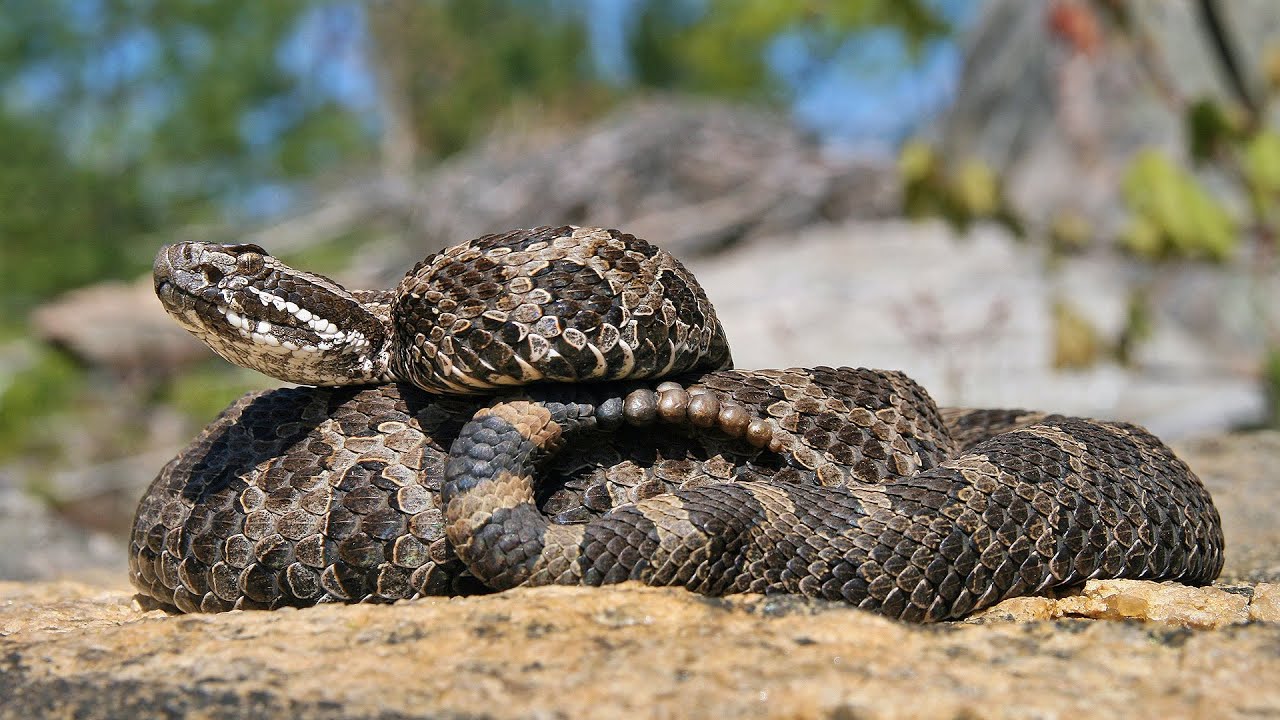
The massasauga is a small but fascinating rattlesnake found in parts of United States and Canada. Unlike the large, famous rattlesnakes of deserts, this species prefers wetlands, grasslands, and forests. It is shy, rarely seen, and usually avoids humans.
Even though it is venomous, the massasauga is not aggressive and bites only when threatened. Because of habitat loss and human fear, its numbers have dropped in many areas, making it an important species for conservation.
Appearance
The massasauga is a relatively small rattlesnake. Adults usually grow between 45 and 75 centimeters (about 18–30 inches), though some can reach nearly 1 meter (around 39 inches).
Its body is thick and short compared to many other snakes. The color is usually gray, tan, or light brown with dark blotches running along the back. These patterns help it blend into leaves, grass, and soil.
Like all rattlesnakes, it has a rattle at the end of its tail. When the snake vibrates its tail, the rattle produces a buzzing sound that warns predators to stay away.
Its head is triangular, with heat-sensing pits between the eyes and nostrils. These pits allow the snake to detect warm-blooded prey even in darkness.
Name and Meaning
The name “massasauga” comes from a Native American word meaning “great river mouth.” This name reflects the snake’s connection to wet habitats such as marshes, swamps, and floodplains.
Sometimes it is called the “swamp rattler” because of where it lives.
Habitat
Unlike many rattlesnakes that prefer dry deserts, massasaugas like moist environments. Common habitats include:
-
Wetlands and marshes
-
Swamps
-
Flooded grasslands
-
Prairies
-
Open woodlands
-
Areas near lakes and rivers
In colder regions, they depend on wetlands for survival during winter. They hibernate in burrows or underground spaces below the frost line, often in places that stay damp but do not freeze solid.
In summer, they may move to drier nearby areas to hunt and bask in the sun.
Distribution
Massasaugas are found mainly in the central and eastern parts of North America. Their range stretches from parts of southern Canada down through the Great Lakes region and into the central United States.
However, populations are often scattered and isolated. Urban development, farming, and drainage of wetlands have reduced suitable habitats.
Diet
Massasaugas are carnivores and skilled ambush predators. They eat:
-
Mice
-
Voles
-
Small rats
-
Birds
-
Frogs
-
Lizards
-
Occasionally other small snakes
Young massasaugas often eat smaller prey such as insects or tiny amphibians until they grow large enough for mammals.
The snake usually waits quietly for prey to come close, then strikes quickly. Its venom immobilizes the animal, allowing the snake to swallow it whole.
Hunting Method
Massasaugas do not chase prey. Instead, they rely on stealth and patience. Their camouflage allows them to remain almost invisible among grass or leaves.
Using heat-sensing pits, they can detect body warmth even in total darkness. Once prey is within range, they strike with lightning speed.
After biting, they often release the prey and track it using scent until it stops moving.
Venom
Massasauga venom is designed to subdue small animals. It contains toxins that affect blood and tissue, helping the snake digest its meal.
Although the bite can be serious for humans, deaths are extremely rare with modern medical treatment. Most bites happen when people accidentally step on or try to handle the snake.
Because massasaugas are shy, they usually rely on camouflage or retreat instead of biting.
Behavior
Massasaugas are quiet, secretive snakes. They spend much of their time hidden under vegetation, logs, or rocks.
They are mostly active during warm months and become inactive during cold weather. In hotter regions, they may be more active in the morning and evening to avoid extreme heat.
Unlike some snakes, they do not travel far from their home area. Many individuals spend their entire lives within a small range.
Defensive Behavior
When threatened, the massasauga uses warning behaviors before attacking:
-
Freezing in place to avoid detection
-
Vibrating its tail to produce the rattling sound
-
Retreating to cover if possible
Only if these warnings fail will it strike. This defensive nature helps reduce unnecessary conflict with larger animals and humans.
Reproduction
Massasaugas give birth to live young rather than laying eggs. This is helpful in colder climates where eggs might not survive.
Mating usually occurs in spring or late summer. After a pregnancy lasting several months, the female gives birth to about 5–20 babies.
Newborn snakes are fully formed and venomous from birth. They are independent immediately and must hunt on their own.
Young massasaugas are especially vulnerable to predators, so many do not survive to adulthood.
Predators
Adult massasaugas have some protection due to their venom, but they still face predators such as:
-
Birds of prey
-
Large mammals
-
Other snakes
-
Wild pigs
-
Domestic cats and dogs
Young snakes are at much greater risk and must rely heavily on camouflage.
Seasonal Life Cycle
Life for a massasauga changes with the seasons.
Spring
Snakes emerge from hibernation, bask in the sun, and begin hunting.
Summer
Active feeding, mating, and movement between habitats.
Autumn
Preparation for winter, searching for suitable hibernation sites.
Winter
Dormant underground in communal hibernation spots called hibernacula.
Importance in the Ecosystem
Massasaugas play a valuable role in nature. By controlling populations of rodents, they help maintain balance in ecosystems and reduce the spread of diseases carried by rodents.
They are also prey for other animals, making them part of the natural food web.
The presence of massasaugas often indicates a healthy wetland environment.
Relationship with Humans
Most people fear rattlesnakes, but massasaugas are rarely seen and seldom cause problems. Bites are uncommon and usually occur when the snake is accidentally disturbed.
In many areas, these snakes are protected by law because of declining populations. Conservation programs focus on habitat protection and public education.
Learning about massasaugas helps people understand that they are not aggressive monsters but important wildlife.
Conservation Status
Many populations of massasaugas are threatened due to human activities, including:
-
Destruction of wetlands
-
Urban development
-
Farming
-
Road mortality
-
Pollution
-
Fear-based killing
Because they depend on specific habitats, even small environmental changes can affect survival.
Conservation efforts include:
-
Protecting wetlands
-
Restoring natural habitats
-
Monitoring populations
-
Educating the public
-
Creating protected wildlife areas
Interesting Facts
-
It is one of the smallest rattlesnakes in North America.
-
Prefers wetlands rather than deserts.
-
Gives birth to live young.
-
Rarely bites unless threatened.
-
Uses heat sensors to detect prey.
-
Can live many years in the wild.
-
Often stays hidden and unseen.
-
Plays a key role in controlling rodent populations.
Observing Massasaugas
Because they are shy and well camouflaged, spotting one in the wild is rare. People are more likely to hear the rattle than see the snake.
Wildlife reserves and protected wetlands sometimes offer safe opportunities to observe them from a distance. Respecting their space is important for both human safety and the snake’s well-being.
Why They Matter
Even though the massasauga is small and secretive, it is an important part of North America’s natural heritage. Its survival depends on healthy wetlands, which also support countless other species.
Protecting this snake means protecting entire ecosystems.
Summary
The massasauga is a shy, small rattlesnake that lives in wetlands, grasslands, and forests of North America. With its camouflage, heat-sensing abilities, and warning rattle, it is a well-adapted predator that usually avoids conflict.
Although venomous, it is not aggressive and plays a valuable role in controlling rodent populations. Habitat loss and human fear have caused declines, making conservation efforts essential.
This quiet snake reminds us that even animals many people fear can be gentle, important, and worth protecting.
Read Also: Keep your face towards the sunshine and shadows will fall behind you
Watch Also: https://www.youtube.com/@TravelsofTheWorld24





Leave a Reply