
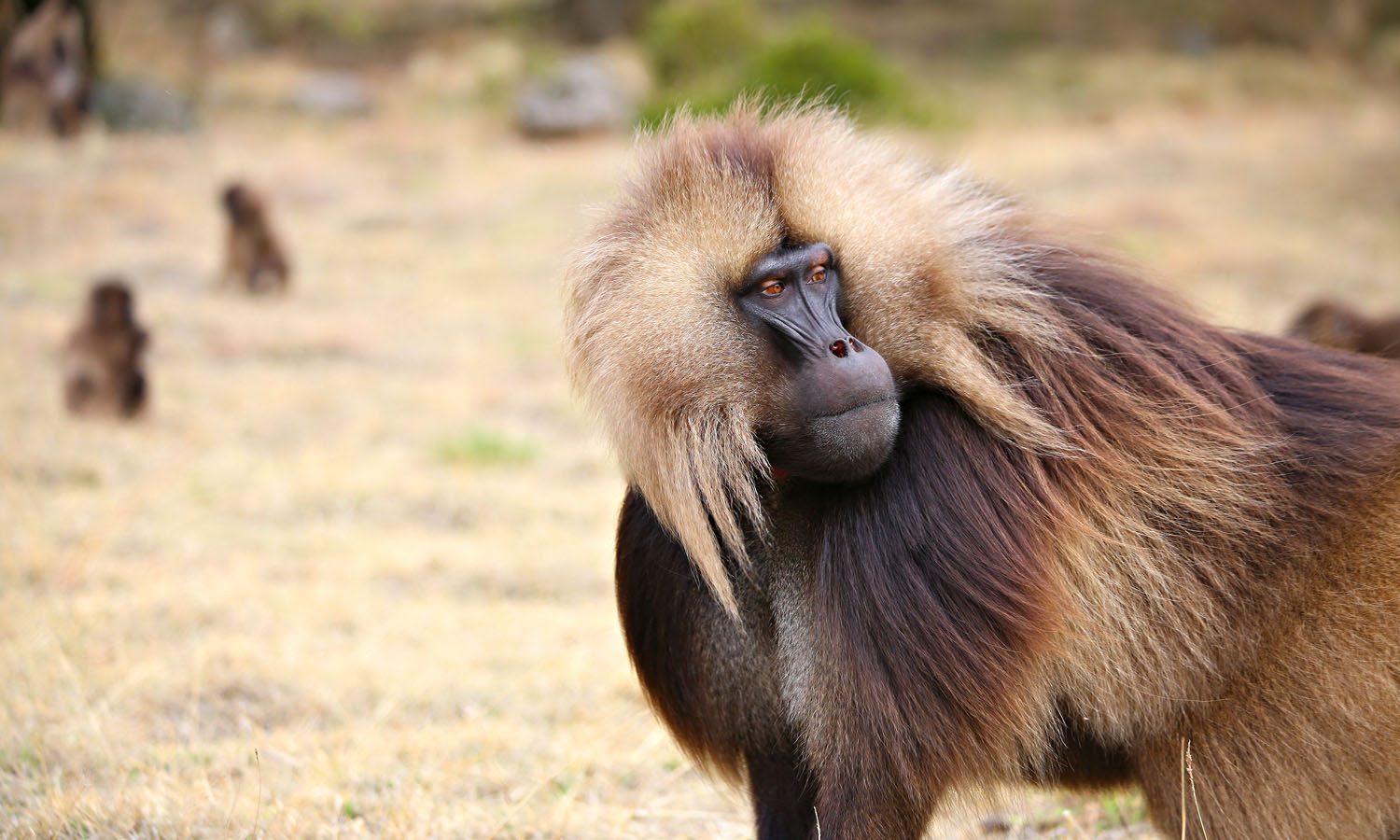
Baboons are large monkeys known for their intelligence, social nature, and adaptability. They belong to the family of Old World monkeys and are mainly found in Africa. Some species also live in parts of the Arabian Peninsula. Baboons are very interesting animals because they live in complex social groups, have unique behaviors, and can adapt to many different habitats.
Appearance
Baboons are strong and muscular monkeys with long limbs and a dog-like face. They have a strong jaw, sharp teeth, and a distinctive snout. Their fur varies depending on the species but is usually brown, gray, or olive-colored. Baboons also have bare, sometimes brightly colored faces and rumps. For example, some species, like the mandrill (a type of baboon relative), have blue and red colors on their faces and bottoms.
Male baboons are larger than females. Adult males can weigh between 50 and 90 pounds, while females usually weigh around 30 to 50 pounds. They also have larger canine teeth than females, which they use for defense and during fights with other males.
Species of Baboons
There are five main species of baboons:
-
Chacma Baboon – Found in southern Africa, one of the largest baboons.
-
Olive Baboon – Found across central Africa, has greenish-brown fur.
-
Yellow Baboon – Lives in eastern Africa, has yellowish fur.
-
Guinea Baboon – Lives in West Africa, smaller than other baboons.
-
Hamadryas Baboon – Lives in the Horn of Africa and parts of Arabia, males have a silver-gray mane.
Each species has its own unique behaviors, but all share similar social structures and intelligence.
Habitat
Baboons are very adaptable. They can live in savannas, grasslands, forests, and rocky areas. They are often near water sources because they need water to drink daily. Some baboons even live near human settlements and can survive in towns or farmlands. Their ability to live in different environments is one reason they have been so successful as a species.
Diet
Baboons are omnivores, which means they eat both plants and animals. Their main diet includes fruits, leaves, seeds, flowers, and roots. They also eat insects, small birds, eggs, and sometimes small mammals. Baboons are clever foragers; they can use their hands to dig for roots or open hard shells of fruits. They are also known to steal food from other animals or even humans when given a chance.
Baboons spend much of their day searching for food. A typical baboon may eat dozens of different types of plants and animals in one day. Their strong teeth help them chew tough plants, and their dexterous hands allow them to handle food in smart ways.
Social Structure
One of the most fascinating things about baboons is their social life. Baboons live in groups called troops, which can range from 20 to over 200 individuals. These troops have a strict hierarchy. Male baboons fight for dominance, and the strongest male, often called the alpha male, leads the troop. The alpha male protects the group, makes decisions, and has mating privileges with females.
Females also have a hierarchy. Older, experienced females usually have higher rank and influence within the troop. Social bonds are very important. Baboons groom each other to clean fur and strengthen friendships. Grooming reduces stress, prevents illness, and keeps the troop united.
Communication
Baboons are very vocal and use many sounds to communicate. They grunt, bark, scream, and make alarm calls to warn the troop about danger. For example, if a predator like a leopard is nearby, baboons give a loud call to alert everyone.
They also communicate with body language. Raising their eyebrows, showing teeth, or making specific postures can signal aggression, submission, or friendliness. Tail positions, facial expressions, and gestures all have meaning in baboon society.
Behavior
Baboons are active during the day and rest at night. They are excellent climbers and can run quickly when needed. Even though they spend a lot of time on the ground, they sleep in trees or on cliffs to avoid predators.
Baboons are intelligent and curious. They can solve simple problems, use tools, and remember places where food is hidden. They are also playful, especially young baboons, who chase, wrestle, and explore.
Reproduction
Female baboons reach sexual maturity at around 4–5 years old, while males mature around 7–8 years. Baboons mate year-round, but births often happen in the rainy season when food is plentiful.
Gestation lasts about six months, and usually, one baby is born. At birth, the baby is small, with soft fur, and is immediately cared for by its mother. Babies cling to their mothers for safety and nourishment. The mother teaches the baby important social and survival skills. Other females in the troop sometimes help care for the young, which is called alloparenting.
Predators and Defense
Baboons have many natural predators, including lions, leopards, hyenas, and humans. They defend themselves by staying in groups, warning each other, and showing strength. Males use their large teeth to fight predators or rivals. Baboons are also very fast and can escape into trees or rocky areas.
Their intelligence also helps them survive. They remember dangerous areas, learn which predators are near, and sometimes cooperate to chase a threat away.
Importance in Nature
Baboons play an important role in their ecosystem. They help spread seeds through their droppings, which promotes plant growth. Their foraging also helps control insect populations and allows plants to regenerate. Predators rely on baboons as a food source, making them an important part of the food chain.
Relationship with Humans
Humans have a complicated relationship with baboons. In some cultures, baboons are respected and even featured in art and stories. In other places, they are considered pests because they raid crops or steal food. Despite this, humans also study baboons to learn about social behavior, communication, and intelligence in primates.
In some wildlife reserves and national parks, tourists love to watch baboons in their natural habitat. Baboons can teach humans about cooperation, family bonds, and problem-solving.
Interesting Facts
-
Clever Monkeys: Baboons can use sticks to dig for food or open hard shells.
-
Strong Teeth: Their large canine teeth are both a defense and a show of strength.
-
Fast Runners: Baboons can run up to 30 miles per hour.
-
Long Lifespan: In the wild, baboons live 20–30 years.
-
Playful Young: Baby baboons spend hours playing and learning social rules.
-
Teamwork: Baboons sometimes work together to fend off predators.
-
Memory: They remember the locations of food and the identity of each troop member.
-
Climbers: Even though they spend most of their time on the ground, baboons climb trees to sleep or escape danger.
Conservation
Some baboon species are not endangered, but they face threats from habitat loss, hunting, and conflicts with humans. Conserving forests, protecting water sources, and managing human-baboon interactions are important for their survival. National parks and wildlife reserves help baboons thrive safely in the wild.
Observing Baboons
Watching baboons is exciting because of their lively behavior. In national parks in Africa, you can see large troops foraging, grooming, and playing. During interactions between males, you might witness dominance fights or displays of strength. Observing baboons can teach us about animal intelligence, social bonds, and the importance of protecting wildlife.
Summary
Baboons are fascinating, smart, and social animals. They live in groups called troops, have a clear social hierarchy, and communicate in many ways. Their diet is varied, and they are adaptable to different environments. Males protect the troop, while females care for the young and maintain social bonds. Baboons are part of their ecosystem, helping spread seeds and providing food for predators.
Humans have admired baboons for their intelligence and complex behavior for centuries. Protecting baboons and their habitats ensures that these clever monkeys continue to thrive and entertain, teach, and inspire us in the wild.
Whether it’s their playful young, their careful mothers, or the strong alpha males leading the troop, baboons show the power of family, intelligence, and adaptability. Watching them in the wild reminds us how fascinating nature can be and why wildlife conservation is so important.
Read Also: Keep your face towards the sunshine and shadows will fall behind you
Watch Also: https://www.youtube.com/@TravelsofTheWorld24










Leave a Reply