
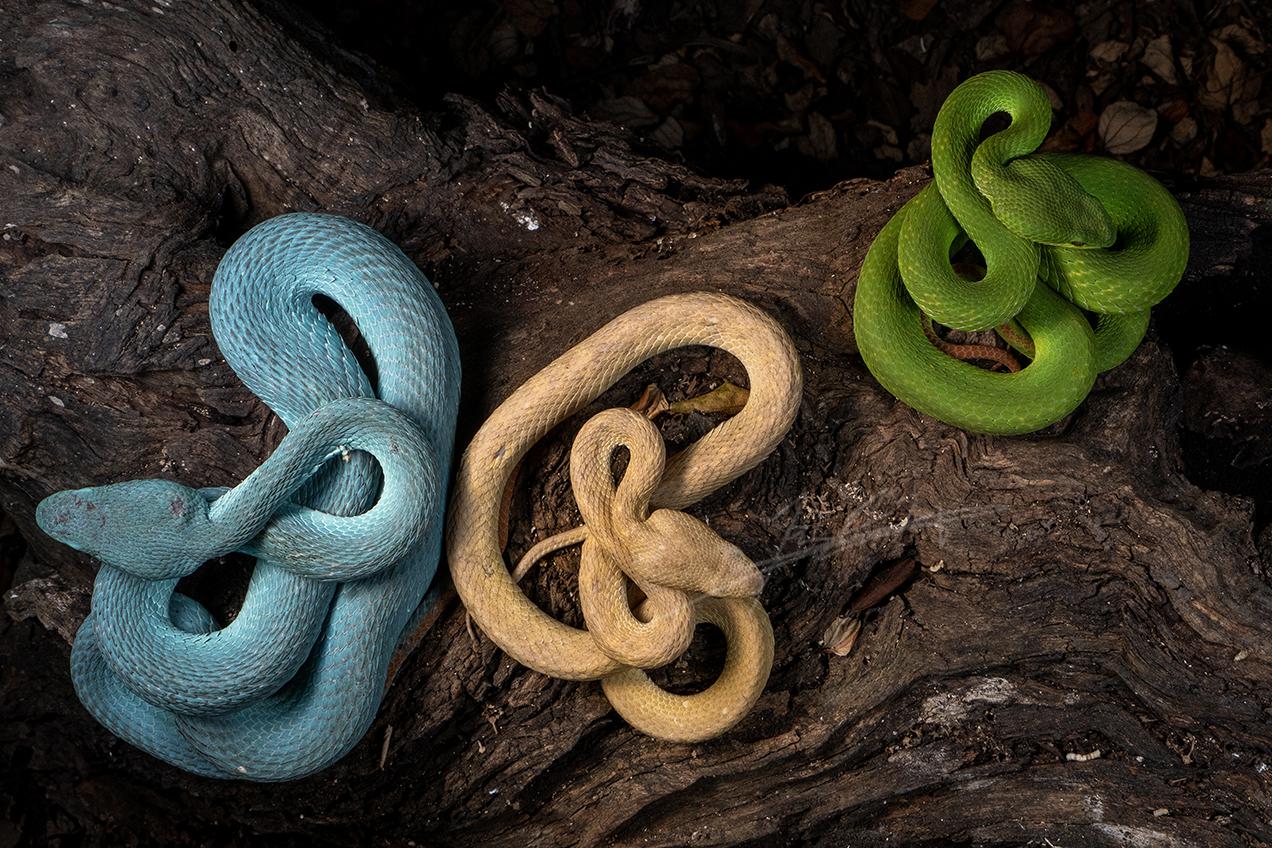
Vipers are a group of snakes known for their venom and incredible survival skills. They belong to the family Viperidae, which includes many of the most well-known venomous snakes in the world. Vipers are found in many regions, including Africa, Europe, Asia, and the Americas. They are known for their triangular heads, long fangs, and potent venom that helps them hunt and protect themselves.
Appearance
Vipers have a distinct look that makes them recognizable. Most have a triangular-shaped head, a thick body, and a tail that tapers to a point. Their scales are usually rough or keeled, giving them a textured appearance. Colors vary widely, from brown, gray, and green to brightly patterned designs that help them camouflage in their environment.
One of the most unique features of vipers is their fangs. They have long, hollow fangs that inject venom deep into their prey. These fangs can fold back when the mouth is closed, which helps vipers strike quickly without damaging their teeth. Some vipers grow up to 6 feet long, while others, like the small pit vipers, are just a few feet.
Species of Vipers
Vipers are divided into two main groups:
-
True Vipers (Viperinae): Found mostly in Europe, Africa, and the Middle East. These vipers do not have heat-sensing pits.
-
Pit Vipers (Crotalinae): Found in Asia and the Americas. They have heat-sensing pits between their eyes and nostrils, which help them detect warm-blooded prey even in the dark.
Some famous vipers include the Gaboon viper, Russell’s viper, saw-scaled viper, and the rattlesnake (which is a type of pit viper). Each species has unique features, but all share venomous fangs and hunting skills.
Habitat
Vipers are highly adaptable and live in a variety of environments. They can be found in forests, grasslands, deserts, and even rocky mountains. Some vipers prefer dry, arid areas, while others thrive in tropical forests. They often hide under rocks, in burrows, or in thick vegetation to stay safe from predators and to ambush prey.
Vipers are excellent at blending into their surroundings. Their color patterns often match the leaves, sand, or rocks around them. This camouflage helps them avoid predators and surprise prey.
Diet
Vipers are carnivorous and rely on their venom to hunt. Their diet mainly includes small mammals like mice, rats, and rabbits, but they also eat birds, lizards, frogs, and even other snakes.
Vipers usually strike quickly, injecting venom that immobilizes or kills their prey. After the prey is subdued, the viper swallows it whole, starting with the head. Their flexible jaws allow them to eat animals much larger than their own head.
Behavior
Vipers are mostly solitary animals. They spend much of their time hiding and waiting for prey. This ambush method of hunting conserves energy and increases their chances of a successful strike.
Some vipers are active during the day, while others are nocturnal, depending on the species and environment. They are excellent climbers and swimmers, which allows them to hunt in different places.
Vipers are also known for their warning behaviors. Some species, like rattlesnakes, shake their tails to warn potential threats. Others may hiss loudly or inflate their bodies to appear larger and scare off predators.
Venom
One of the most famous aspects of vipers is their venom. Viper venom is a complex mixture of proteins and enzymes that can affect the blood, muscles, and nervous system of their prey. It helps vipers kill prey quickly and start the digestion process even before swallowing.
Venom is also a defense mechanism. If a viper feels threatened, it can strike to protect itself. However, most vipers avoid humans and only bite when provoked or accidentally stepped on.
Viper venom has also been studied by scientists for medical purposes. Some components are used in medicines to treat blood clots, high blood pressure, and heart problems. This shows that even dangerous animals can benefit humans when studied carefully.
Reproduction
Vipers reproduce either by laying eggs or giving birth to live young, depending on the species. Some vipers, like the Gaboon viper, lay eggs, while others, like many pit vipers, give birth to live young.
The number of young varies by species. A female viper usually gives birth to between 5 and 20 offspring. Baby vipers are born with fully functional fangs and venom, which allows them to hunt and defend themselves immediately. Mothers usually do not care for the young, so survival depends on instinct and camouflage.
Predators and Threats
Despite being venomous, vipers have natural predators. Birds of prey like eagles and hawks, mongooses, wild pigs, and some larger snakes hunt vipers. Humans also pose a major threat through habitat destruction, hunting, and fear-driven killings.
Vipers rely on camouflage, quick strikes, and venom to protect themselves. Their warning behaviors, such as rattling or hissing, help prevent unnecessary fights.
Importance in Nature
Vipers play a crucial role in ecosystems. By hunting rodents and other small animals, they help control populations and prevent overgrazing or crop damage. They are also a food source for some predators.
Their presence indicates a healthy ecosystem. Vipers balance the food chain and help maintain the natural order in forests, deserts, and grasslands.
Relationship with Humans
Humans often fear vipers because of their venom. However, viper bites are usually avoidable if people respect their space and learn about their habits. Many bites occur when people accidentally step on or handle a viper.
Vipers are also valuable in medicine. Researchers study their venom to create antivenoms and develop new drugs. Ecotourism and wildlife photography allow people to appreciate vipers safely, teaching respect for these fascinating snakes.
Interesting Facts
-
Ambush Hunters: Vipers often wait in one place for hours for prey to come near.
-
Heat-Sensing Pits: Pit vipers can detect warm-blooded animals even in total darkness.
-
Rattlesnake Warning: Some vipers shake their tails to scare predators.
-
Flexible Jaws: Vipers can eat prey much larger than their head.
-
Venom Efficiency: Viper venom helps digest food and defend against threats.
-
Camouflage Experts: Their patterns allow them to blend into sand, leaves, or rocks.
-
Fast Strikers: Vipers can strike in a fraction of a second.
-
Long Lifespan: Some vipers live 15–20 years in the wild.
Observing Vipers
Watching vipers can be exciting but requires caution. In wildlife reserves or national parks, people can safely observe vipers from a distance. Researchers often use cameras or protective barriers to study them. Observing vipers teaches us about hunting strategies, survival, and the complexity of nature.
Conservation
Vipers face threats from humans, habitat loss, and climate change. Protecting their habitats, creating awareness, and preventing unnecessary killings are essential for conservation. Many wildlife reserves around the world now include vipers in their protection plans, helping maintain biodiversity and ecosystem health.
Summary
Vipers are fascinating, venomous snakes with unique adaptations that help them survive and thrive. They have strong jaws, sharp fangs, and potent venom, which they use to hunt and defend themselves. Vipers are mostly solitary, highly skilled hunters, and play a vital role in ecosystems by controlling prey populations and maintaining balance.
While humans often fear vipers, these snakes are important for science, medicine, and nature. Studying vipers teaches us about venom, survival strategies, and the interconnectedness of life in the wild.
Vipers remind us that even dangerous animals are an essential part of the natural world. Their camouflage, hunting skills, and survival instincts show the incredible diversity and complexity of wildlife. By protecting vipers and their habitats, we ensure that ecosystems remain healthy and that future generations can admire these incredible snakes safely.
Read Also: Keep your face towards the sunshine and shadows will fall behind you
Watch Also: https://www.youtube.com/@TravelsofTheWorld24





Leave a Reply