
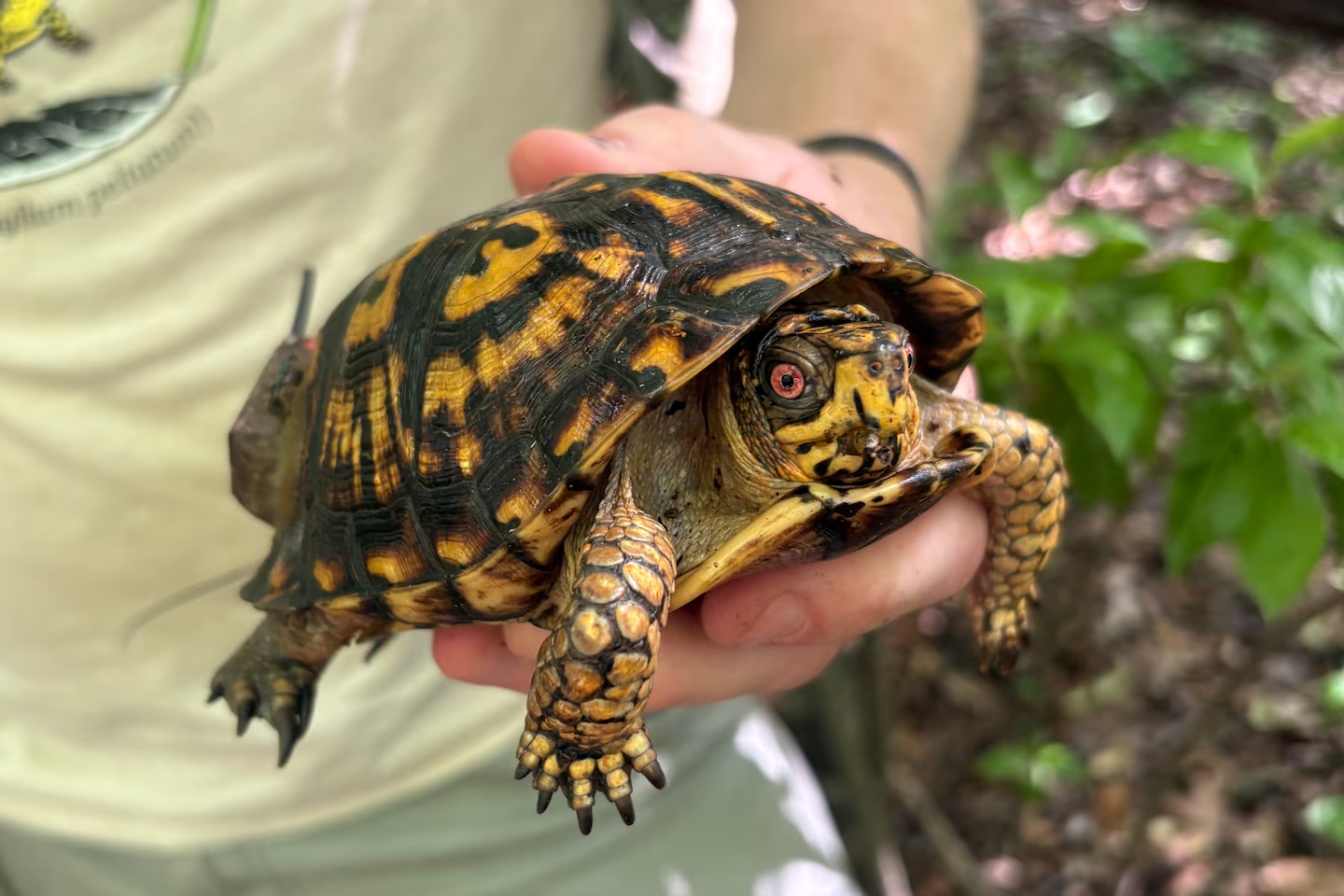
Turtles are ancient reptiles that have been on Earth for millions of years. They are known for their hard shells, slow movements, and long lifespan. Turtles can live in oceans, rivers, and on land, depending on their species. They are gentle animals, mostly herbivores, but some eat small animals too.
In this article, we will explore everything about turtles in simple words. We will talk about their habitat, physical features, behavior, diet, family life, and their importance in nature.
Where Turtles Live
Turtles are found all over the world. They live in oceans, rivers, lakes, and forests.
-
Sea turtles live in the oceans and migrate long distances between feeding and nesting areas.
-
Freshwater turtles live in rivers, ponds, and lakes.
-
Land turtles, also called tortoises, live on grasslands, forests, and deserts.
Each type of turtle has adaptations to survive in its specific environment.
Physical Appearance
Turtles have a distinctive hard shell that protects their body. The shell is made of bone and covered with a layer called scutes. The shell has two parts: the carapace (top) and the plastron (bottom).
Turtles have strong legs or flippers depending on their habitat. Sea turtles have flippers for swimming, while land turtles have thick, strong legs for walking on rough ground.
Most turtles have a small head with eyes on the sides, a beak instead of teeth, and a long neck that can retract into the shell for protection.
Turtles vary in size. Some, like the tiny speckled padloper, are only 10 centimeters long, while the giant leatherback sea turtle can reach over 2 meters in length.
Types of Turtles
There are many types of turtles, but they are generally classified into three groups:
-
Sea Turtles – Live in oceans, feed mostly on jellyfish and sea plants, and migrate long distances. Examples: Green sea turtle, Hawksbill turtle.
-
Freshwater Turtles – Live in rivers, ponds, and lakes. They eat plants, insects, and small fish. Examples: Painted turtle, Red-eared slider.
-
Tortoises (Land Turtles) – Live on land, eat plants, and move slowly. Examples: Galápagos tortoise, African spurred tortoise.
Each type has special features that help it survive in its environment.
Behavior and Social Life
Turtles are mostly solitary animals. They do not form groups like some other animals.
Sea turtles travel long distances alone, following ocean currents. Freshwater and land turtles may share basking spots or water areas but mostly live separately.
Turtles are slow movers, but they are patient and careful. They rely on their shells for protection rather than speed.
Some turtles are active during the day (diurnal), while others, especially in hot climates, are active in the early morning or late evening.
Diet and Feeding
Turtles are mostly herbivores, but their diet depends on the species.
-
Sea turtles eat seaweed, algae, and jellyfish.
-
Freshwater turtles eat aquatic plants, insects, small fish, and crustaceans.
-
Land turtles (tortoises) eat grass, leaves, fruits, and flowers.
Turtles have a strong, beak-like mouth to bite plants and capture prey. They can survive on limited food for long periods.
Speed and Survival
Turtles are slow on land, but some are fast swimmers. Their shell is their main protection against predators.
Young turtles are more vulnerable and often eaten by birds, mammals, or fish. Adults have fewer predators due to their strong shells.
Some species bury themselves in sand or mud to hide from danger or extreme temperatures. Sea turtles hatch on beaches and immediately rush to the ocean to avoid predators.
Family Life and Babies
Turtles lay eggs on land. Female turtles dig a hole, lay eggs, and cover them with sand or soil for protection.
The number of eggs varies. Sea turtles can lay over 100 eggs in a single nest, while some land turtles lay fewer than 20.
Turtle babies, called hatchlings, are born with soft shells. They are independent from birth and must find food and water on their own. Many do not survive due to predators, but the strong ones grow into adults.
Some turtles, like sea turtles, return to the same beach where they were born to lay their eggs, showing incredible memory and navigation skills.
Enemies and Threats
Turtles face many natural enemies. Birds, foxes, raccoons, crabs, and fish prey on eggs and hatchlings. Adult turtles have fewer predators due to their hard shells.
Humans are a major threat. Habitat destruction, hunting for meat and shells, pollution, and fishing nets have reduced turtle populations worldwide.
Plastic pollution in oceans is especially harmful to sea turtles, as they can mistake plastic bags for jellyfish. Conservation efforts are essential to protect them.
Importance in Nature
Turtles play an important role in ecosystems.
-
Seed dispersal – By eating fruits and plants, turtles help spread seeds through their droppings.
-
Maintaining food chains – They are both predators (eating insects, fish) and prey (food for birds, mammals).
-
Ecosystem health – Healthy turtle populations indicate clean water and balanced habitats.
Without turtles, many plants and animals would be affected, showing their importance in nature.
Adaptations for Survival
Turtles have several special adaptations:
-
Hard shell – Protects them from predators.
-
Retractable head and limbs – Helps hide from danger.
-
Long lifespan – Some turtles live over 100 years.
-
Strong swimming ability – Sea turtles can cross oceans.
-
Burying behavior – Helps land turtles survive heat and hide from predators.
These adaptations have helped turtles survive for millions of years.
Fun Facts About Turtles
Here are some interesting facts:
-
Turtles have been on Earth for over 200 million years.
-
Sea turtles migrate thousands of kilometers between feeding and nesting areas.
-
Some land tortoises can live more than 150 years.
-
Turtles do not have teeth; they have strong beaks.
-
Leatherback sea turtles can dive over 1,200 meters deep.
-
Hatchlings use the moonlight to find the ocean after hatching.
Conservation
Many turtle species are endangered or threatened. Protection efforts include:
-
Creating wildlife reserves and protected nesting beaches.
-
Reducing plastic pollution in oceans.
-
Educating people about the importance of turtles.
-
Preventing hunting and illegal trade of turtle shells and meat.
Organizations worldwide are working to save turtles and their habitats, especially sea turtles, which face the most threats.
Conclusion
Turtles are slow, wise, and fascinating reptiles that have survived millions of years. They live in oceans, rivers, and on land, each adapted perfectly to their environment.
Turtles eat plants and small animals, lay eggs on land, and play an important role in ecosystems. They protect the balance of nature and help plants grow by spreading seeds.
The turtle teaches us patience, resilience, and the importance of protecting nature. Despite being slow, turtles are strong survivors and a symbol of endurance and wisdom in the animal kingdom.
Read Also: Keep your face towards the sunshine and shadows will fall behind you
Watch Also: https://www.youtube.com/@TravelsofTheWorld24





Leave a Reply