
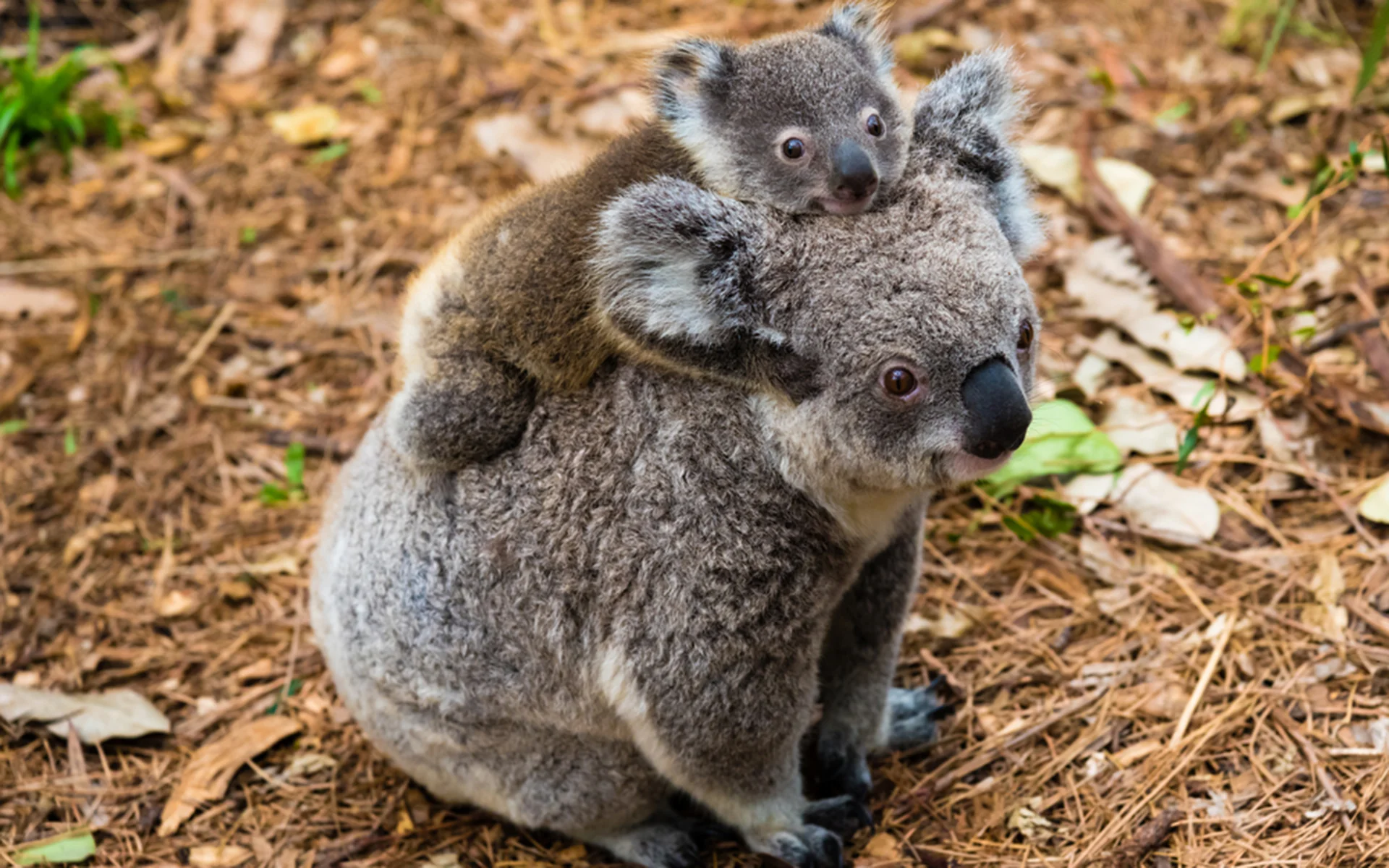
Koalas are small, tree-dwelling marsupials found only in Australia. They are famous for their round, fluffy ears, big noses, and sleepy nature. Koalas are herbivores, feeding mainly on eucalyptus leaves, which provide most of their water and food. Despite their cute and calm appearance, koalas are strong climbers and play an important role in Australia’s forests.
In this article, we will explore everything about koalas in simple words. We will talk about their habitat, physical features, behavior, diet, family life, and their importance in nature.
Where Koalas Live
Koalas are native to eastern and southeastern Australia. They live in eucalyptus forests and woodlands, where there are plenty of trees to climb and feed on.
Koalas prefer areas with tall eucalyptus trees, as these trees provide food, shelter, and protection. They are mostly found in Queensland, New South Wales, Victoria, and South Australia.
Physical Appearance
Koalas are small to medium-sized mammals with thick, soft fur that is usually gray or brown. They have large, round ears and a big black nose. Their eyes are small but sharp enough to see branches and predators.
Koalas have strong, curved claws and fingers that help them grip tree trunks and branches. Their feet are also specially adapted for climbing, with two opposable toes on each front paw to hold branches securely.
Adult koalas weigh between 4 to 15 kilograms, and their bodies are about 60 to 85 centimeters long. Males are usually larger than females.
Types of Koalas
There is only one species of koala, but populations vary slightly depending on the region. Koalas in northern Australia tend to be smaller and lighter in color, while southern populations are larger and darker.
Koalas are closely related to wombats, another type of marsupial found in Australia. Both animals carry their young in a pouch after birth.
Behavior and Social Life
Koalas are mostly solitary animals. They spend most of their time alone in trees, sleeping or resting.
Koalas are nocturnal, meaning they are more active at night. During the day, they rest in the fork of tree branches or sleep curled up to save energy.
Koalas communicate with loud, low-pitched calls, especially during mating season. These calls can travel long distances through the forest. They also use scent from glands on their chest to mark trees and establish territory.
Diet and Feeding
Koalas are herbivores and almost exclusively eat eucalyptus leaves. There are over 600 types of eucalyptus trees, but koalas prefer around 30 specific species.
Eucalyptus leaves are tough, low in nutrients, and contain toxins. Koalas have a special digestive system with a long cecum that helps break down the leaves and detoxify chemicals.
Koalas get most of their water from the leaves they eat, so they rarely drink water. They spend many hours a day eating slowly to get enough nutrients.
Speed and Survival
Koalas are slow movers on the ground but are excellent climbers in trees. Their strong limbs and claws allow them to move easily from branch to branch.
Koalas rely on their camouflage, resting high in eucalyptus trees to stay safe from predators like dingoes and large birds of prey. Their sleeping habits conserve energy, which is important because their diet provides limited calories.
Family Life and Joeys
Koalas are marsupials, which means they carry their babies, called joeys, in a pouch after birth.
A female koala gives birth to a tiny, underdeveloped joey after about 35 days of pregnancy. The joey stays in the pouch for around six months, feeding on milk and growing stronger. After leaving the pouch, it rides on its mother’s back for another six months, learning to eat eucalyptus leaves and climb trees.
Koalas form loose social networks where individuals maintain home ranges that sometimes overlap with others. Mothers are very protective of their young during the first year.
Enemies and Threats
Koalas face predators such as dingoes, large owls, and eagles, but humans are their biggest threat.
Habitat loss due to deforestation, urban development, and bushfires reduces the number of eucalyptus trees and safe living spaces. Cars and domestic dogs also pose danger to koalas crossing roads.
Diseases like chlamydia affect koalas, causing illness and reducing fertility in some populations. Conservation efforts are essential to protect them.
Importance in Nature
Koalas play an important role in Australia’s forests:
-
By feeding on eucalyptus leaves, they help manage tree growth.
-
Their droppings provide nutrients to the soil.
-
Koalas are an important part of the ecosystem, serving as prey for some predators and contributing to biodiversity.
Koalas also attract ecotourism, raising awareness about protecting forests and wildlife.
Adaptations for Survival
Koalas have several adaptations that help them survive:
-
Climbing claws – Strong claws and opposable toes help climb trees easily.
-
Thick fur – Protects from cold, heat, and rain.
-
Special digestion – Cecum and long intestines help digest toxic eucalyptus leaves.
-
Sleeping habits – Sleep up to 18–20 hours a day to conserve energy.
-
Scent marking – Marks territory and communicates with other koalas.
These adaptations make koalas well-suited to their tree-dwelling lifestyle.
Fun Facts About Koalas
Here are some interesting facts:
-
Koalas sleep 18–20 hours a day.
-
Each koala has a unique nose pattern, like human fingerprints.
-
Koalas do not drink much water because they get moisture from eucalyptus leaves.
-
Joeys stay in the mother’s pouch for six months and then ride on her back.
-
Koalas have strong jaws to chew tough eucalyptus leaves.
-
Despite being called “koala bears,” they are not bears but marsupials.
Conservation
Koalas are vulnerable due to habitat loss, bushfires, and human activity.
-
Wildlife reserves and national parks protect their natural habitat.
-
Tree-planting programs help restore lost forests.
-
Education and awareness campaigns reduce human impact and promote coexistence.
-
Rescue and rehabilitation centers care for injured or sick koalas.
Protecting koalas is important for forest ecosystems and Australia’s natural heritage.
Conclusion
Koalas are cute, sleepy, and unique tree-dwellers of Australia. They live in eucalyptus forests, feed on leaves, and spend most of their time resting or climbing.
Koalas are solitary, strong climbers with special adaptations for survival. They play an important role in their ecosystem and are a symbol of Australia’s wildlife.
These gentle marsupials teach us about patience, adaptation, and the importance of protecting nature. Koalas are truly one of the most beloved and fascinating animals in the world.
Read Also: Keep your face towards the sunshine and shadows will fall behind you
Watch Also: https://www.youtube.com/@TravelsofTheWorld24





Leave a Reply