
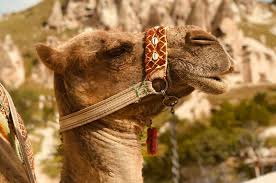
Camels are one of the most amazing animals in the world. They are known as the “Ship of the Desert” because they can travel long distances in hot deserts without water. Camels are strong, patient, and very well adapted to life in harsh conditions. They have been helping humans for thousands of years, carrying goods, people, and even helping with farming in desert areas.
In this article, we will explore everything about camels in simple words. We will talk about where they live, their body, habits, diet, behavior, family life, and why they are important to humans and nature.
Where Camels Live
Camels mostly live in deserts and dry areas. They are found in Africa, the Middle East, and parts of Asia, like India, Pakistan, and Mongolia. The most common types of camels are the dromedary camel, which has one hump, and the Bactrian camel, which has two humps.
Camels live in places where the climate is very hot during the day and cold at night. They can survive in areas with very little water and food. They often move long distances in search of water and grass.
Physical Appearance
Camels are large animals with long legs and a long neck. Their bodies are covered with thick fur that can be brown, beige, or white. The fur protects them from the sun and keeps them warm at night.
The most unique feature of camels is their hump. The hump stores fat, not water. This fat can be used as energy when food is not available. A dromedary camel has one hump, while a Bactrian camel has two.
Camels have long eyelashes, bushy eyebrows, and closing nostrils. These help protect them from sandstorms. Their large, flat feet prevent them from sinking into the sand.
Adult camels can weigh between 400 to 600 kilograms, and they can be over 2 meters tall at the shoulder. They are strong enough to carry heavy loads for long distances.
Types of Camels
There are mainly two types of camels:
-
Dromedary Camel – Found in Africa and the Middle East. It has one hump and is used mainly for riding and carrying goods.
-
Bactrian Camel – Found in Central Asia, especially Mongolia and China. It has two humps and is used for carrying heavy loads in cold deserts.
Both types are adapted to survive in harsh desert conditions, but they live in slightly different climates.
Behavior and Social Life
Camels are social animals. They often live in groups called herds. A herd usually has 5 to 20 camels. One male usually leads the herd, while females and young camels stay together for safety.
Camels are gentle, but they can be stubborn. They communicate using sounds, body movements, and even spitting when angry. Spitting is a common behavior when they feel threatened or annoyed.
They are active during the day but rest in the shade during the hottest hours. At night, they may travel long distances if needed.
Diet and Food
Camels are herbivores, which means they eat plants. They can eat dry grass, leaves, shrubs, and even thorny plants that other animals cannot eat. Their mouths are tough, so they can eat rough plants without injury.
Camels can survive without water for several days, sometimes even weeks. When they drink water, they can drink up to 100 liters at one time. Their bodies are very efficient at storing water and using it slowly.
The fat stored in their humps also helps them survive when food is scarce.
Adaptations for Desert Life
Camels are perfect for desert life. Some of their adaptations include:
-
Thick fur – Protects against sun during the day and cold at night.
-
Long eyelashes and closing nostrils – Protect against sand and dust.
-
Wide feet – Prevent sinking in sand.
-
Humps – Store fat for energy when food is scarce.
-
Water efficiency – Can survive long periods without drinking.
These adaptations make camels one of the most reliable animals in the desert.
Family Life and Baby Camels
A baby camel is called a calf. Usually, a female gives birth to one calf after about 13 months of pregnancy. Twins are rare.
The mother takes care of the calf and feeds it milk for several months. Young camels grow quickly and can walk and run within hours after birth.
Calves stay with their mother for protection and learning. They learn how to find food, water, and survive in the harsh desert.
Camels and Humans
Camels have been very important to humans for thousands of years. They are used for:
-
Transport – Carrying people and goods across deserts.
-
Food – Milk and sometimes meat. Camel milk is nutritious and can last longer in heat.
-
Clothing – Camel hair is used to make clothes, blankets, and tents.
-
Agriculture – Helping in plowing fields in desert areas.
Camels are often called the “ship of the desert” because they can carry heavy loads for long distances without tiring.
Enemies and Threats
In the wild, camels have very few natural enemies. Large predators like lions or wolves may attack young camels, but adult camels are too big to easily hunt.
The biggest threat to camels comes from humans. Hunting, habitat loss, and modern vehicles have affected wild camel populations. However, domesticated camels are safe because people take care of them.
Importance in Nature
Camels are important for desert ecosystems. By eating shrubs and plants, they help control plant growth. Their movement spreads seeds, which helps plants grow in new areas.
Camels are also a source of food for predators when calves are born. In this way, they are a part of the natural balance.
Fun Facts About Camels
Here are some interesting facts:
-
Camels can drink up to 100 liters of water at once.
-
They can survive several days without water.
-
Camels have thick lips that help eat thorny plants.
-
Their humps store fat, not water.
-
Camels can run up to 65 kilometers per hour in short bursts.
-
Baby camels can walk within hours of birth.
Conservation
Some camel species, like the wild Bactrian camel, are endangered. Conservation efforts are in place to protect their habitats and ensure their survival.
Protecting deserts and drylands is important for the survival of wild camels. Domesticated camels continue to thrive because humans care for them.
Conclusion
Camels are amazing animals perfectly adapted to life in deserts. They are strong, patient, and clever. Their humps, long legs, thick fur, and special water-saving abilities make them unique.
Camels live in Africa, the Middle East, and Asia. They eat plants, drink water only when needed, and can travel long distances carrying heavy loads. They are social animals, living in herds and taking care of their young.
Camels have helped humans for thousands of years as transport, food, and clothing. They also play an important role in desert ecosystems.
The camel teaches us the power of patience, endurance, and adaptability. It truly is the ship of the desert and one of the most incredible animals in the world.
Read Also: Keep your face towards the sunshine and shadows will fall behind you
Watch Also: https://www.youtube.com/@TravelsofTheWorld24













Leave a Reply