
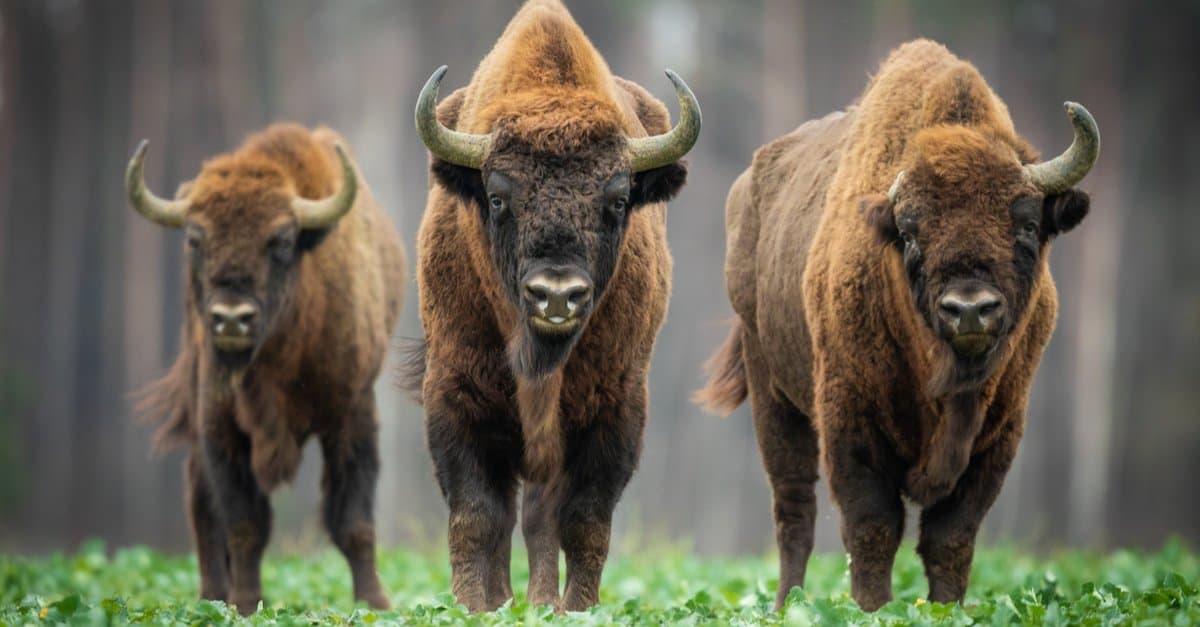
The bison is one of the strongest and largest land animals in North America and Europe. It is big, heavy, and covered with thick fur. When you see a bison, you can feel its power just by looking at it. It has a large head, a strong hump on its shoulders, and sharp curved horns. Even though it looks slow and calm, the bison can run very fast and protect itself if needed.
Bison have lived on Earth for thousands of years. They are an important part of nature and also an important symbol in many cultures.
Types of Bison
There are mainly two types of bison in the world:
-
American Bison – Found in North America.
-
European Bison (Wisent) – Found in parts of Europe.
The American bison is more common and well known. It lives in the United States and Canada. The European bison is slightly taller but usually less heavy. Both types look similar but have small differences in size and shape.
Where Bison Live
Bison mostly live in grasslands, open plains, and prairies. In the past, millions of American bison roamed across North America. They lived in huge herds that moved from place to place in search of fresh grass.
Today, bison can be found in protected parks and reserves. In the United States, one famous place where bison live freely is Yellowstone National Park. European bison live in forests and protected areas in countries like Poland and Belarus.
Grasslands are perfect for bison because they eat grass as their main food.
Physical Appearance
Bison are very large animals. An adult male bison can weigh between 900 to 2,000 pounds. Some can even weigh more. Females are smaller but still very strong.
They have thick brown fur that keeps them warm in cold weather. During winter, their fur becomes even thicker. In summer, they shed some of this fur to stay cool.
One of the most noticeable features of a bison is the large hump on its shoulders. This hump is made of strong muscles that help it move its heavy head. The head is large and covered with thick hair. Both males and females have short, curved horns.
Their strong legs allow them to run up to 35 miles per hour, even though they look heavy and slow.
What Bison Eat
Bison are herbivores, which means they only eat plants. Their main food is grass. They also eat:
-
Leaves
-
Small plants
-
Shrubs
-
Twigs
Bison spend many hours each day grazing. They move slowly across the land while eating. Their strong teeth help them cut grass easily.
In winter, when grass is covered with snow, bison use their large heads to push snow away and find food underneath.
Social Life and Herds
Bison are social animals and live in groups called herds. A herd can have a few animals or sometimes hundreds.
Female bison and their young usually stay together in one group. Males may live alone or join small male groups. During the breeding season, males compete to join female herds.
Living in a herd helps protect them from predators. When danger comes, they stay close together and face the threat as a group.
Baby Bison
A baby bison is called a calf. Calves are usually born in spring. When a calf is born, it has reddish-brown fur. This is why some people call them “red dogs.”
A baby calf can stand and walk within a few hours after birth. This is very important because it helps them stay with the herd and avoid predators.
The mother takes care of her calf and protects it. Calves drink their mother’s milk for several months before they start eating grass.
Predators and Defense
Adult bison are strong and do not have many natural enemies. However, wolves and bears sometimes attack young or weak bison.
Bison defend themselves using their size, strength, and horns. They can charge very quickly if they feel threatened. Even humans must be careful around wild bison because they can become dangerous if disturbed.
Their thick skin and strong muscles also help protect them from attacks.
Bison and Weather
Bison are well built for cold weather. Their thick fur keeps them warm during snowy winters. They do not need shelter and can survive strong winds and freezing temperatures.
In summer, they handle heat by shedding extra fur. They may also roll in dirt to protect their skin from insects. Rolling in dirt also helps keep them cool.
Importance in Nature
Bison play a very important role in the ecosystem. When they graze, they help control plant growth. This allows different kinds of plants to grow and keeps the grassland healthy.
Their movement also helps spread seeds. When they walk across land, seeds stick to their fur and fall in new places. Their waste also helps fertilize the soil.
Because of bison, many other animals and plants can survive. They are a key part of the grassland environment.
Bison and Native American Culture
For many Native American tribes, the bison was one of the most important animals. It provided food, clothing, tools, and shelter.
People used bison meat for food. The skin was used to make clothes and tents. Bones were used to make tools. Almost every part of the bison was used carefully.
The bison was not only important for survival but also respected as a sacred animal. It was a symbol of life, strength, and unity.
Near Extinction
In the 1800s, millions of bison lived in North America. But during that time, large numbers were hunted. Hunters killed bison for meat, skin, and sport. Railroads also made it easier for hunters to reach large herds.
Because of heavy hunting, the bison population dropped very quickly. At one point, only a few hundred were left. They were close to extinction.
This was a very sad time in history, not only for nature but also for Native American communities who depended on bison.
Conservation and Recovery
Luckily, efforts were made to save the bison. Protected areas were created, and hunting was controlled. Farmers and conservation groups helped raise and protect bison.
Today, the number of bison has increased. There are now thousands living in parks, reserves, and private lands. Even though they are no longer near extinction, they are still carefully protected.
The European bison also faced extinction but was saved through breeding programs. Now it lives again in protected forests.
Differences Between Bison and Buffalo
Many people confuse bison with buffalo, but they are not exactly the same.
-
Bison live in North America and Europe.
-
Buffalo usually live in Africa and Asia.
Bison have a large shoulder hump and thick fur. Buffalo have longer horns and less fur. Even though people sometimes say “American buffalo,” the correct name is American bison.
Interesting Facts About Bison
-
Bison are the largest land animals in North America.
-
They can jump surprisingly high despite their size.
-
They run fast and can change direction quickly.
-
Their hump helps support their heavy head.
-
Baby calves are reddish in color at birth.
-
Bison have lived in North America since ancient times.
Life of the Bison in North America and Europe
Bison Today
Today, bison are a symbol of strength and freedom. In the United States, the American bison is the national mammal. It represents the history and natural beauty of the country.
Many parks allow people to see bison in their natural habitat. Watching a herd move across open land is a powerful and unforgettable sight.
However, it is important to respect them and keep a safe distance. Even though they look calm, they are wild animals.
Why Bison Are Special
Bison are special because they show how nature can recover if people care. They survived near extinction and made a strong comeback.
They are powerful but peaceful animals that help keep grasslands healthy. They are part of history, culture, and the natural world.
When you see a bison standing proudly on the open plains, it feels like you are looking at a living piece of history.
Conclusion
The bison is a strong, large, and important animal. It lives in grasslands and forests, eats plants, and lives in herds. It can survive cold winters and defend itself against predators.
In the past, bison were hunted almost to extinction, but thanks to protection and conservation, they are alive today. They play an important role in nature and hold deep meaning in many cultures.
The story of the bison teaches us an important lesson. When humans protect wildlife and respect nature, we can fix past mistakes. The bison stands as a symbol of strength, survival, and hope for the future.
Read Also: Keep your face towards the sunshine and shadows will fall behind you
Watch Also: https://www.youtube.com/@TravelsofTheWorld24





Leave a Reply