
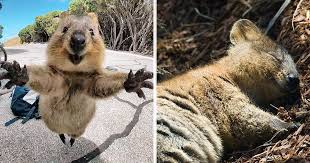
The quokka is one of the most famous and beloved animals in Australia, a country in Oceania. It is a small, furry marsupial that is known for its friendly face and almost “smiling” expression. Because of its cute look and approachable behavior, many people call it the happiest animal in the world.
Quokkas are not just popular online or in photos—they are an important part of Australian wildlife. They live in special areas, and their unique lifestyle makes them very interesting to learn about.
What Is a Quokka?
A quokka is a small marsupial, similar to a kangaroo or wallaby. It has short, rounded ears, a small nose, and big eyes. Its body is covered in brownish-grey fur, soft and thick. Quokkas are small animals—they usually weigh around 2.5 to 5 kilograms and are about the size of a domestic cat.
Like kangaroos, female quokkas have a pouch to carry their babies, called joeys. The joey stays in the pouch for a few months before it starts exploring the world outside.
Where Quokkas Live
Quokkas are native to Australia, mostly found in the southwest region of Western Australia. Their most famous home is Rottnest Island, a small island near the city of Perth. A smaller number of quokkas live on the mainland, but they are harder to see there because of predators and human activity.
Quokkas like areas with thick vegetation, shrubs, and forests, where they can hide and find food. They are mostly active at night and during cooler parts of the day, resting during the hottest hours in shaded areas.
Quokka Behavior and Lifestyle
Quokkas are nocturnal, which means they are active at night. During the day, they hide under bushes or tall grass to stay safe from predators and the sun. At night, they come out to feed, explore, and interact with other quokkas.
Quokkas are very social. They often live in small groups and communicate with each other using soft sounds, body movements, and even grooming. Despite their small size, they are bold and curious animals, sometimes approaching humans on Rottnest Island.
What Quokkas Eat
Quokkas are herbivores, which means they eat only plants. Their diet mostly includes leaves, stems, grasses, bark, and small shrubs. They are not picky eaters and can survive on the natural vegetation around them.
Because quokkas do not drink much water, they get most of the moisture they need from their food. This ability helps them survive in dry areas where water is limited.
Breeding and Baby Quokkas
Quokkas can breed any time of the year, but usually more babies are born in the cooler seasons. Female quokkas give birth to one joey at a time. After birth, the tiny joey crawls into its mother’s pouch and stays there for about six months.
Once the joey grows big enough, it starts leaving the pouch for short periods and eventually joins the group of other quokkas. The mother continues to watch over it until it is fully independent.
Quokkas and Humans
Quokkas are very popular with people because of their friendly nature. On Rottnest Island, tourists often see quokkas close to paths and beaches. People love taking photos with them, and many quokkas seem to “smile,” which makes them famous on social media.
However, it is very important not to feed quokkas. Human food can harm them and make them sick. They are wild animals and do best when they eat their natural diet. Observing them respectfully is the best way to enjoy these happy marsupials.
Threats and Conservation
Quokkas face dangers from predators, habitat loss, and human interference. On the mainland, foxes, dogs, and cats have made it harder for quokkas to survive. Fires and land clearing also reduce their natural homes.
Because of this, quokkas are considered vulnerable. Conservation programs focus on protecting their habitats, controlling predators, and educating people about safe ways to interact with them. Rottnest Island is a protected area, which helps many quokkas live safely and breed successfully.
Why Quokkas Are Special
Quokkas are special because they show that wild animals can be both cute and important to the ecosystem. They help spread seeds as they eat plants and move through their environment. They also remind people of Australia’s unique wildlife, which cannot be found anywhere else in the world.
Their happy appearance and social behavior make them one of the most loved animals in the world. People feel joy and calm when they see quokkas, and they often become ambassadors for wildlife conservation because of this.
Seeing a Quokka
If you want to see a quokka, Rottnest Island is the best place. It is accessible by ferry from Perth. Walking quietly through the island’s paths at dusk or early morning increases your chances of spotting them.
Remember to observe from a distance, do not feed them, and enjoy watching them hop, explore, or interact with each other. Even a few minutes with a quokka can be a magical wildlife experience.
Quokkas in Popular Culture
Quokkas have become famous worldwide because of “quokka selfies.” Tourists love taking photos with these small, smiling animals, and these images are often shared online.
They also appear in books, documentaries, and wildlife campaigns, often as symbols of happiness, friendliness, and the unique nature of Australia.
Conclusion
The quokka of Australia, Oceania, may be small, but it leaves a big impression. Its friendly face, curious behavior, and social nature make it one of the most charming animals in the world.
By protecting their homes, respecting their natural behavior, and spreading awareness about conservation, people help ensure that quokkas will continue to hop through Australia’s landscapes, making both locals and visitors smile for generations to come.
Read Also: Keep your face towards the sunshine and shadows will fall behind you
Watch Also: https://www.youtube.com/@TravelsofTheWorld24




Leave a Reply